




Meiji Carved Display Cabinet
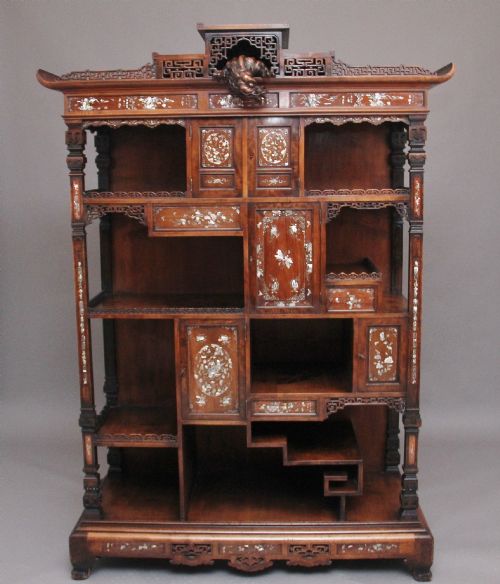
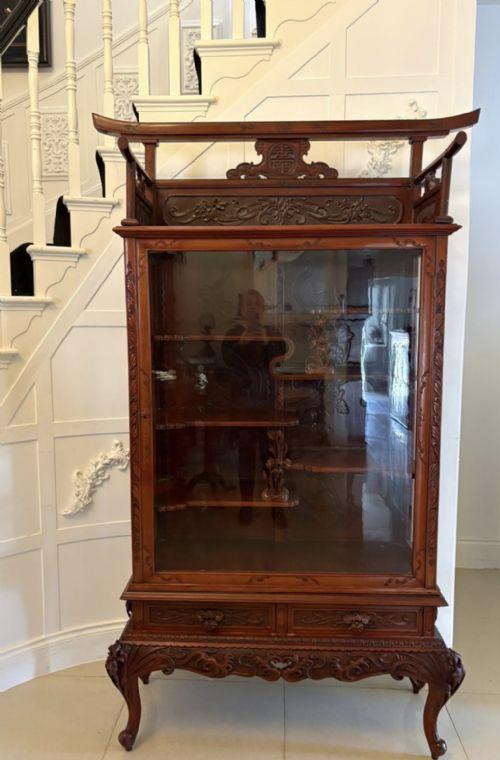
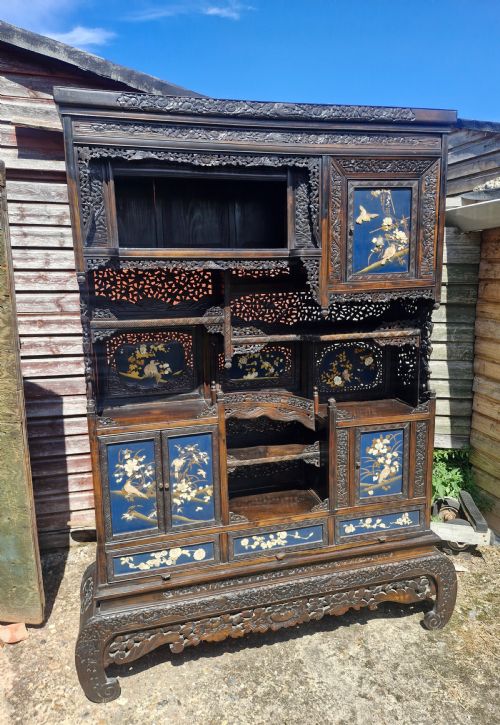
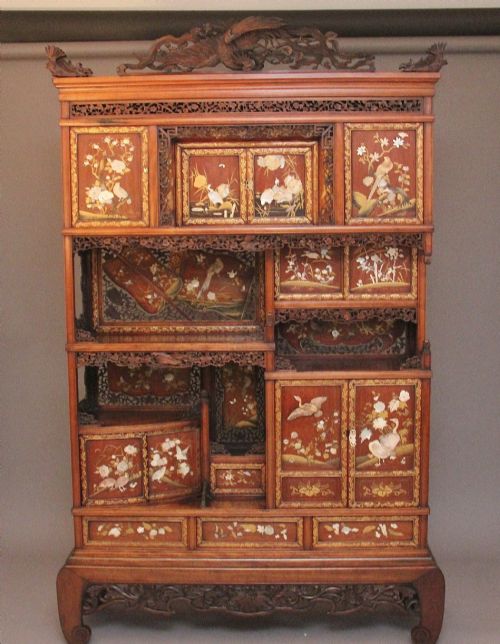
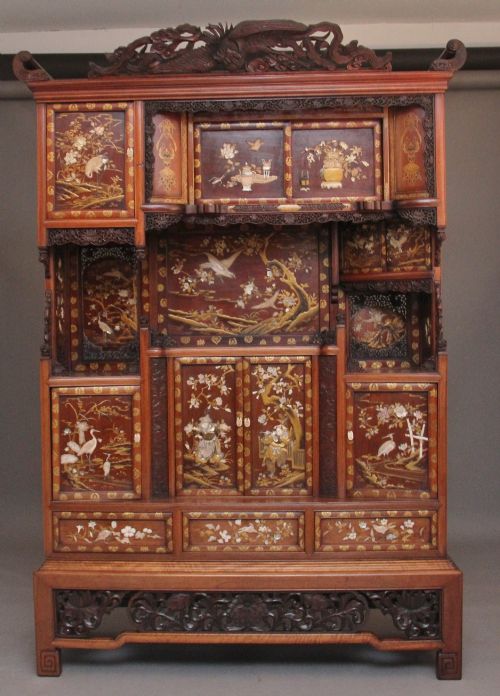
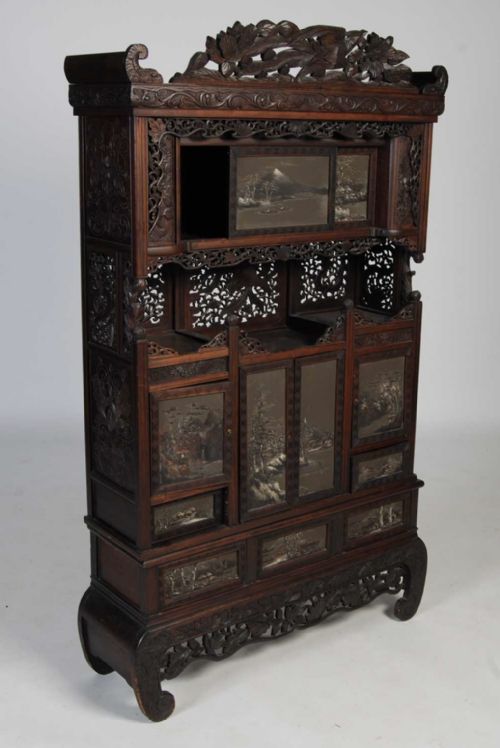
These meiji carved display cabinet examples bring intricate woodwork, lacquer and bone inlay into the home from the nineteenth and early twentieth centuries.
Meiji Carved Display Cabinet
When you search for a meiji carved display cabinet, you enter a field dominated by Japanese shodona cabinets and side cabinets originating from the nineteenth century. The examples met on this page span the Meiji and Taisho periods, alongside nineteenth-century French and Asian export interpretations.
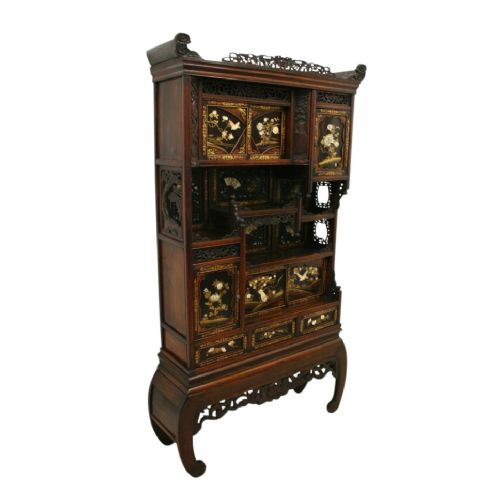
Most pieces take the form of the traditional shodona or cabinet on stand, designed to showcase precious objects. Hardwoods like rosewood provide the structure, often paired with red lacquer, ebonised surfaces or cinnabar lacquer.
Makers utilised decorative panels and carving to elevate these storage pieces into focal points for a room. Alongside Japanese production, the inventory includes pieces showing the influence of Chinoiserie and Japonisme.
How they were made
Makers constructed these cabinets using dense hardwoods and rosewood to support intricate carved decoration. The surfaces frequently received layers of red lacquer, black ebonising or cinnabar work.
Details were added through bone inlay and mother-of-pearl or mother of pearl elements set into the woodwork. Lacquered panels feature floral carving and figurative scenes executed by skilled hands.
The inventory records pieces attributed to the Meiji period, Taisho period, Japonisme and Asian export categories.
What varies in quality
The standard of a meiji carved display cabinet rests on the depth and crispness of the carving across the hardwood structure. Cabinets featuring meticulous bone inlay and well-preserved lacquer command greater appreciation than plain surfaces.
Proportion and the integration of stands also define the hierarchy of these pieces. Stand construction that matches the main cabinet body indicates a higher level of original design.
The Meiji Carved Display Cabinet Glossary
- Shodona
- A Japanese tabletop or freestanding display cabinet designed for exhibiting curios and art objects. These pieces typically feature asymmetrical shelving and enclosed cupboards.
- Mejl Period
- A distinct era in Japanese history spanning from eighteen sixty-eight to nineteen twelve, noted for the opening of trade with the West and exceptional decorative arts. Items from this time often display refined carving and lacquer techniques.
- Cinnabar Lacquer
- A technique where numerous layers of red lacquer are applied to a core material before being deeply carved. This method produces rich relief patterns with a distinctive matte finish.
- Bone Inlay
- The practice of recessing small pieces of bone into wood to create contrasting decorative motifs. It frequently appears alongside mother-of-pearl on nineteenth-century Japanese furniture.
- Japonisme
- A nineteenth-century Western artistic movement inspired by Japanese art and design. European makers adopted these aesthetic principles in furniture such as shodona cabinets.
Meiji Carved Display Cabinet: Frequently Asked Questions
How do I date a meiji carved display cabinet?
Dating relies on examining the wood species, lacquer types and construction methods used in the piece. Evidence from the nineteenth century points towards Meiji production, while early twentieth-century examples often cross into the Taisho era.
Stylistic shifts also provide clues, as pure Japanese export work differs slightly from European interpretations influenced by Japonisme.
Where were these cabinets placed?
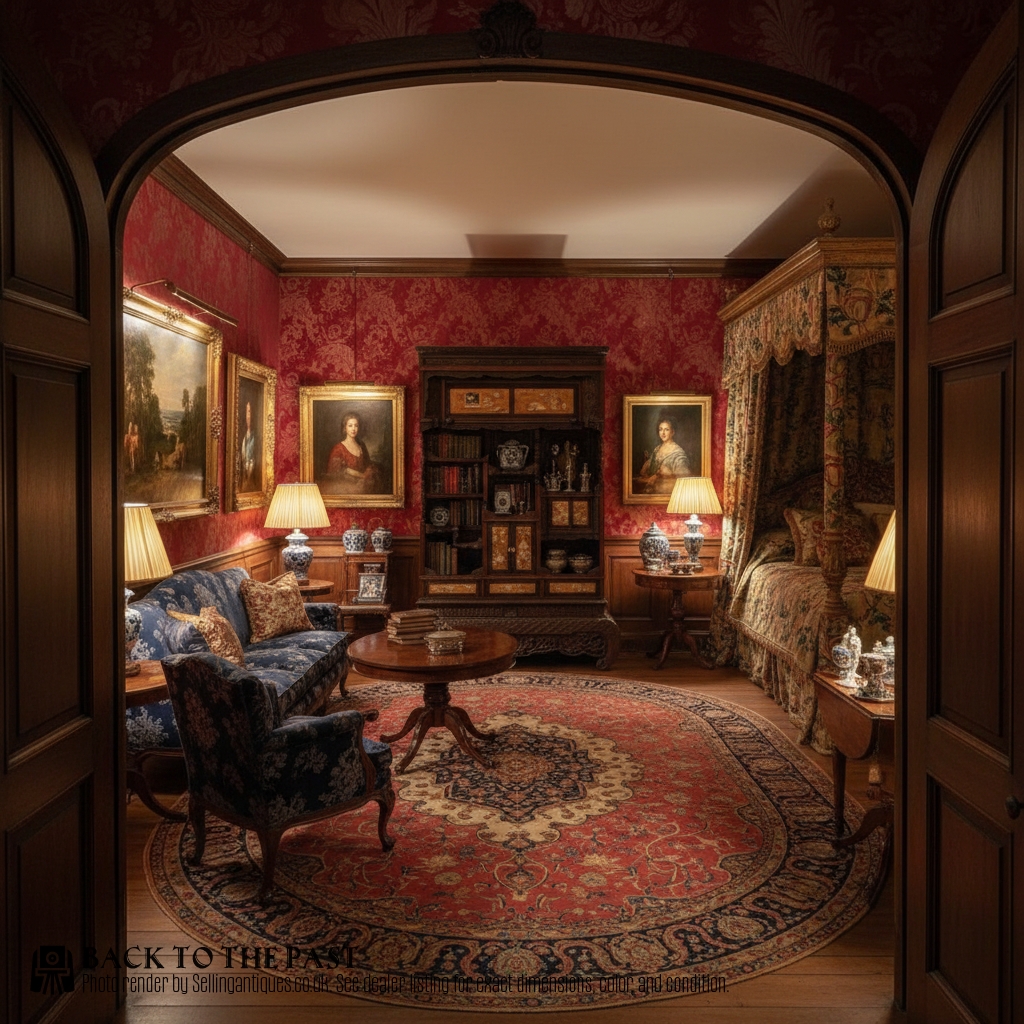
In historical settings, these cabinets stood in reception rooms or parlours to display ceramics, bronzes and other collected treasures. Their compact forms suited domestic interiors of the Victorian period.
In modern homes, they function well as standalone display pieces for small collections. Their glass doors and open shelves protect items while keeping them visible.
What is the difference between Meiji and Taisho pieces?
Meiji period pieces date from eighteen sixty-eight to nineteen twelve and generally feature elaborate hand-carved ornamentation and traditional lacquer finishes. Taisho pieces follow immediately after, beginning in nineteen twelve, and sometimes introduce simpler ebonised surfaces.
Both periods share a foundation in Japanese craftsmanship but reflect the evolving tastes of their respective decades.
How do I care for lacquer and hardwood?
Maintenance involves keeping the cabinet away from direct sunlight and extreme humidity fluctuations to protect the lacquer and bone inlay. Dusting with a soft, dry cloth preserves the polished hardwood surfaces.
Avoid using harsh modern cleaning products that can damage historical finishes. Regular gentle upkeep ensures the woodwork remains stable over time.