
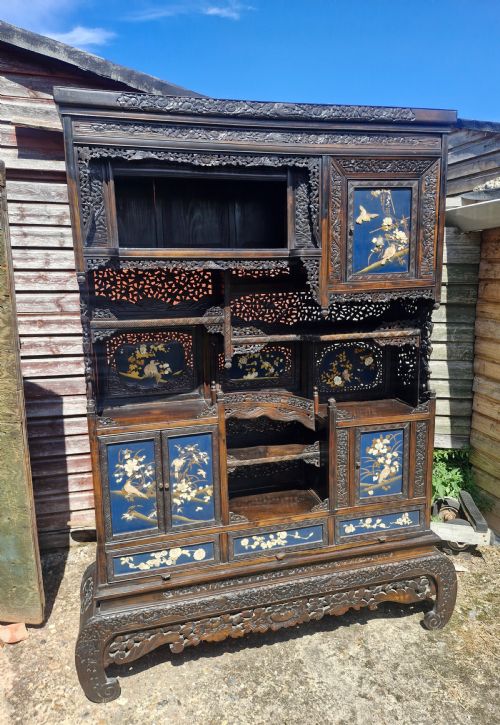
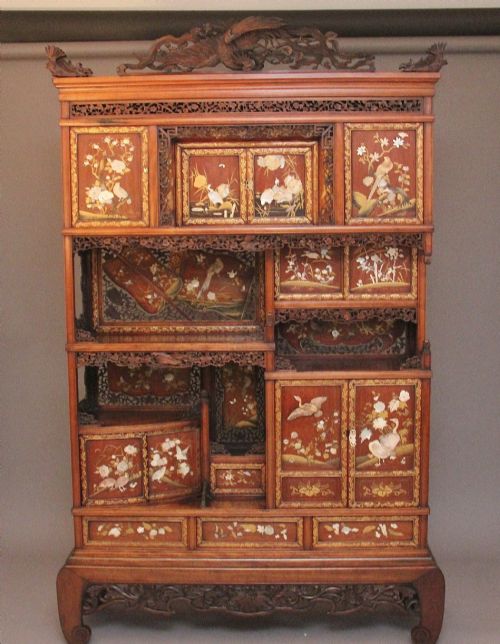
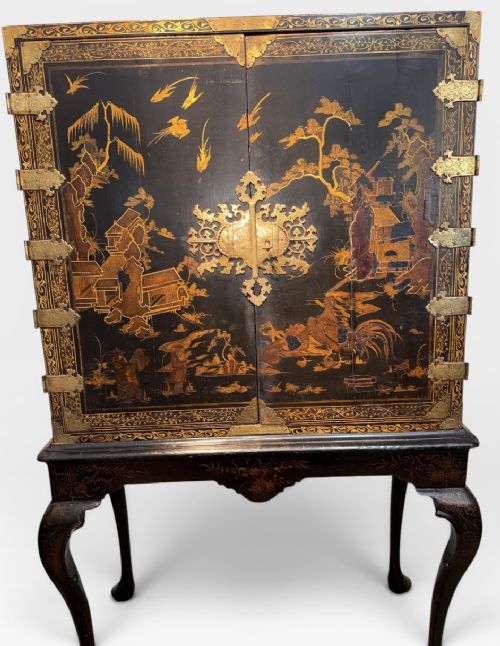


Japanese Display Cupboard
These japanese display cupboard pieces bring intricate craftsmanship and rich historical depth into a room.
Japanese Display Cupboard
A japanese display cupboard offers a specialised cabinet form designed for showing small objects and precious items. These pieces range from substantial floor cabinets to smaller wall cabinets and hanging designs.
Most examples originate from the Meiji and Taisho periods, alongside European interpretations in the Aesthetic Movement and Chinoiserie styles. Buyers encounter both traditional Japanese shodana formats and Western cabinets influenced by Eastern design.
The construction typically incorporates hardwoods, lacquer, and walnut, often ornamented with bone, brass, and mother of pearl. Cabinets frequently feature stands, intricate carving, or ebonised surfaces.
Materials and construction
The construction relies on sturdy timbers such as hardwood and walnut, which provide a stable framework for detailed ornamentation. Ebonised finishes and carved details appear across various regional interpretations.
Surface decoration makes extensive use of lacquer, cinnabar, and inlaid materials including bone and mother-of-pearl. These decorative elements are carefully applied to panels, doors, and structural framing.
Listings feature pieces spanning the eighteenth, nineteenth, and early twentieth centuries, including Edwardian interpretations.
Assessing quality
The standard of a japanese display cupboard depends heavily on the precision of its joinery and the finesse of its surface decoration. Finely executed inlay work and complex carved elements distinguish superior pieces from simpler utilitarian storage.
The integrity of the lacquer and the stability of applied brass or bone ornamentation dictate the enduring character of the cabinet. Coarser examples display simpler framing with less refined surface detail.
Gabriel-Frederic Viardot·Gabriel Viardot
The Japanese Display Cupboard Glossary
- Shodana
- A traditional Japanese multi-tiered display cabinet featuring asymmetric shelving and small cupboards. These pieces were designed to hold scholarly objects and decorative arts.
- Japonisme
- A Western artistic movement in the nineteenth century inspired by Japanese art and design. It heavily influenced European furniture makers of the period.
- Cinnabar lacquer
- A carved red lacquer technique built up in numerous layers before being deeply incised. This material requires immense patience to produce.
- Aesthetic Movement
- A nineteenth-century design philosophy prioritising beauty over narrative or moral function. Furniture in this style often incorporated Japanese structural and decorative principles.
Japanese Display Cupboard: Frequently Asked Questions
What is a shodana cabinet?
A shodana is a traditional Japanese display cabinet characterised by asymmetric shelving and small sliding doors. They were created to showcase precious objects and scholarly goods.
These pieces provide a distinctive silhouette that sets them apart from standard European shelving units.
How do I care for lacquer furniture?
Lacquer surfaces require gentle maintenance away from direct sunlight and extreme humidity changes. Dusting with a soft, dry cloth preserves the finish without scratching.
Avoid chemical polishes or abrasive cleaners which can permanently damage the delicate surface layers.
Where should I place a wall cabinet?
Hanging cabinets require secure wall fixings capable of supporting the weight of both the timber structure and its contents. Position them at eye level to properly appreciate the interior shelving and inlay work.
Keep them away from damp areas and direct heat sources to protect the wood and lacquer.
What distinguishes an Aesthetic Movement cabinet?
Aesthetic Movement pieces from the late nineteenth century blend European furniture forms with Japanese artistic motifs. They often feature ebonised wood and delicate asymmetry.
These cabinets reflect the Victorian fascination with Eastern design principles.