
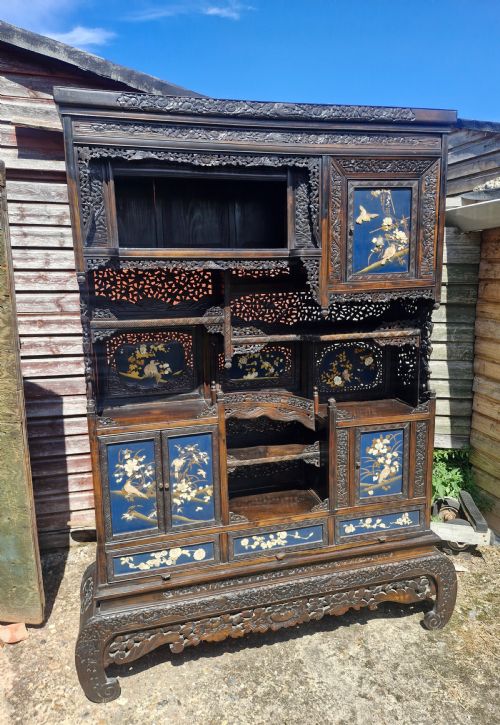
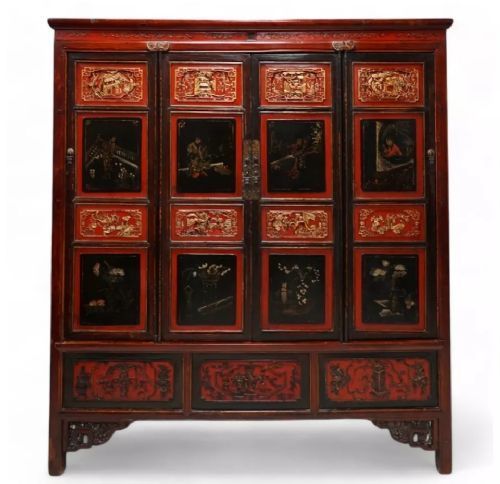
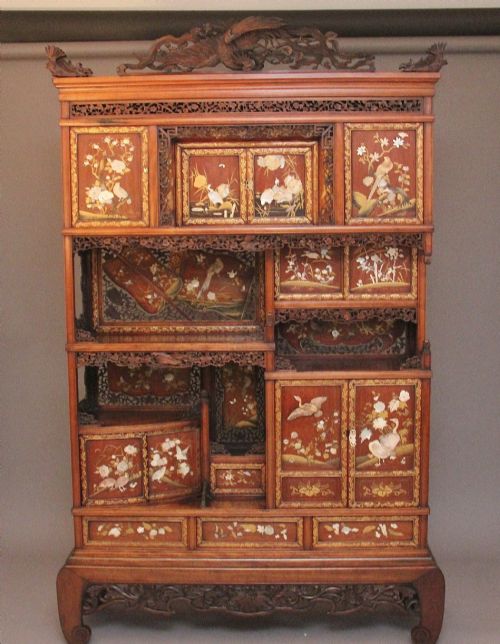
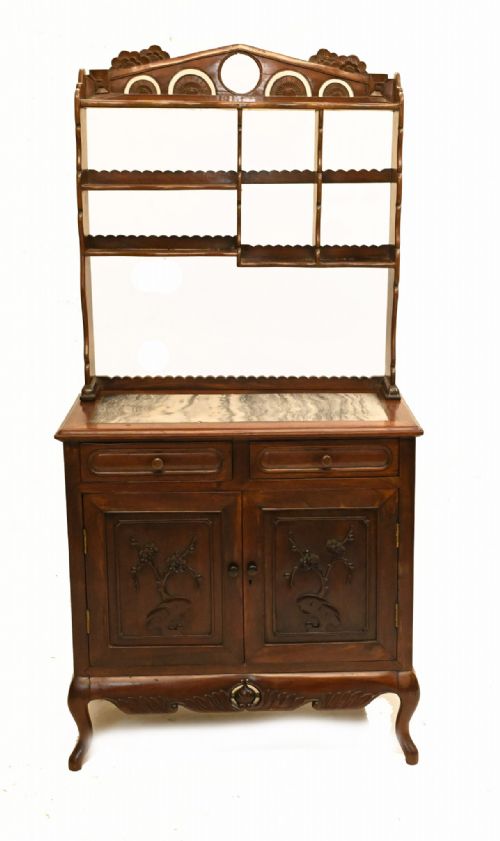


Asian Carved Display Cupboard
An asian carved display cupboard brings intricate relief work and profound history into a room, offering both storage and a stage for treasured objects.
Asian Carved Display Cupboard
An asian carved display cupboard spans forms such as the traditional shodana, compound cabinet, and marriage cabinet, originating from Chinese and Japanese workshops.
The pieces on this page emerge primarily from the nineteenth century, extending into the early twentieth century through the Meiji and Taisho periods.
Makers shaped these cabinets from dense hardwoods and lacquered timbers, incorporating glazed sections, shelving, and compartments designed specifically for display and storage.
How They Were Made
Artisans employed sturdy hardwoods like elm and zitan, alongside applied techniques of red and black lacquer to seal and finish the timber surfaces.
Decoration relied on deep carving into the wood, complemented by intricate inlays of bone, mother-of-pearl, and brass fittings that secured the structural corners and doors.
What Varies in Quality
The depth and precision of the carved relief work dictate the visual impact of the piece, separating standard decorative surfaces from master-level execution.
The integrity of the lacquer finish and the preservation of delicate bone and mother-of-pearl inlays determine the overall state and authenticity of the cabinet.
The Asian Carved Display Cupboard Glossary
- Shodana
- A Japanese display cabinet featuring asymmetrical shelving and sliding doors, designed for ornamental objects. These pieces often showcase elaborate woodwork and lacquer finishes.
- Sijiangui
- A Chinese compound cabinet design, typically consisting of stacked sections that form a unified storage unit. They frequently feature dragon carvings and robust hardwood construction.
- Zitan
- A dense, heavy Asian hardwood prized for its dark colour and fine grain. Artisans used this material for high-status furniture requiring intricate carving.
- Cinnabar
- A red mineral pigment applied in multiple layers to a timber base before being carved into detailed patterns. This technique creates a tactile, richly coloured surface.
- Chinoiserie
- A Western style reflecting Chinese artistic influences, though genuine pieces originate directly from Asian workshops during the Qing period and later eras.
Asian Carved Display Cupboard: Frequently Asked Questions
Where were these cabinets placed in a home?
These cabinets served primarily in reception rooms and private quarters to store valued possessions and display decorative items.
Their glazed doors and open shelving allowed owners to exhibit porcelain, bronzes, and scholar's objects while protecting them from dust.
How do I identify a Meiji period shodana?
A Meiji period shodana is recognised by its distinct Japanese aesthetic, featuring asymmetrical shelving, sliding panels, and detailed woodwork.
Craftsmen built these display cabinets during the late nineteenth and early twentieth centuries, often incorporating ebonised finishes and delicate metal hardware.
What is a marriage cabinet?
A marriage cabinet is a traditional large storage piece commissioned or given as part of a bride's dowry in China.
These cupboards often display vibrant red lacquer and brass hardware, symbolising prosperity and good fortune for the newly established household.
How should I care for a lacquered display cabinet?
Lacquered surfaces require stable environmental conditions away from direct sunlight and excessive humidity to prevent cracking or warping.
Dusting should be done gently with a dry, soft cloth, avoiding commercial polishes or abrasive cleaners that can damage the historical finish.