
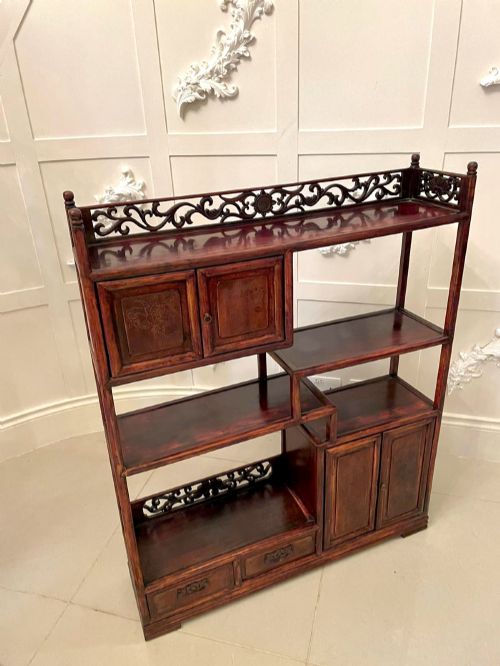

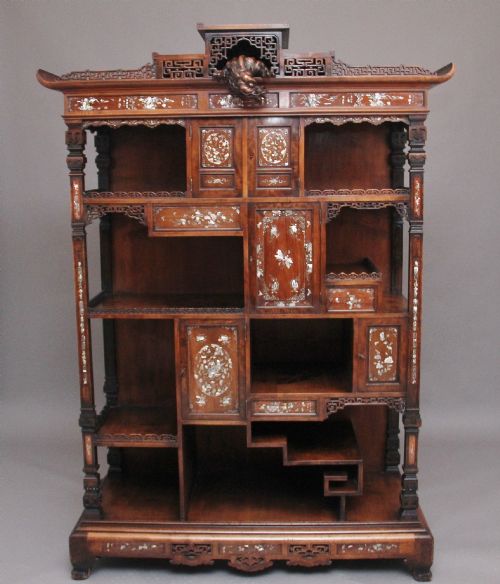
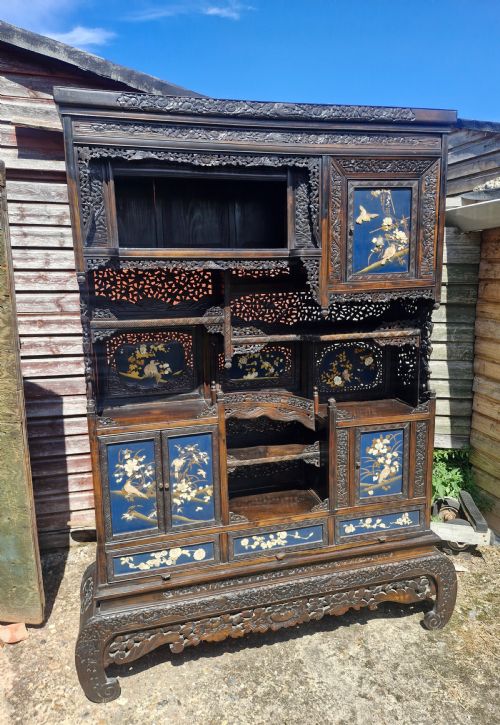
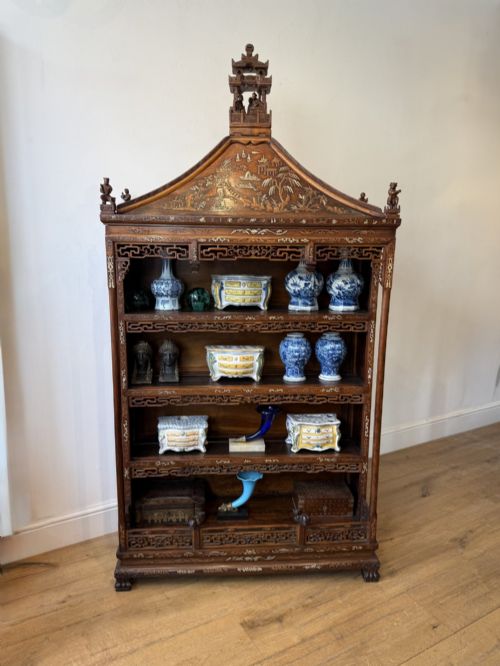
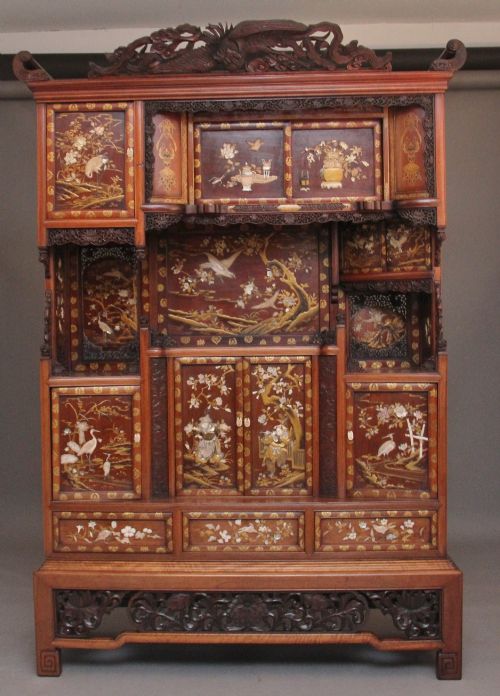


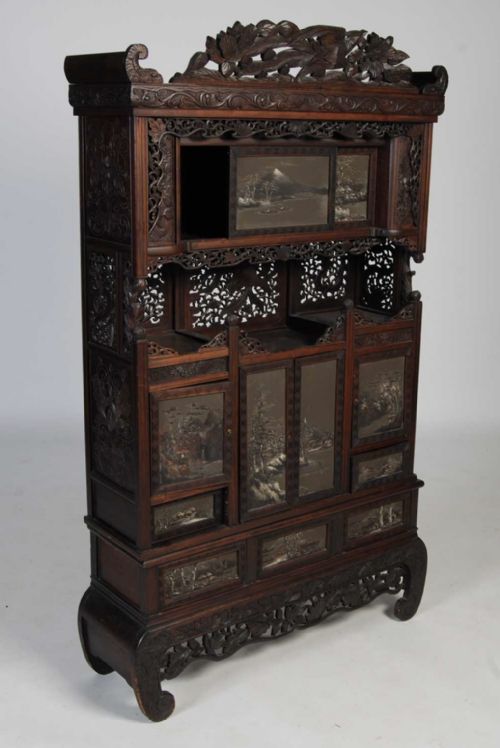


Carved Oriental Display Shelf
A carved oriental display shelf brings intricate craftsmanship and layered staging into a room for showing treasured small objects.
Carved Oriental Display Shelf
A carved oriental display shelf encompasses varied forms such as shodanas, corner cabinets, open cabinets, and whatnots originating from the nineteenth and early twentieth centuries. These pieces emerge from Chinese, Japanese, and Burmese traditions, alongside European interpretations like French shodonas and Aesthetic Movement bamboo cabinets.
The most frequent examples on this page are Japanese Meiji period shodanas and Chinese hardwood cabinets featuring tiered shelving and carved compartments. Makers and workshops constructed these stands to display ceramics, bronzes, and curiosities within domestic interiors.
How they were made
Craftsmen utilised dense hardwoods, rosewood, hongmu, and teak to build sturdy frames capable of supporting asymmetrical shelving tiers. These primary timbers provided a dark, uniform background that contrasted with displayed items.
Artisans applied intricate surface decoration through deep carving, bone inlay, mother-of-pearl, and lacquer work. Structural joinery allowed for complex compositions of staggered shelves, enclosed cupboards, and pierced panels.
Listings span periods from eighteen-sixty to nineteen-twenty, featuring hardwood, rosewood, lacquer, and bone inlay.
What varies in quality
Depth and crispness of the carving distinguish finer examples from simpler commercial production. Superior pieces exhibit undercut foliage, balanced asymmetry, and secure, flush joints across multiple tiers.
Selection of materials dictates overall grade, with dense rosewood and intact mother-of-pearl or bone inlay representing higher tiers of craftsmanship. Surface finish and the preservation of original lacquer further separate standard cabinets from exceptional works.
Gabriel Viardot
The Carved Oriental Display Shelf Glossary
- Shodana
- A Japanese tiered display cabinet featuring irregular shelving, sliding doors, and small cupboards. These pieces became central to both Meiji period production and European Japonisme interiors.
- Hongmu
- A traditional Chinese dense hardwood prized for dark reddish-brown tones and heavy weight. Artisans utilised this timber for fine cabinets and display stands.
- Whatnot
- A piece of furniture consisting of open shelves for displaying small objects. Victorian and Edwardian makers adapted this form to incorporate oriental carving styles.
- Japonisme
- A Western artistic movement influenced by Japanese art and design during the late nineteenth century. European makers produced cabinets and decorative items inspired by these aesthetics.
Carved Oriental Display Shelf: Frequently Asked Questions
What is a shodana cabinet?
A shodana is a Japanese cabinet featuring stepped shelves, small doors, and varied compartments designed for displaying small ornaments.
Craftsmen built these units with asymmetrical layouts to create visual interest from multiple angles.
How do I clean a carved hardwood cabinet?
Dust surfaces gently with a soft, dry cloth to protect delicate bone inlay and deep carvings.
Avoid liquid cleaners and wax buildup, which can damage aged lacquer and timber finishes.
Where should I place a display shelf?
Position these cabinets against sturdy walls away from direct sunlight and fluctuating radiator heat.
Keep shelves balanced by distributing the weight of displayed ceramics and curiosities evenly.
How do I date a Chinese or Japanese cabinet?
Examine the wood species, joinery construction methods, and decorative motifs such as Meiji period carvings or Qing Dynasty styles.
Compare the patination and hardware against documented pieces from the nineteenth and early twentieth centuries.