





Oriental Carved Deity
An oriental carved deity brings centuries of ritual craft and sculptural presence into a room, offering rich cultural history through wood, stone and metal.
Oriental Carved Deity
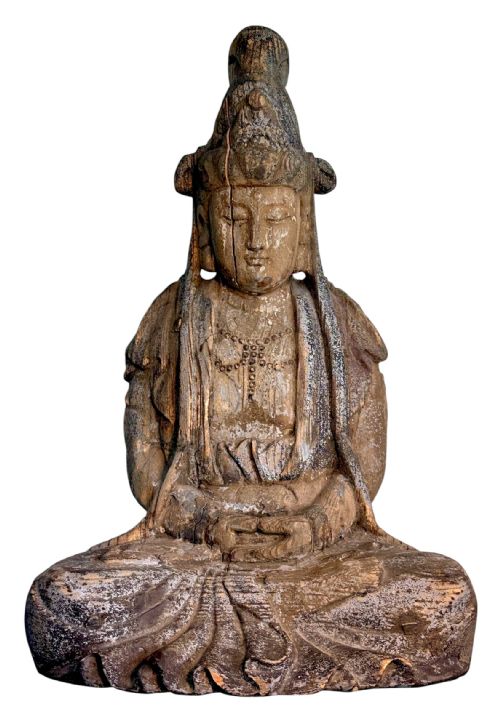
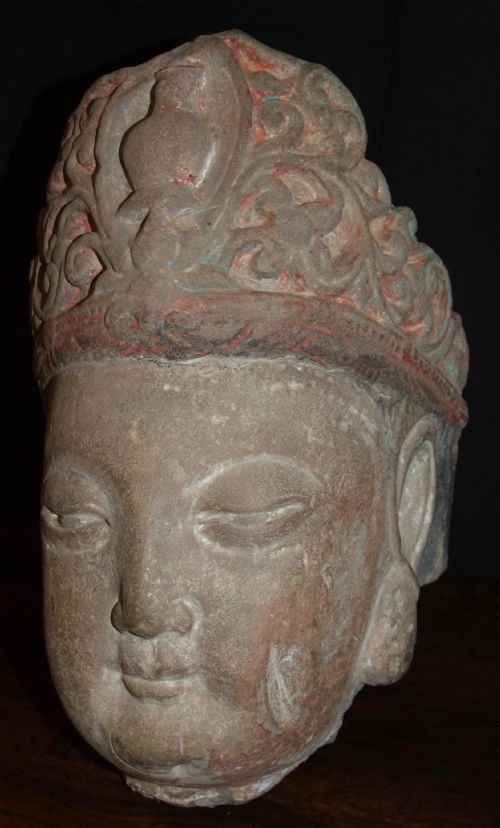
An oriental carved deity encompasses religious statues, temple guardians and scholarly figures originating from diverse Asian traditions. These pieces include figures from Chinese, Burmese, Tibetan, Japanese and Khmer cultures, spanning multiple centuries from the Ming dynasty to the early twentieth century.
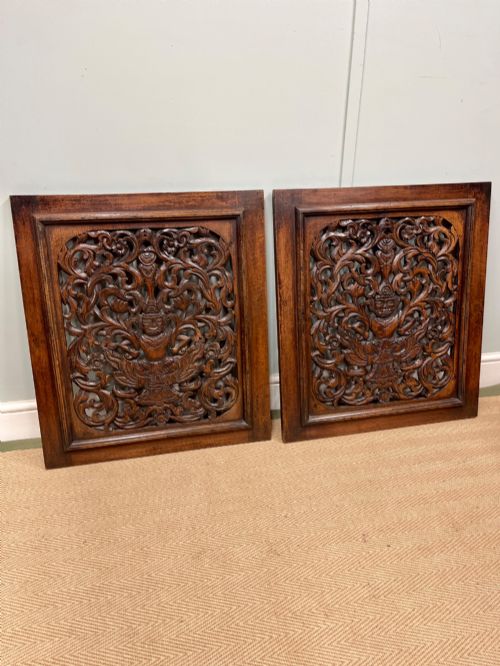
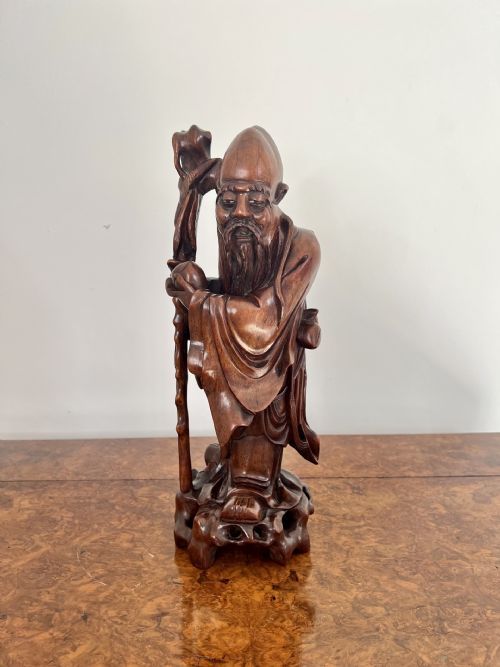
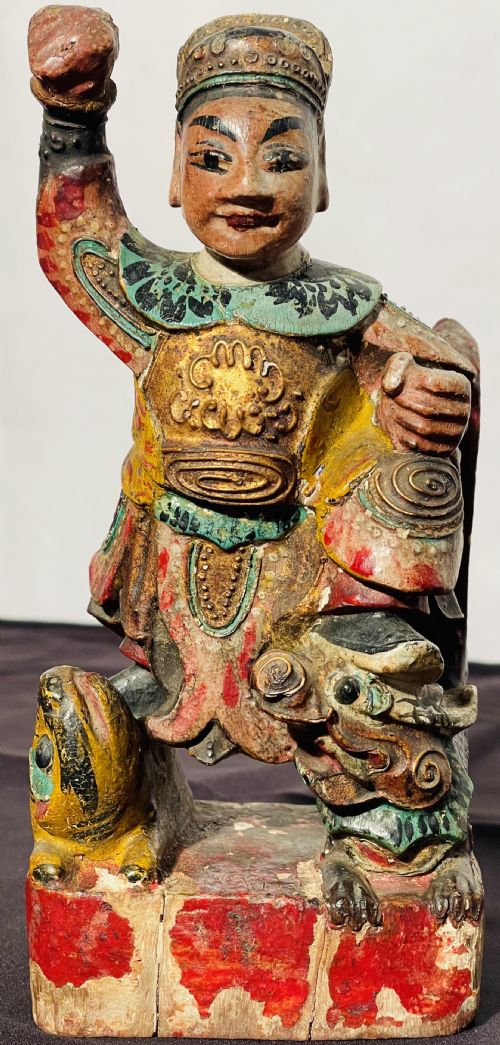
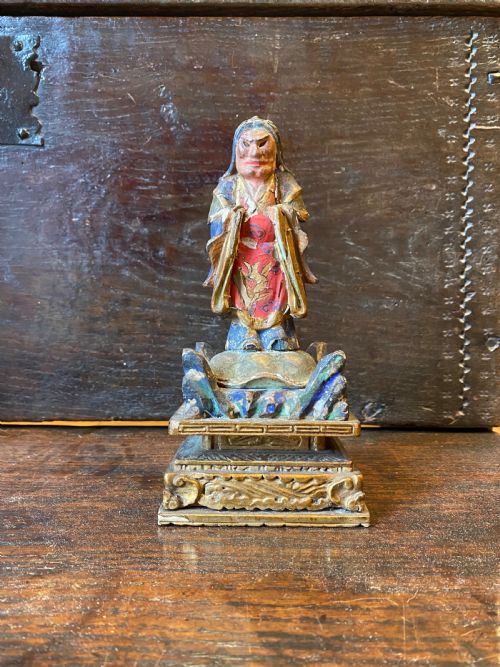
The most common examples encountered on this page are wooden figures, ranging from large temple guardians finished in gilt and polychrome to intimate root carvings and boxwood okimono. Alongside wood, buyers find pieces rendered in sandstone, terracotta, stone, alabaster, jade and bamboo, taking the form of freestanding statues, architectural panels and wall hangings.
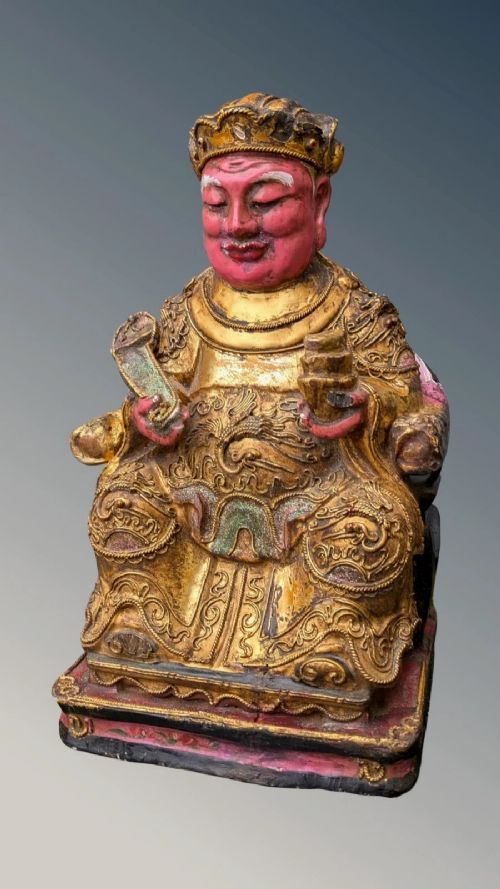
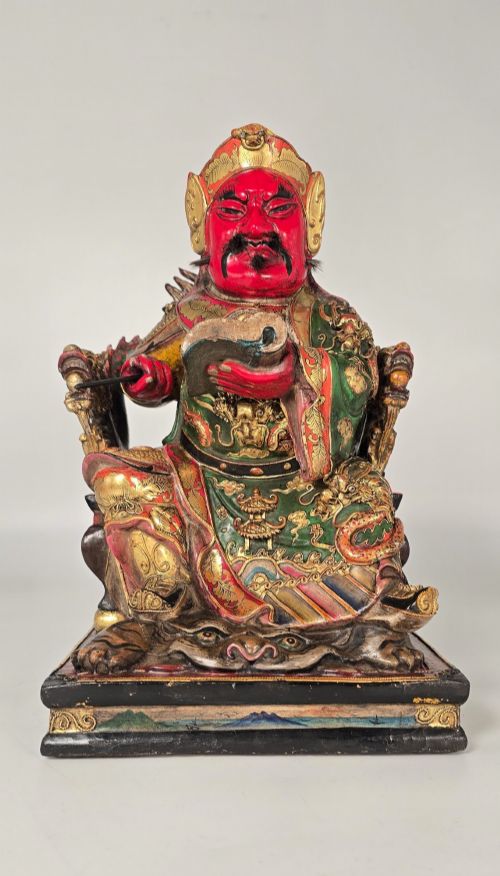
Forms represent significant spiritual and cultural icons, including depictions of Buddha, Quan Yin, temple guardians such as Zhenwu, and deities associated with wealth and happiness like Fukurokuju. Vishnu and other Hindu manifestations also appear, reflecting the broad geographic scope of the category.
Materials and Technique
Many wooden statues received surface treatments including layers of gesso, gold leaf, lacquer and polychrome pigment to enhance their visual impact. These applied finishes frequently show age-related craquelure and distress, reflecting centuries of exposure in religious or domestic settings.
Listings feature works spanning the 18th, 19th and early 20th centuries, rendered in wood, hardwood, stone, alabaster, terracotta, jade and bamboo.
Assessing Quality
The preservation of original surface treatments such as gilding, polychrome pigment and lacquer greatly influences the character of a piece. Examples that retain their authentic layered finishes with honest wear present higher visual coherence than those with later repainting.
The Oriental Carved Deity Glossary
- Polychrome
- Painted in several colours. This surface decoration is often found applied over gesso on wooden figures.
- Gilt
- Covered thinly with gold leaf or gold paint. Temple sculptures frequently utilise this technique to denote sacred status.
- Okimono
- A Japanese statuette carved for display in a room or alcove. These miniature carvings often depict deities or figures from folklore.
- Patina
- The surface sheen developed through age, handling and exposure. Good patina indicates organic wear on hardwoods and bamboo.
- Root carving
- Sculptural work shaped from the root mass of a tree. Artisans follow the natural twists of the wood to suggest figures and deities.
Oriental Carved Deity: Frequently Asked Questions
How do I care for a wooden deity?
Keep wooden and polychromed statues away from direct sunlight and rapid temperature fluctuations to prevent the wood and gesso from splitting.
Dust gently with a dry, soft brush and avoid liquid cleaners that might damage fragile historic pigments or gold leaf surfaces.
Where were these statues originally placed?
Many larger figures stood inside temples as guardians or objects of devotion, while others served in domestic shrines or scholar's rooms.
Architectural carvings and wall panels often formed part of larger structural woodwork within traditional buildings.
How do I distinguish between periods?
Dating relies on stylistic markers associated with specific dynasties or eras, such as Meiji period Japanese work or Qing dynasty Chinese figures.
Material analysis, tool marks and the natural ageing of the wood or stone provide further clues to a piece's age.
Are these pieces purely decorative?
While modern collectors display them as decorative art, these sculptures carried deep religious, philosophical and cultural significance for their makers.
They represented divine protection, prosperity and scholarly pursuits within their original cultural contexts.