



Oriental Bronze Urn Pair
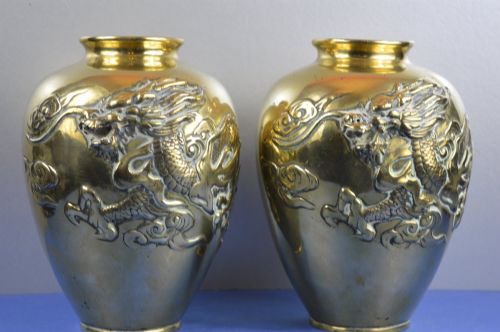
These oriental bronze urn pair selections bring heavy patinated metalwork and intricate casting straight from nineteenth-century Japanese and Chinese workshops into modern interiors.
Oriental Bronze Urn Pair
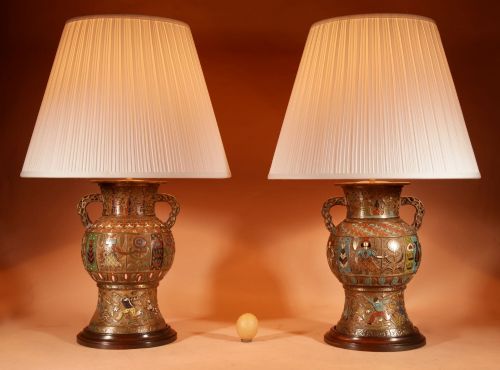
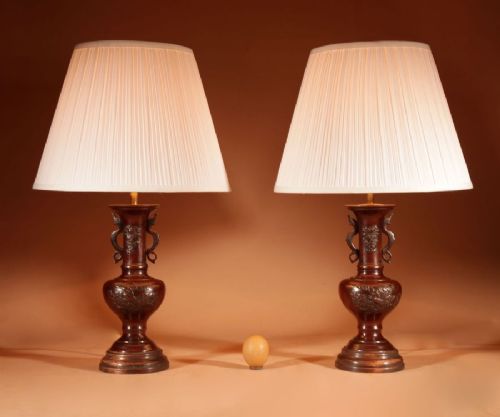
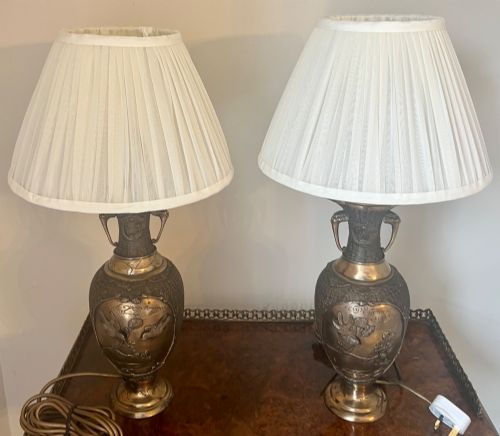
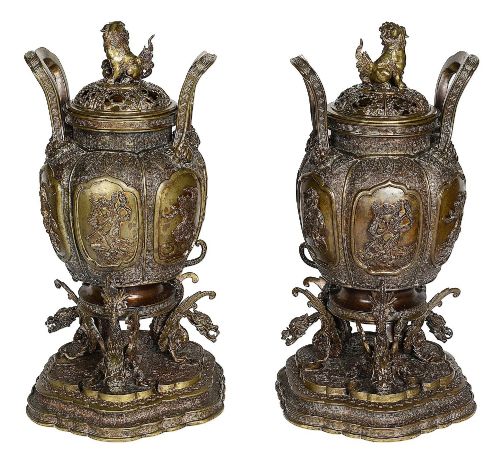
When buyers search for an oriental bronze urn pair, they encounter matching vessels cast in bronze, brass, and patinated metal originating mainly from the Meiji period, Qing dynasty, and Victorian eras. These symmetrical sets typically function as decorative vases, lidded vessels, garden urns, or table lamps adapted with electrical fittings.
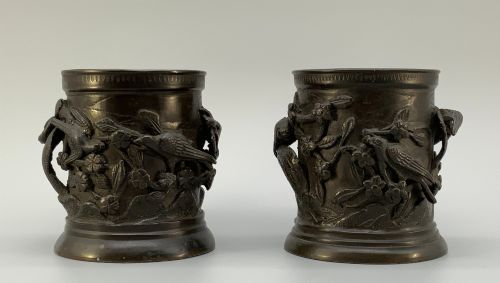
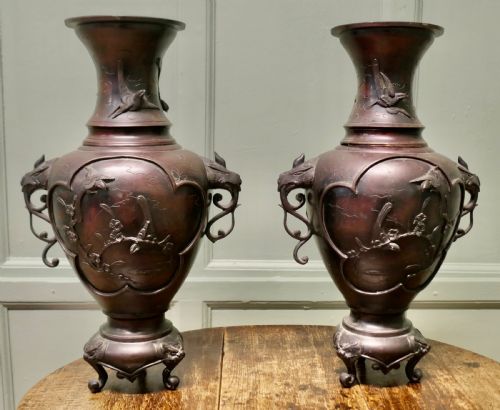
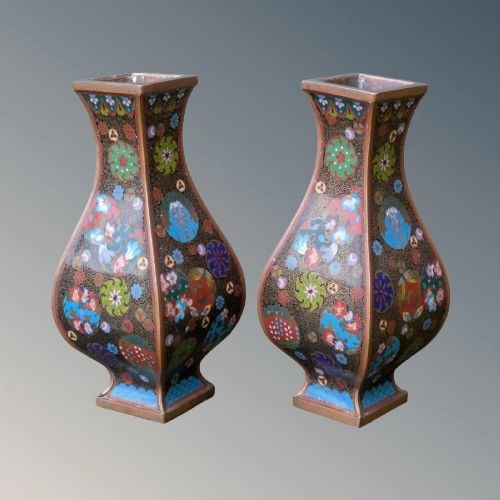
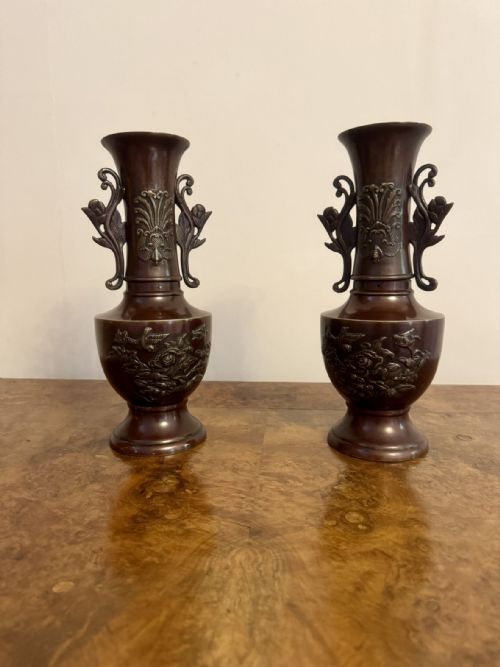
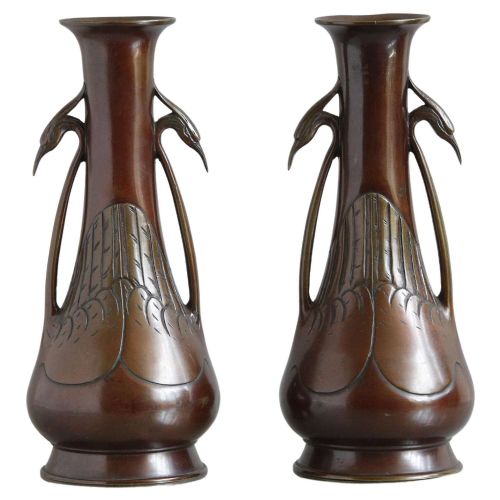
Japanese examples dominate the selection, frequently displaying raised mixed metal details depicting birds, blossoms, and egret handles, alongside Chinese cloisonné and champlevé enamel variations.
How they were made
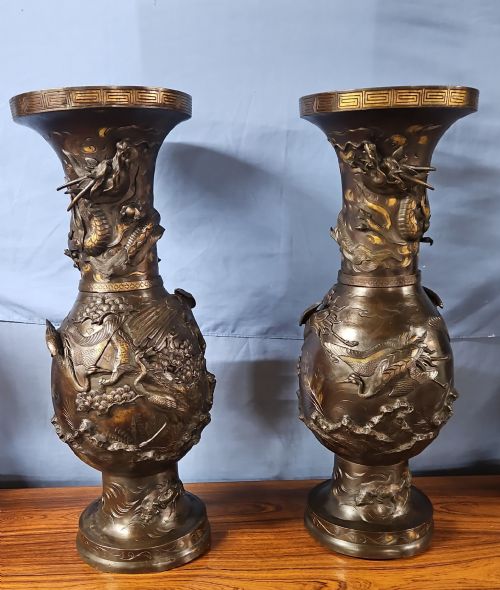
Artisans utilised traditional casting techniques in bronze, incorporating applied elements in copper, brass, and gilt bronze to create high-relief surface decoration. Many vessels integrate champlevé and cloisonné enamel work, where coloured glass pastes fill wire compartments before firing.
Makers also applied chemical patination treatments to achieve dark brown and aged metallic finishes, occasionally pairing the heavy metal bodies with carved wood bases or gilt ormolu mounts.
Several heavy pairs weigh up to eight kilograms, proving that nineteenth-century artisans took weight training very seriously.
What varies in quality
Quality rests upon the crispness of the chased and raised detail work, particularly in mixed metal applications showing birds, flora, and dragons. Heavier weights indicate substantial metal casting rather than thin production, while precise enamel work without pitting distinguishes finer workshops.
Symmetry between matching pairs and the integrity of original patination significantly separate standard decorative items from superior period examples.
The Oriental Bronze Urn Pair Glossary
- Meiji Period
- The era in Japanese history spanning from 1868 to 1912, noted for exceptional bronze casting and mixed metal decorative arts. Works from this time often exhibit detailed flora and fauna motifs.
- Champlevé
- An enamelling technique where troughs or cells are chiselled directly into the bronze surface and filled with vitreous enamel before firing. This method produces robust coloured patterns alongside exposed metal lines.
- Cloisonné
- A method of decorating metal objects by soldering flat metal wires to the body to create compartments that receive enamel paste. The piece is then fired and polished to a smooth finish.
- Patinated Bronze
- Metal treated with chemical solutions to produce a controlled surface coloration, ranging from deep browns to greens. This finish protects the underlying alloy and creates an antique appearance.
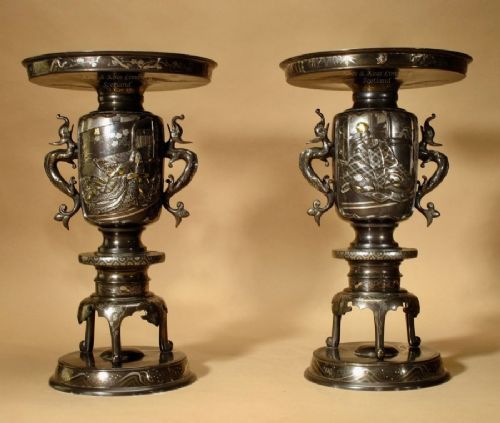
- Usubata
- A traditional Japanese bronze vessel form featuring a wide top basin, primarily utilised for formal flower arrangements. These garden and display urns often possess considerable weight and substantial proportions.
Oriental Bronze Urn Pair: Frequently Asked Questions
How do I clean antique bronze?
Dust surfaces gently with a soft dry cloth to preserve the historical patination and finish.
Avoid chemical polishes or water, which can strip away original patinas and damage delicate enamel or mixed metal inlays.
Are these urns waterproof?
Most antique bronze and cloisonné vessels feature construction methods intended for ornamental display rather than holding water.
Insert a small glass or plastic liner inside if you wish to use them for fresh flower arrangements.
How do I date Meiji bronze pieces?
Examine the casting quality, surface patination, and the style of mixed metal application across the pair.
Meiji period bronzes typically date between 1868 and 1912, often identified by signature plaques or characteristic avian and floral motifs.
Can I convert them into lamps?
Many large oriental bronze vases and urns undergo conversion into table lamps to suit contemporary interior lighting needs.
Ensure any wiring alterations respect the original metal body without drilling or compromising the structural integrity of the antique.