



Large Bronze Vases
When you search for large antique bronze vases, you enter a field defined by heavy metal casting, Japanese artistry, and European neoclassical design.
Large Bronze Vases
Large antique bronze vases encompass substantial decorative vessels originating primarily from nineteenth-century Japan, China, and Europe. Buyers seeking this phrase encounter heavy, sculptural pieces often intended as floor-standing garden urns, mantelpiece ornaments, or balanced pairs on solid bases.
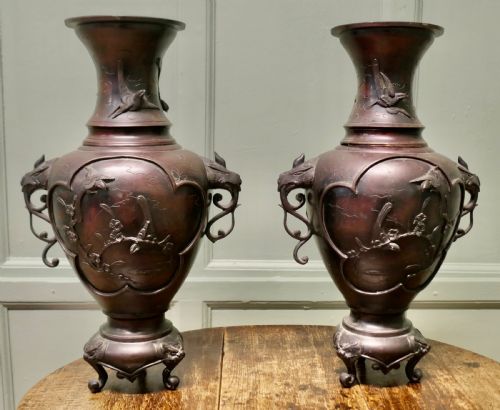
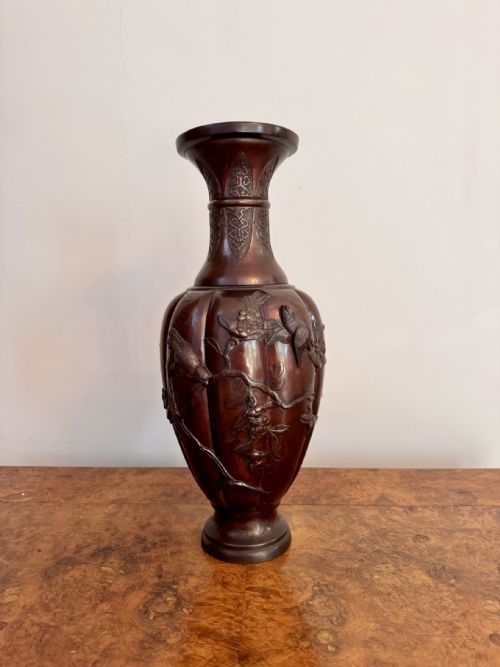
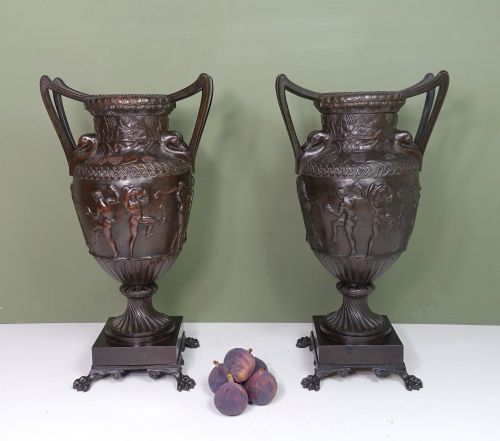
The Japanese Meiji period examples dominate the selection, featuring patinated surfaces, high-relief decoration, and mixed metal inlays. Alongside these, European Neoclassical grand tour urns and French campana-shaped models appear frequently across the inventory.
Materials and construction methods
Makers utilised traditional lost-wax casting and sand-casting techniques to shape heavy copper alloys and bronze, achieving considerable weight often exceeding several kilograms per vessel. Artisans then applied surface patination, chemical treatments, or gilding to create depth and tone.
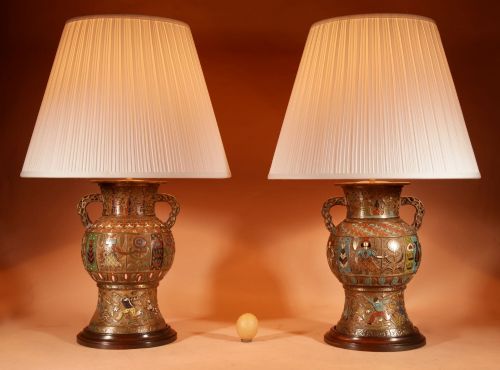
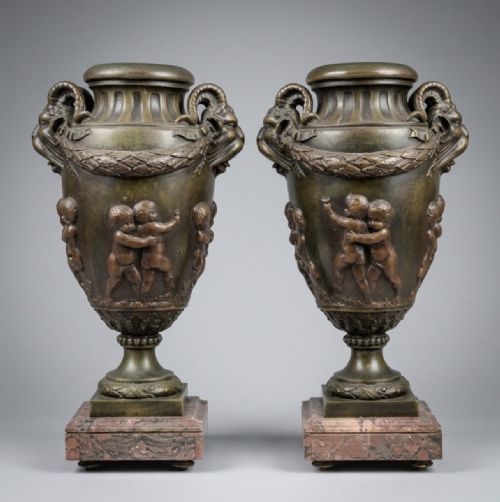
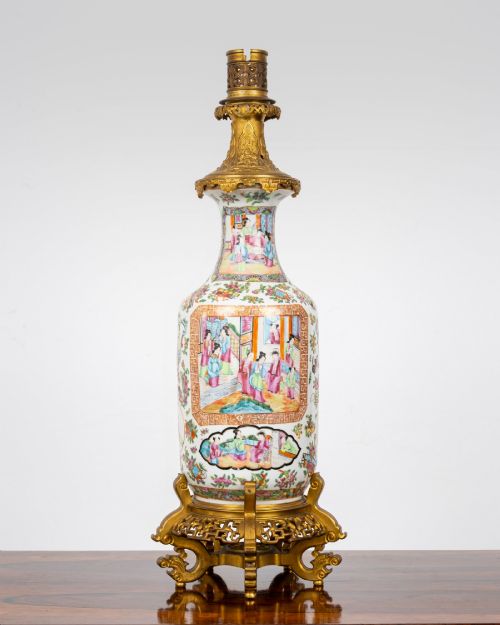
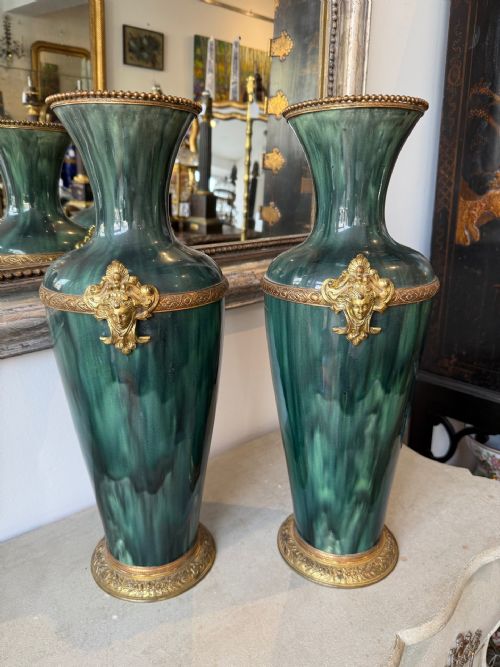
Many Eastern pieces incorporate intricate cloisonné and champlevé enamel work, fusing glass pastes into metal wire cells before firing and polishing. European examples frequently combine cast bronze or ormolu mounts with contrasting materials such as white marble, porcelain, and patinated spelter.
Listings feature 19th-century and early 20th-century pieces, including Victorian and Meiji period works in bronze, brass, porcelain, and marble.
Factors of distinction
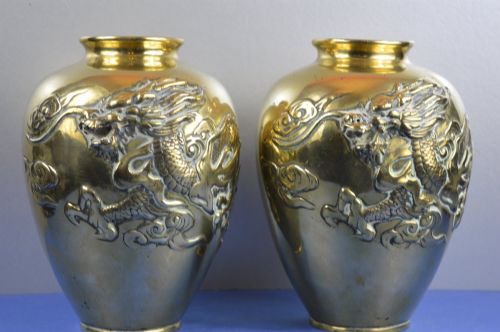
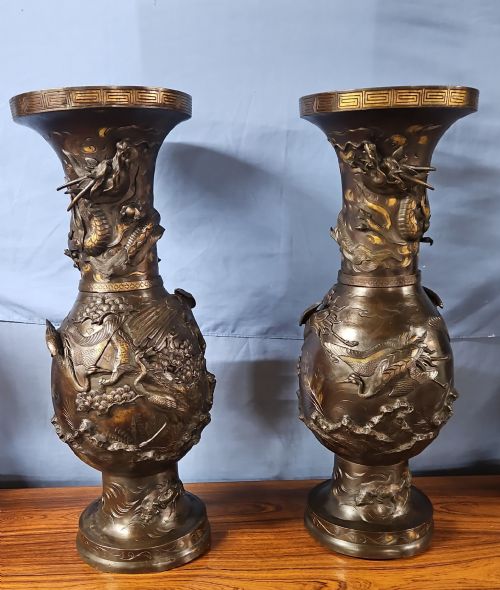
Quality rests upon the crispness of the chasing, the depth of relief work, and the integrity of the original surface patination. Superior Japanese Meiji pieces demonstrate meticulous hand-finishing, where fine details in foliage, figures, or dragons remain sharp and distinct.
The weight of the metal and the precision of the joinery between bronze mounts and stone or porcelain elements separate standard production from exceptional studio work. Original components, uncompromised patinas, and intact enamel or inlay work distinguish finer survivals.
Paul Dachsel
The Large Bronze Vases Glossary
- Meiji Period
- The era in Japanese history spanning from 1868 to 1912, characterised by an opening to Western trade and exceptional metalwork production. Vases from this time often exhibit dynamic naturalistic motifs and advanced patination.
- Ormolu
- Gilt bronze, referring to a gold-coloured metallic coating applied to bronze objects, popular in French decorative arts. This technique protects the underlying metal while adding a brilliant reflective finish.
- Usubata
- A specific Japanese bronze vessel shape featuring a wide, flat basin supported by a pillar and broad foot, traditionally used for ikebana flower arrangements. They frequently appear as garden or temple urns in large formats.
- Cloisonne
- An enamelling technique where metal wires are soldered to a bronze base to create compartments filled with coloured glass paste. The piece is then fired and polished to a smooth surface.
- Grand Tour
- A nineteenth-century tradition where wealthy travellers collected classical antiquities, inspiring miniature or full-scale bronze reproductions of famous archaeological vases. These pieces often draw on ancient Roman and Greek designs.
Large Bronze Vases: Frequently Asked Questions
How were large bronze vases used originally?
These large vessels served primarily as decorative focal points within nineteenth-century drawing rooms, halls, and gardens. Many functioned as display urns, while specific forms like usubata held formal floral arrangements.
In European interiors, heavy campana urns and cassolettes occupied prominent spaces on pedestals or mantelpieces. Over time, a number of these pieces underwent conversion into table lamps or wiring for electrical illumination.
How do I distinguish Japanese from European pieces?
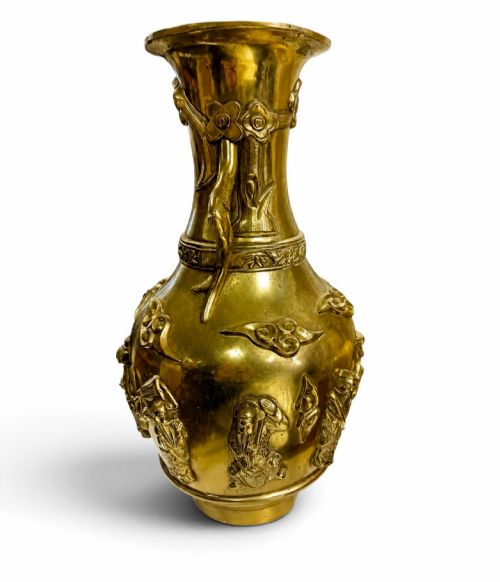
Japanese examples from the nineteenth century typically display patinated bronze surfaces, high-relief casting of flora and fauna, and sometimes mixed metal inlays or enamel work. Signature motifs include dragons, Daoist immortals, and naturalistic landscapes characteristic of the Meiji period.
European pieces lean heavily on classical vocabulary, showing neoclassical motifs, campana profiles, or ormolu mounts paired with marble and porcelain. They frequently emulate ancient Roman models associated with the grand tour tradition.
What is patinated bronze?
Patinated bronze refers to metal treated with chemical solutions, heat, or natural weathering to produce a controlled surface colour and texture. This process transforms the raw metallic sheen into rich browns, deep blacks, or mottled greens.
A stable patina protects the underlying bronze alloy and adds visual depth to the chased relief details on the body of the vase.
Can these heavy vases safely sit outdoors?
While certain monumental Japanese temple vases and garden urns were designed to withstand external elements, most antique bronze and mixed-media pieces suit interior display best. Exposure to moisture and temperature fluctuations can harm delicate enamels, gilding, and marble bases.
Checking the specific material composition helps determine whether a heavy vessel can endure garden conditions or requires indoor placement.