
Large Metal Garden Planters
Large metal garden planters bring scale and character to grounds, drawing on centuries of robust utility.
Large Metal Garden Planters
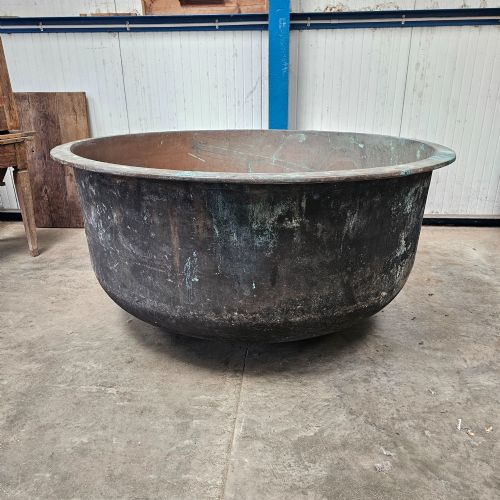
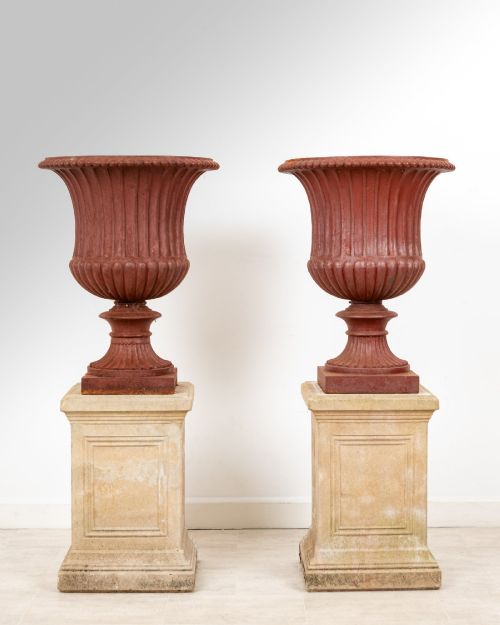
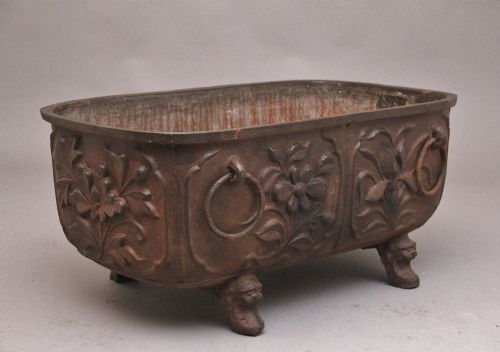
Large metal garden planters comprise substantial vessels originating primarily from the nineteenth century, alongside eighteenth-century and mid-twentieth-century examples. Buyers encountering these pieces will find heavy cast iron urns, robust copper pots, zinc vessels, and wrought iron garden planters designed for outdoor display.
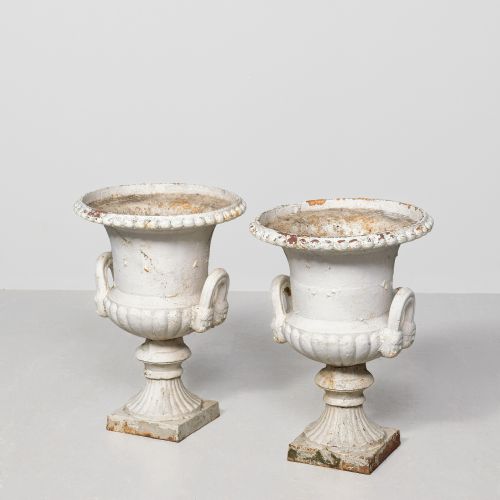
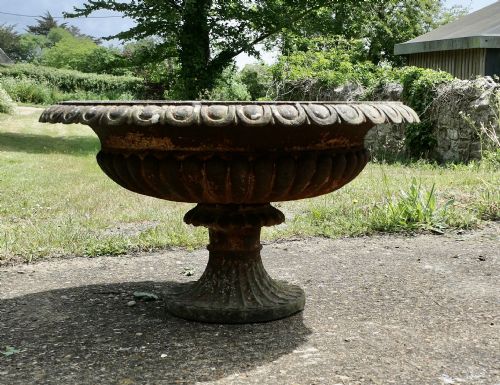
These items span forms such as Campagna urns, tazza urns, wash tubs, cheese vats, log bins, and garden jardinieres. The selection balances utilitarian vessels adapted for horticulture with decorative neoclassical urns intended for formal grounds.
Origins range across English, French, and Asian workshops, incorporating items like Chinese cast iron temple baths and Japanese bronze usubata garden urns. The predominant aesthetic leans towards Victorian industrial, rustic farmhouse, and classical styles.
Materials and construction methods
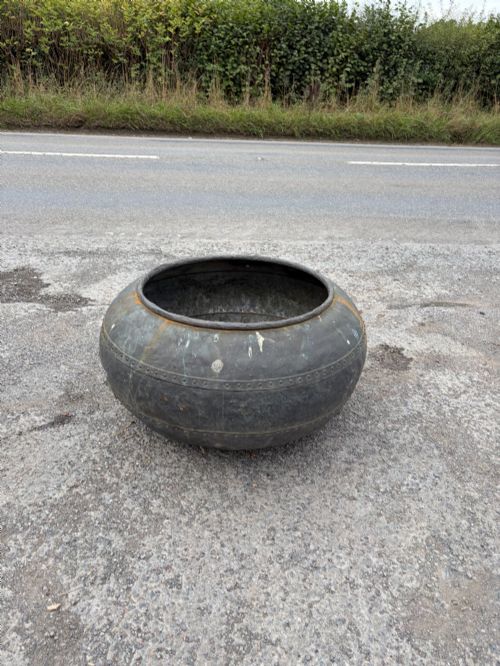
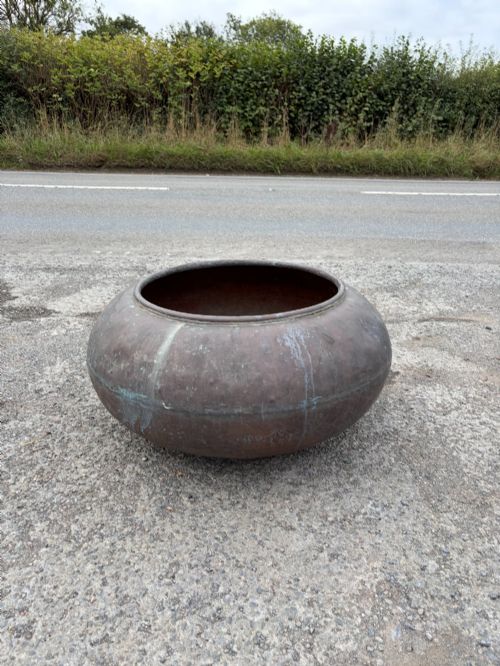
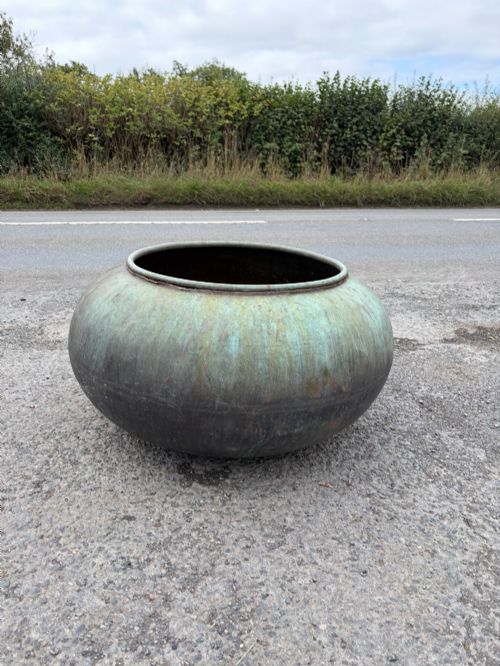
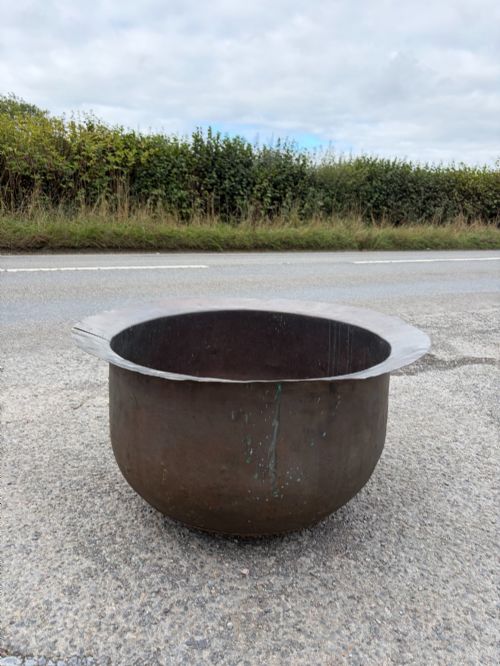
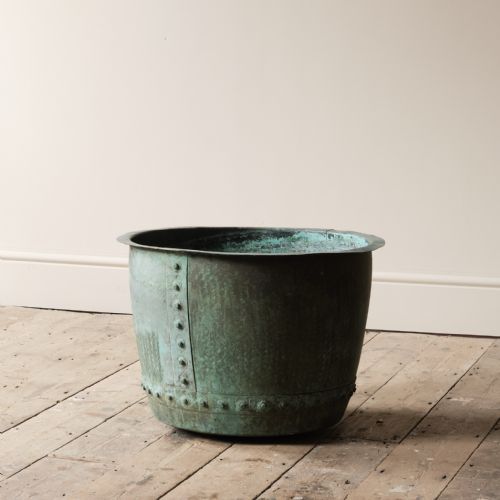
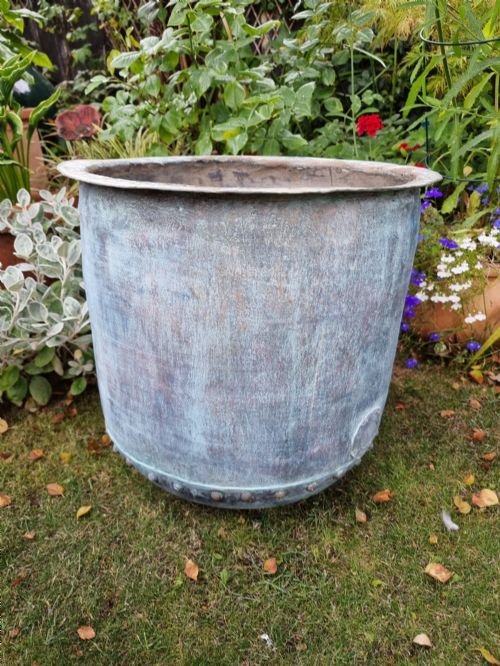
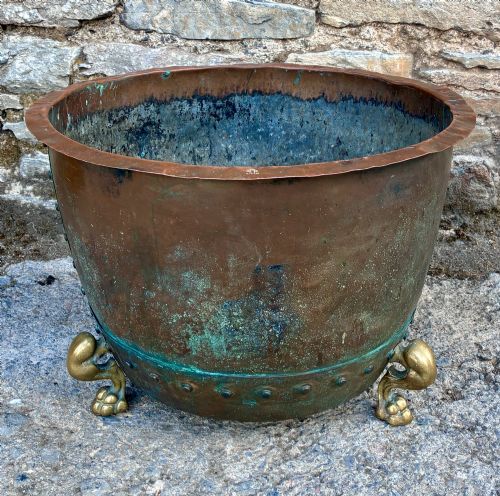
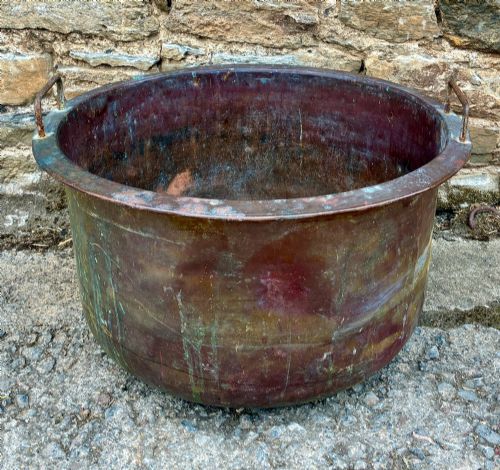
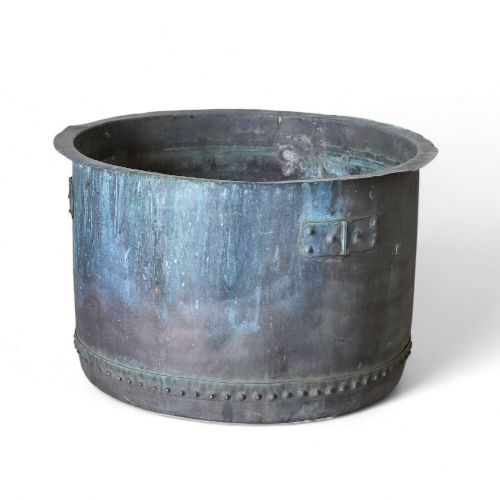
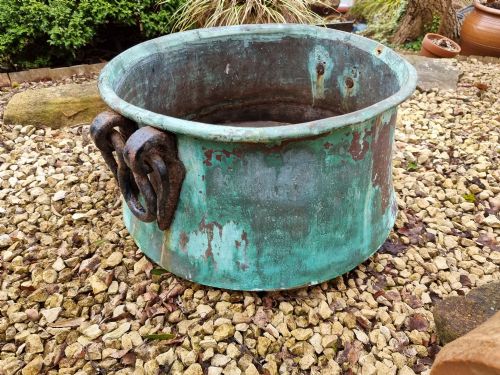
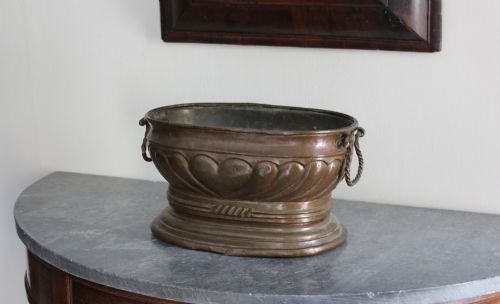
Copper vessels rely on hand-riveted sheet metal construction, often featuring swing handles and applied verdigris finishes resulting from long exposure to the elements. Cast iron and bronze examples utilise traditional foundry casting, producing heavy, durable bodies with crisp relief detail and monumental presence.
Secondary materials include wrought iron for structural stands and handles, zinc for corrosion-resistant sheeting, and lead for durable ornamental jardinieres. Surfaces display natural patinas, old paint layers, and weathering accumulated over decades of use.
Several large copper pots spent their earlier lives boiling cheese or washing laundry before retiring to the herbaceous border.
Determinants of quality
Quality rests upon the integrity of the original casting or hand-riveting, where crispness of detail on iron urns and neatness of hand-hammered seams on copper pots distinguish finer workshop output. Depth of natural patina, the presence of matching pairs, and structural intactness without modern repairs elevate certain pieces above standard utilitarian stock.
Proportion and scale dictate desirability, particularly in monumental garden ornaments where neoclassical design elements align harmoniously. The survival of original surface finishes, such as aged verdigris or historic paint, contributes substantially to the character of the piece.
Andrew Handyside
The Large Metal Garden Planters Glossary
- Campana urn
- A bell-shaped garden vessel popular in classical and nineteenth-century design, mounted on a pedestal base. These pieces frequently appear in cast iron for garden display.
- Verdigris
- A green patina formed naturally on copper, brass, or bronze through atmospheric oxidation. This surface layer develops over long periods outdoors.
- Tazza
- A shallow cup or urn form raised upon a stem and foot, often cast in iron for Victorian garden use. They provide a wide opening for planting.
- Usubata
- A traditional Japanese bronze vessel type utilised for floral arrangements and garden display. Examples often feature distinct ritual or decorative motifs.
- Log bin
- A deep metal container, typically fashioned from copper with riveted seams, repurposed from industrial or domestic storage into a garden planter.
Large Metal Garden Planters: Frequently Asked Questions
Can these metal planters stay outside all year?
Most heavy cast iron, copper, and zinc vessels withstand outdoor conditions indefinitely, developing further patina through exposure to weather.
Porosity is rarely an issue with solid metal, though ensuring adequate drainage prevents water accumulation during freezing winter months.
How do I clean a copper garden planter?
Washing with mild soapy water and a soft brush removes dirt while preserving the stable underlying surface layers.
Harsh chemical polishes should be avoided to keep the desirable weathered verdigris intact.
Are cast iron urns too heavy for a patio?
Cast iron and lead pieces possess considerable weight, which provides stability against wind when placed on terraces or lawns.
Placement should be planned carefully before positioning, as large urns require multiple people or equipment to move safely.
How are nineteenth-century copper pots dated?
Dating relies on construction methods such as hand-riveting techniques, handle attachment styles, and recorded workshop practices of the period.
Matching the specific form, such as wash tubs or cheese vats, against known nineteenth-century typologies also aids verification.