



Oriental Bronze Table Lamp
An oriental bronze table lamp brings weight, intricate pattern and centuries of East Asian design directly into a room.
Oriental Bronze Table Lamp
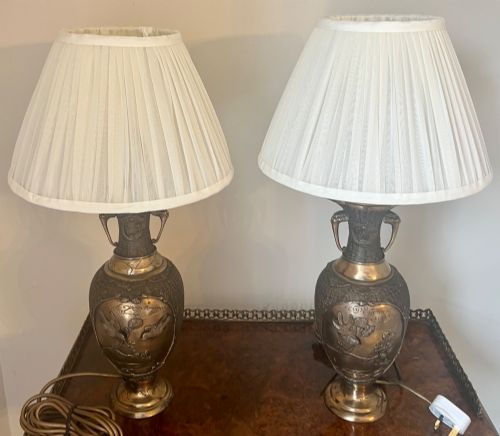
An oriental bronze table lamp gathers together heavy cast metal vessels, converted oil lamps and decorative vases wired for modern interiors. These pieces draw from Meiji period Japanese metalwork and Chinese export traditions, shifting from nineteenth-century origins into early twentieth-century domestic lighting.
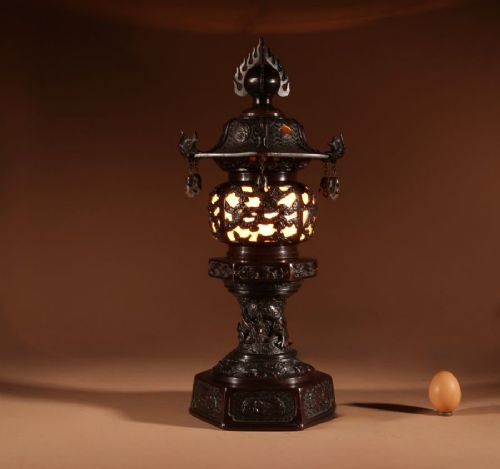
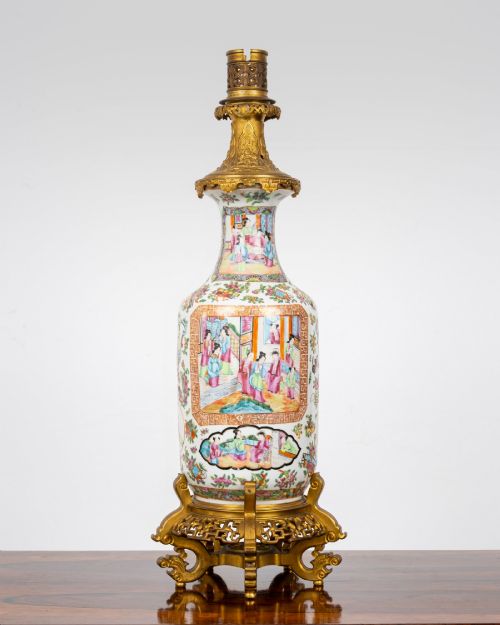
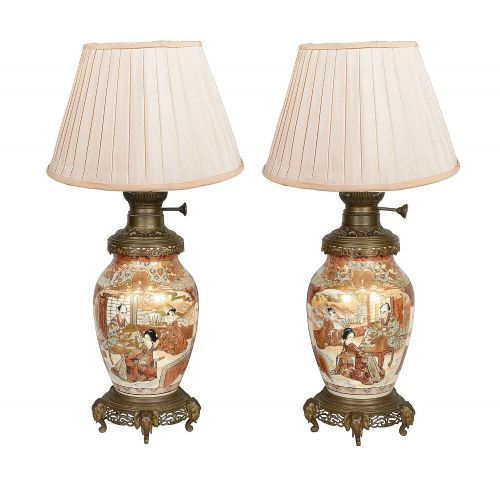
The most common examples on this page are Japanese bronze vases and lanterns from the Meiji period, alongside Chinese porcelain vessels mounted in gilt bronze or ormolu. Many started life as temple vessels, ceremonial lanterns or oil burners before receiving electrical fittings.
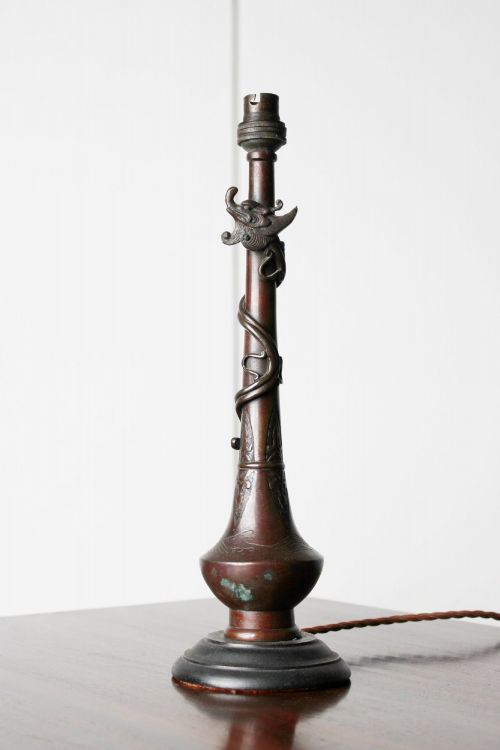
Forms range from simple baluster shapes to dragon-wrapped bodies, elephant figures and architectural hanging lanterns adapted for tabletop use. Buyers select them to anchor a room with dark patinated metal and hand-painted ceramic colour.
How They Were Made
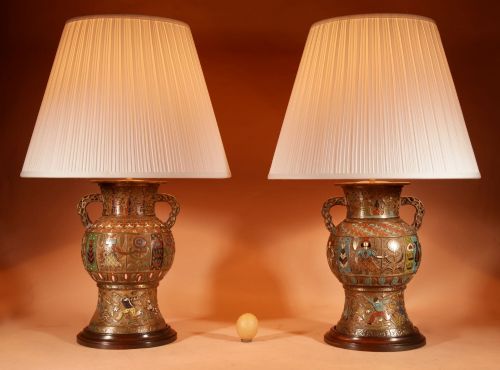
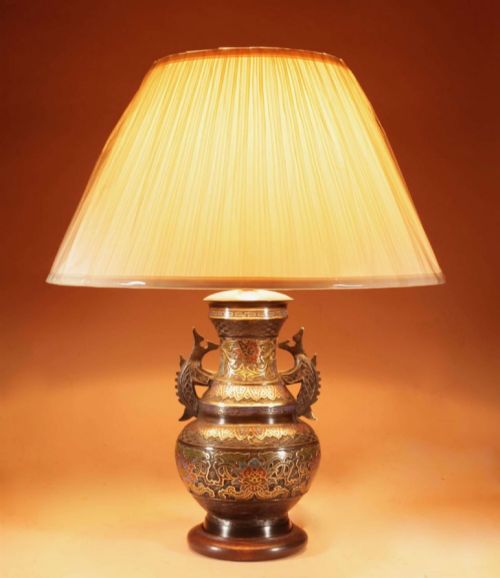
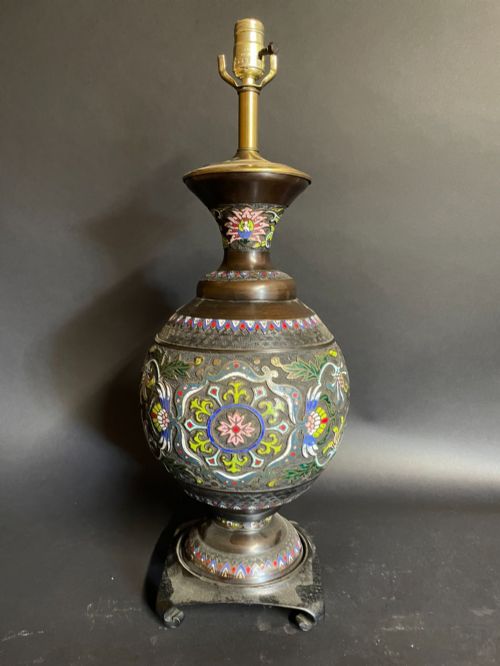
Maker workshops built these bodies primarily through lost-wax bronze casting or hand-thrown porcelain, later integrating brass components and silk fabric flex. Japanese artisans applied champlevé and cloisonné enamel directly into recessed bronze cells, creating intricate coloured surface patterns.
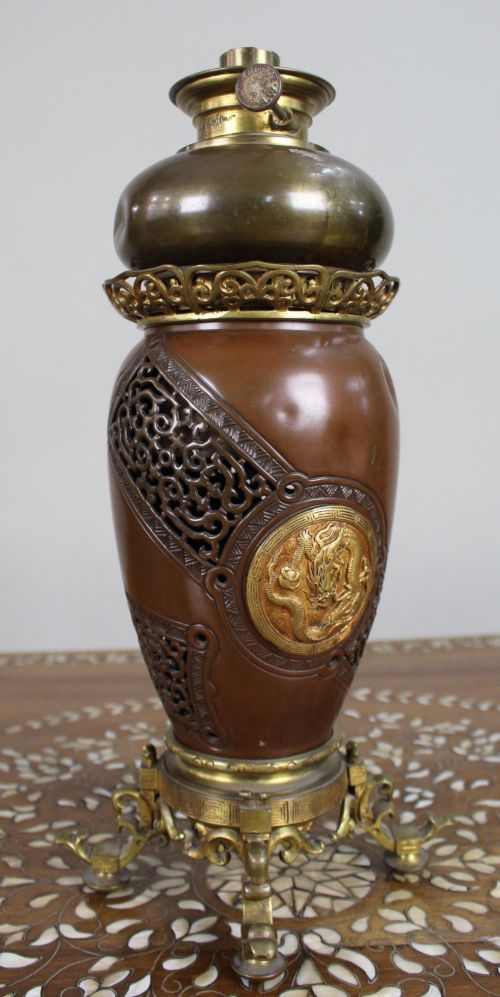
French and British mounting workshops subsequently added cast ormolu and gilt bronze mounts to imported Chinese celadon, rose medallion and blue and white vases. These metal collars and bases secured the wiring channels while unifying Eastern ceramic bodies with Western interior tastes.
Several lamps double as temple elephants, standing ready to illuminate the room while carrying their twentieth-century lamp fittings upon their backs.
What Varies in Quality
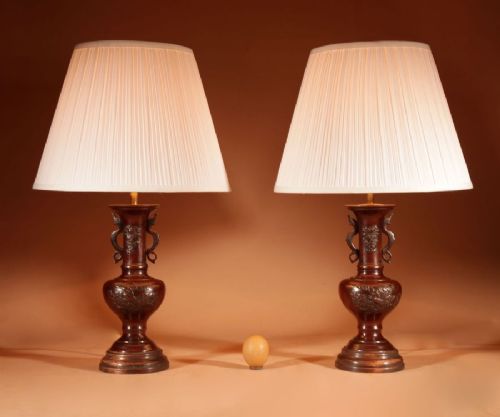
The distinction between ordinary and exceptional pieces lies in the crispness of the bronze casting and the depth of the original patina. Superior Japanese bronzes show sharply chiselled details on dragons and feathered elements, whereas lesser examples present softer, shallower surface relief.
Enamel work and ceramic painting also divide the range, with hand-poured champlevé and finely detailed Satsuma or Famille Rose palettes standing apart from simpler factory decoration. Furthermore, the integration of ormolu mounts reveals craftsmanship: top-tier mounts follow the exact contours of the porcelain vessel beneath.
The Oriental Bronze Table Lamp Glossary
- Champlevé
- Enamelling technique where artists gouge troughs into a bronze surface, fill them with vitreous paste, and fire the piece. This method produces bold coloured patterns bounded by raised metal lines.
- Cloisonné
- Decorative work created by soldering thin metal wires onto a bronze base to form compartments filled with enamel paste. The piece is then fired and polished smooth.
- Ormolu
- Finely ground high-zinc brass applied to cast bronze mounts through a mercury amalgamation process, or simply gilt bronze. It provides a bright gold finish that contrasts with dark patinated metal.
- Meiji Period
- The era of Japanese history lasting from 1868 to 1912, characterised by intense artistic production for both domestic use and Western export. Pieces from this time often display naturalistic motifs like dragons and foliage.
- Rose Medallion
- A style of nineteenth-century Chinese export porcelain featuring panels filled with figures, birds, and flowers rendered in pink and gilt enamels. These ceramics frequently appear paired with bronze mounts.
Oriental Bronze Table Lamp: Frequently Asked Questions
Are these lamps converted from old vessels?
Many oriental bronze table lamps began as vases, oil lamps or temple lanterns before receiving electrical wiring and brass fittings during the nineteenth or twentieth centuries.
This conversion process respected the original vessel, often utilising existing apertures or adding secure metal bases to house the electrical components.
How do I identify Meiji period bronzes?
Japanese Meiji period pieces typically display dense, naturalistic surface ornamentation, including dragons, elephants or floral relief cast in heavy dark bronze.
They often feature signature plaques or stamps embedded in the casting, alongside rigorous attention to symmetrical proportion and textured patination.
What styles of porcelain accompany the bronze?
The ceramic bodies paired with bronze mounts include nineteenth-century Satsuma earthenware, celadon greenware, blue and white export ware and Famille Rose palettes.
These vessels were frequently fitted with gilt bronze or ormolu collars by European workshops to serve as table lighting.
How do I care for antique bronze and enamel?
Maintain the patinated bronze and delicate enamel surfaces by dusting gently with a dry, soft cloth without applying commercial metal polishes.
Polishing compounds can strip the historic patina and damage the vitreous enamel fillings within champlevé and cloisonné cells.