
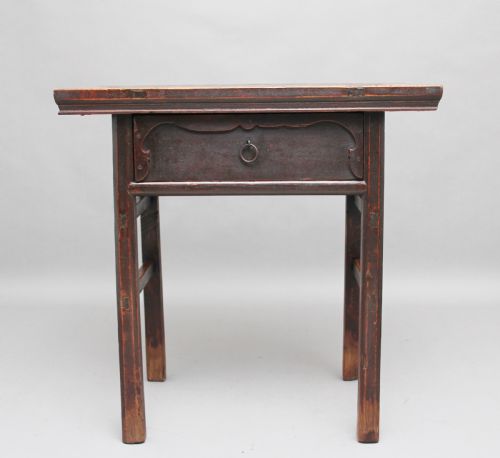


Oriental Altar Table Console
An oriental altar table console brings architectural line and centuries of ritual utility into a modern room through solid elm and dense hardwoods.
Oriental Altar Table Console
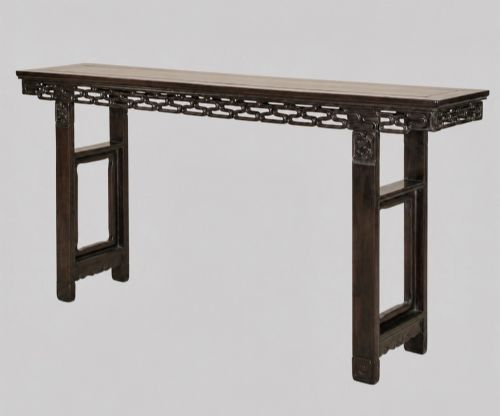
An oriental altar table console stands as a long, narrow surface traditionally shaped for temples and domestic halls, now serving narrow hallways and living spaces as a console or side table. The forms appearing here emerge primarily from the nineteenth century, with roots extending back through Qing Dynasty traditions and regional provincial workshops.
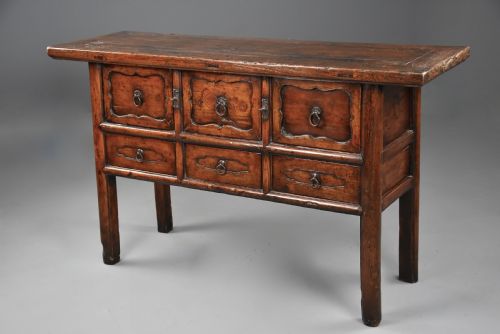
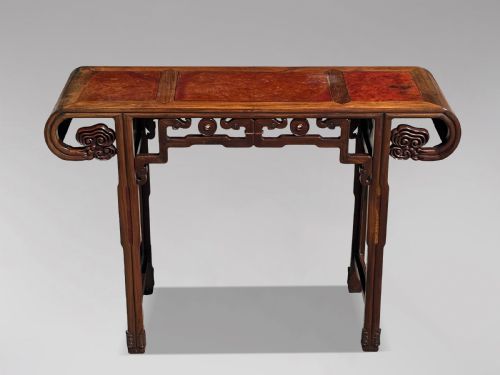
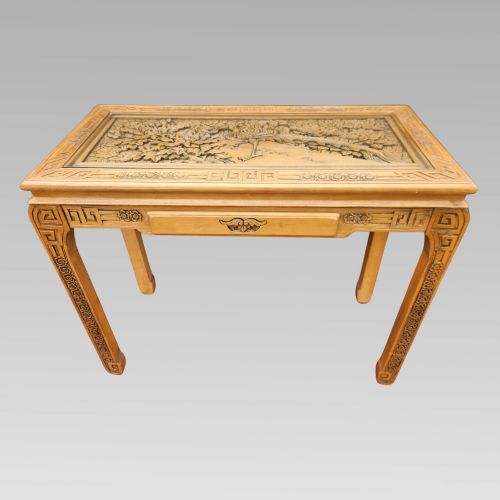
The pieces on this page span several closely related structural types, including dedicated altar tables with upturned flange ends, side tables, and occasional writing desks or small sideboards. Elm and dense Asian hardwoods dominate the selection, often complemented by inset marble panels or deep red lacquer finishes.
Buyers seeking this phrase encounter formats ranging from rustic elm boards with simple trestle legs to heavily carved hongmu and rosewood examples bearing traditional motifs. These tables function naturally against walls, carrying lamps, ceramics, or books while maintaining a slender footprint.
How they were made
Joinery forms the backbone of these pieces, relying on traditional frame-and-panel construction and complex interlocking joints that manage the natural expansion of timber without metal nails. Elm provides a resilient, fibrous structure suited to provincial tables, while dense hardwoods like hongmu and rosewood take crisp, deep chisel work for carved aprons and legs.
Surface treatments range from clear wax highlighting the natural grain of elm to pigmented lacquer layers built up over wood or composite bases. Marble panels, particularly rouge varieties, are fitted directly into recessed wooden frames to create smooth, cooling top surfaces.
Listings feature elm, hardwood, and lacquer materials spanning the nineteenth and early twentieth centuries, alongside marble-topped variants.
What varies in quality
The distinction between standard utility pieces and finer examples rests upon the density of the timber and the depth of the carving. Heavy hardwoods such as hongmu command greater attention than domestic elm due to their material weight and the precision required to shape them.
Proportion and restraint in the decorative carving separate masterwork pieces from commercial workshop output. Crisp relief work on the apron and balanced proportions in the leg placement indicate higher standards of construction.
The Oriental Altar Table Console Glossary
- Altar table
- A long, narrow ceremonial table characterised by upturned flanges at the short ends. These raised edges historically kept ritual vessels from sliding off.
- Hongmu
- A categorical term used in Chinese furniture for dense, heavy hardwoods that include various species of rosewood and padauk. The wood requires no heavy staining due to its rich natural colour.
- Flange
- The upward-curving projection at each short end of an altar table top. This architectural feature derives from early stone and lacquered temple architecture.
- Apron
- The decorative wooden skirt connecting the legs beneath the table top. Carved openwork or geometric bracing often decorates this structural zone.
- Qing Dynasty
- The final imperial dynasty of China, spanning from sixteen-forty-four to nineteen-twelve. Furniture from the late nineteenth century reflects the traditional craftsmanship of this era.
Oriental Altar Table Console: Frequently Asked Questions
How were oriental altar tables used?
These tables originally stood against interior walls in domestic halls or temples to support ceremonial objects, ancestral tablets, or ritual vessels. Their elevated ends helped secure items placed upon the surface.
In contemporary interiors, their narrow proportions make them practical for hallways, living rooms, and dining spaces where floor space is limited.
What is the difference between elm and hardwood tables?
Elm served as a primary domestic timber in Chinese furniture making, offering visible grain patterns and a lighter, fibrous structure. Provincial workshops utilised it widely for side tables and dressers.
Hardwoods such as hongmu and rosewood are significantly denser, heavier, and darker in tone. They allowed artisans to execute deep, intricate carvings that remain crisp over centuries.
How do I style a console table at home?
The long, shallow footprint makes these tables suitable for placement against plain walls or behind sofas. Pairing the timber surface with modern lamps or simple ceramics creates a visual balance between old and new.
Because the tables are narrow, keeping objects arranged thoughtfully along the centreline maintains their architectural lines without cluttering the surface.
How can I tell the age of these tables?
Dating relies on timber shrinkage, tool marks, and construction methods rather than strict timestamps. Nineteenth-century examples often display natural wear patterns and dry patinas on the wood surfaces.
Comparative analysis of Qing Dynasty structural habits and provincial joinery styles helps narrow down the period of manufacture.