
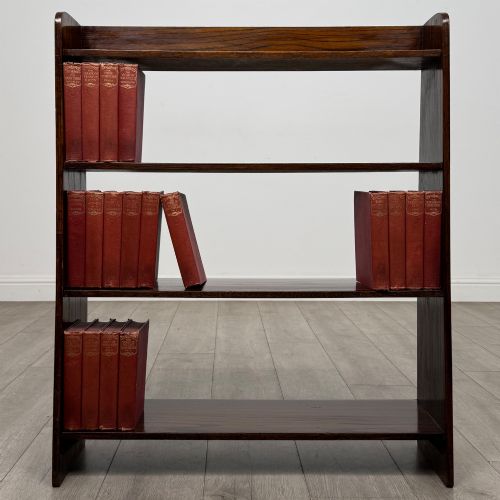
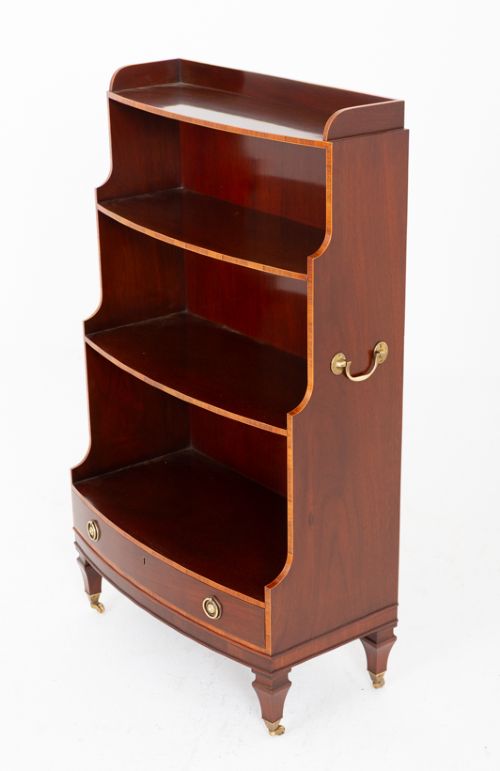
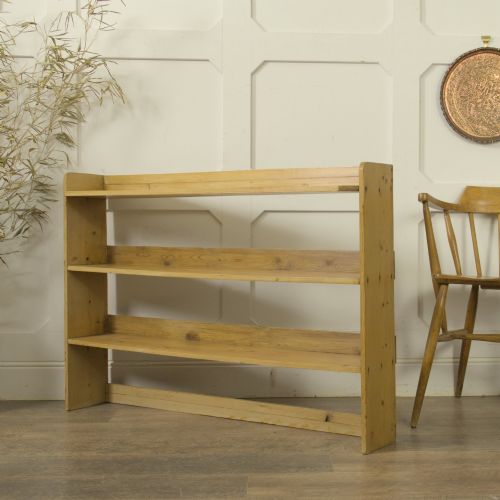
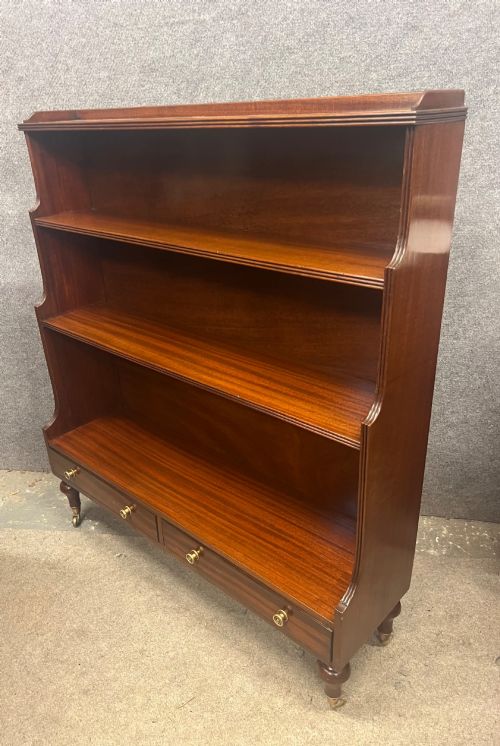
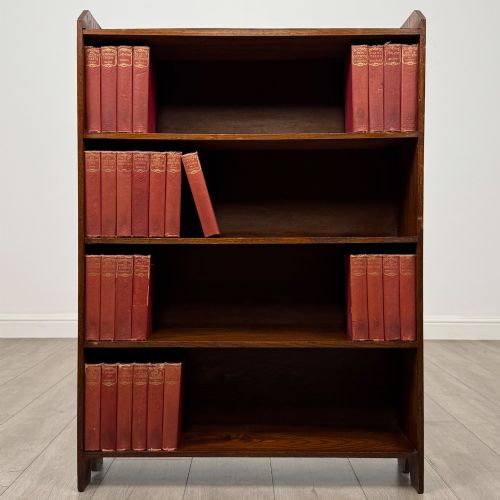
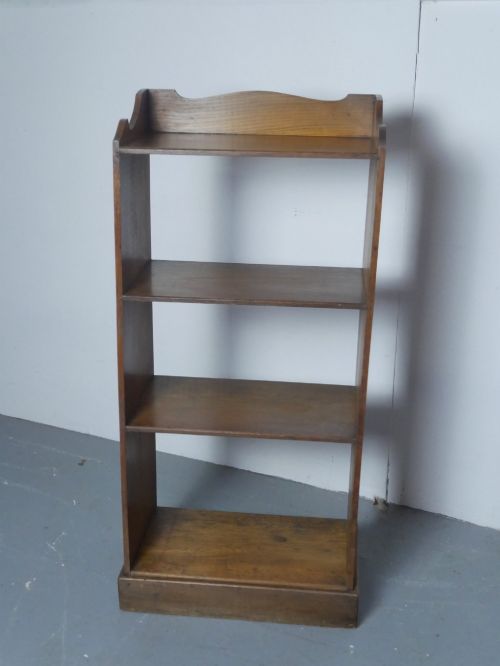
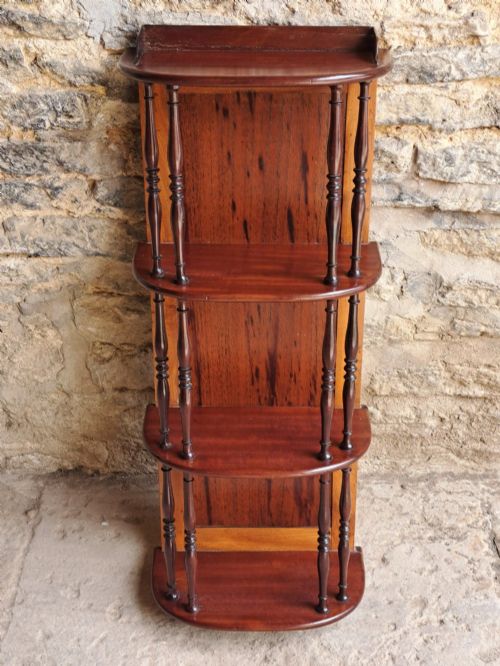
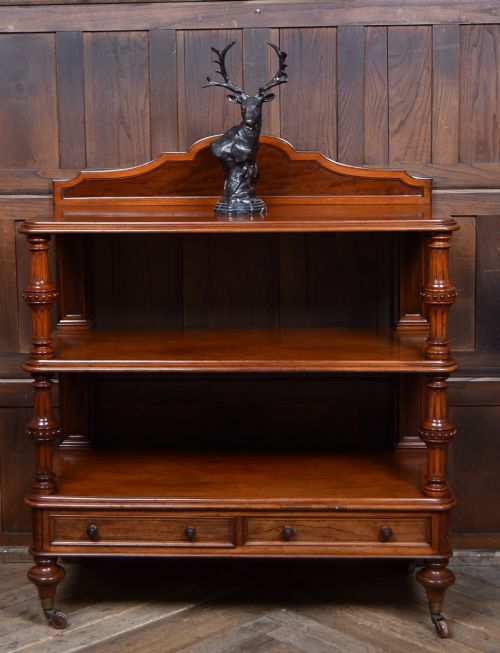
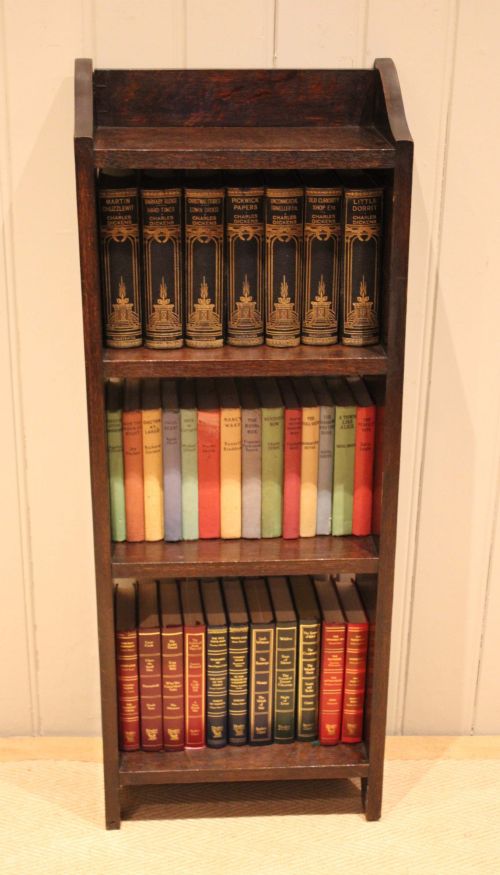
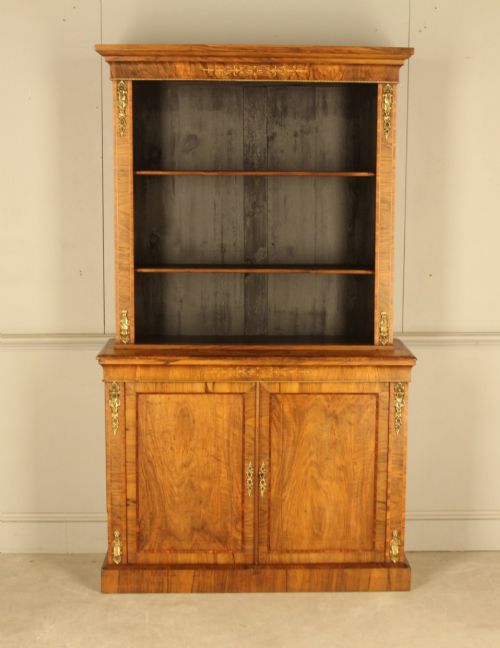
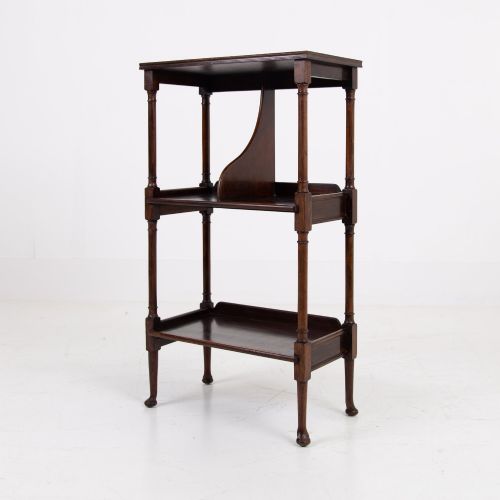
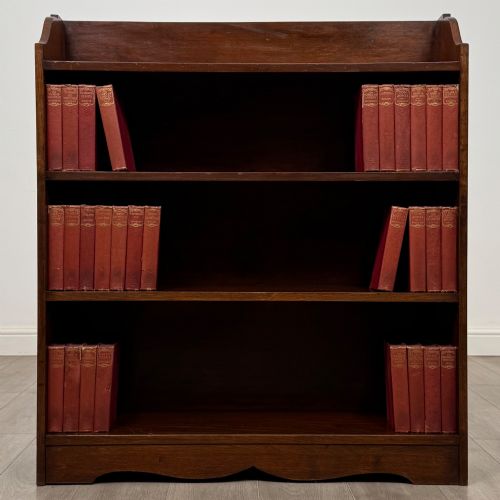
Open Tier Bookshelf
An open tier bookshelf brings books and display pieces together in timber ranging from rich rosewood to practical oak.
Open Tier Bookshelf
An open tier bookshelf serves as a practical yet decorative storage piece, offering tiered shelving that keeps volumes and objects accessible without doors or glazed panels. When you search for an open tier bookshelf, you encounter forms that span several historic periods including the Regency, Victorian, and Edwardian eras.
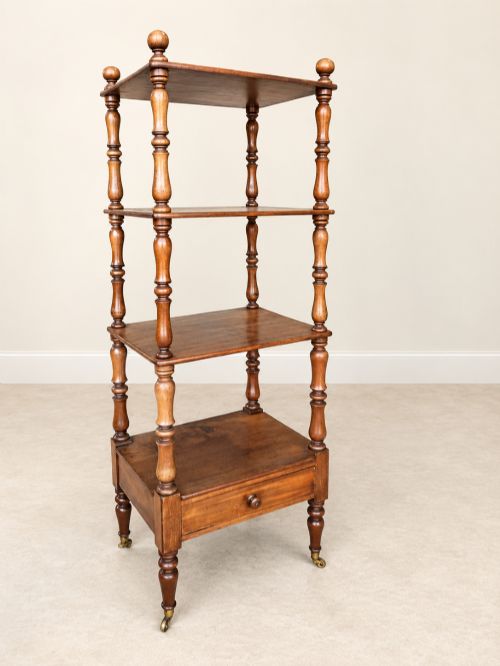
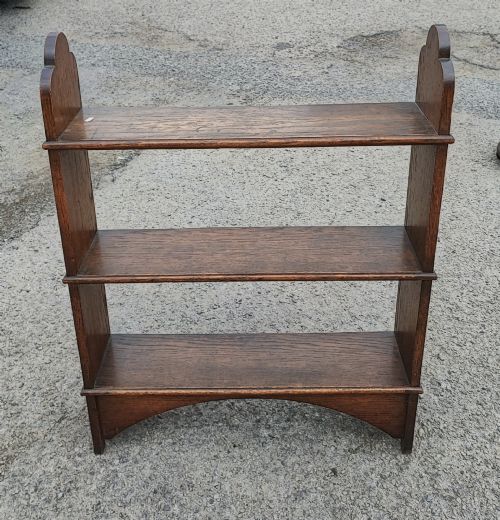
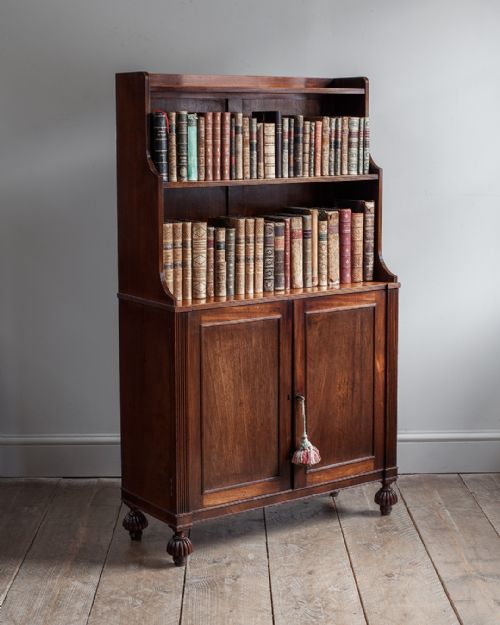
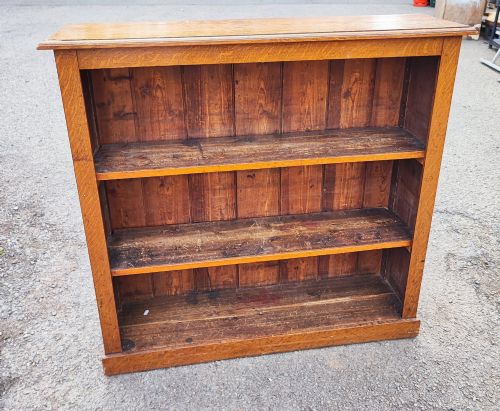
The pieces appearing on this page include sturdy oak bookcases, slender mahogany waterfall designs, and multi-tiered rosewood whatnots. Examples range from freestanding floor units to wall-hanging shelves and dwarf bookcases.
Makers and manufacturers from the nineteenth and early twentieth centuries produced these items in various woods such as walnut, satin birch, and yew. The selection reflects diverse aesthetic movements including Arts and Crafts and William IV designs.
Materials and Construction Methods
Cabinetmakers utilised hardwoods such as mahogany, rosewood, and walnut to build these tiered structures, often selecting figured veneers like burr walnut or incorporating crossbanding in satinwood. Solid oak and pine served for sturdier, functional utility pieces while brass fittings and ormolu mounts added decorative contrast.
Construction techniques included stepped tiers, fret-cut brackets, and integrated drawers or mirror backs on more elaborate whatnot forms. Certain pieces relied on brass castors for mobility, whilst others utilised wall-hanging brackets for elevated storage.
Several pieces are designated as ship's furniture, proving that Victorian readers required stability on the high seas.
Judging Quality in Tiered Shelving
The distinction between standard utility items and finer examples rests upon the selection of timber and the crispness of the joinery. Superior pieces display carefully matched veneers, refined fretwork, and thoughtful proportions rather than plain, heavy boards.
Refinements such as inlaid stringing, gilt mounts, and secondary woods like satin birch or yew indicate workshops operating at a higher standard. The integration of structural elements, such as well-turned upright supports and solid backboards, separates basic shelving from exhibition pieces.
Heals
The Open Tier Bookshelf Glossary
- Waterfall bookcase
- A tiered bookshelf where each successive shelf steps back from the one below it, creating a descending profile.
- Whatnot
- A multi-tiered open piece of furniture designed for displaying ornaments, books, or curiosities.
- Crossbanding
- A border veneer applied around the edges of a shelf or panel with the grain running perpendicular to the central wood.
- Fret-cut
- Timber pierced and shaped with decorative openwork patterns, commonly seen on brackets and gallery rails.
- Dwarf bookcase
- A low open shelving unit designed to sit beneath window height while providing accessible book storage.
Open Tier Bookshelf: Frequently Asked Questions
Where should I place an open bookshelf?
These units suit living rooms, studies, or hallways where books and decorative objects require accessible display space. Freestanding versions anchor well against plain walls while smaller hanging versions utilise vertical space in compact rooms.
Ensure the timber grain complements existing furniture within the room. Placement away from direct sunlight protects sensitive rosewood and mahogany finishes.
How do I distinguish a Victorian whatnot from a Regency bookcase?
Regency pieces often feature clean architectural lines, rosewood or mahogany timbers, and classical proportions. Victorian examples frequently incorporate heavier turned supports, carved details, burr walnut veneers, or mirrored backs.
Examining the secondary woods and construction methods helps confirm the manufacturing era. Regional variations, such as Irish exhibition pieces, display particularly elaborate carving.
What is the difference between a bookcase and a whatnot?
A bookcase focuses primarily on the horizontal storage of bound volumes. A whatnot acts as a multi-tiered stand intended for displaying a mixture of books, ceramics, and small ornaments.
Many tiered pieces bridge both categories, offering open shelving suitable for reading material alongside decorative gallery rails.