


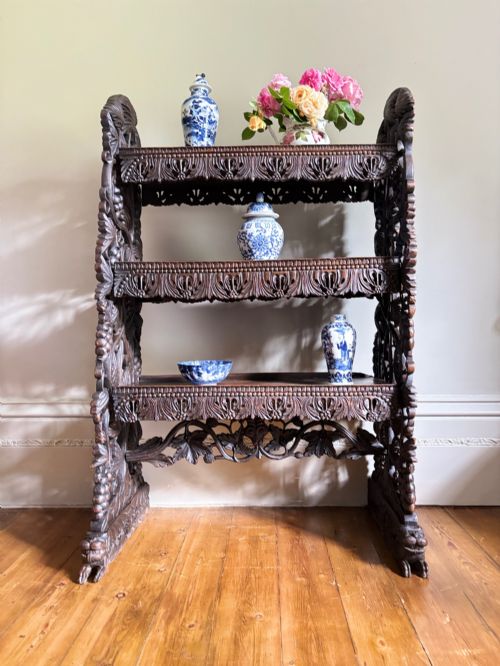
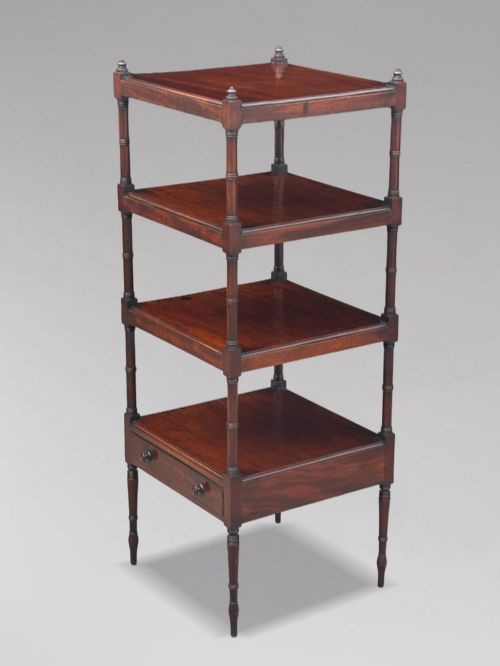
Etagere Display Shelf
An etagere display shelf holds objects in tiers, bringing open storage and vertical display to a room.
Etagere Display Shelf
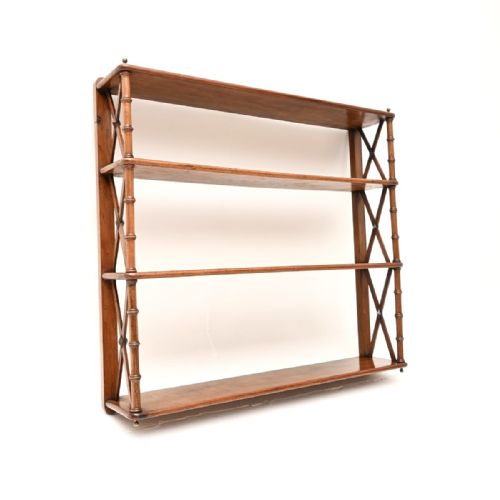
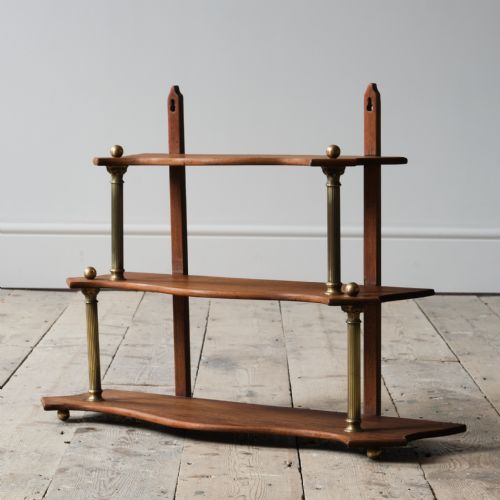
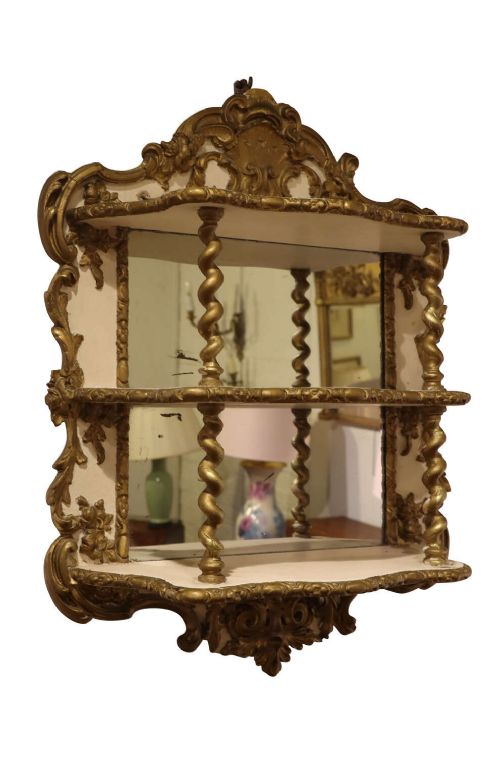
An etagere display shelf is a multi-tiered piece designed to hold books, ornaments or ceramics in an open format. When searching for an etagere display shelf, buyers encounter tiered structures ranging from corner units to wall-mounted shelves and freestanding bookcases.
The pieces on this page span the Regency, Victorian and Edwardian periods, with nineteenth-century examples dominating the selection. Makers built these tier units to utilise vertical space efficiently in drawing rooms and parlours.
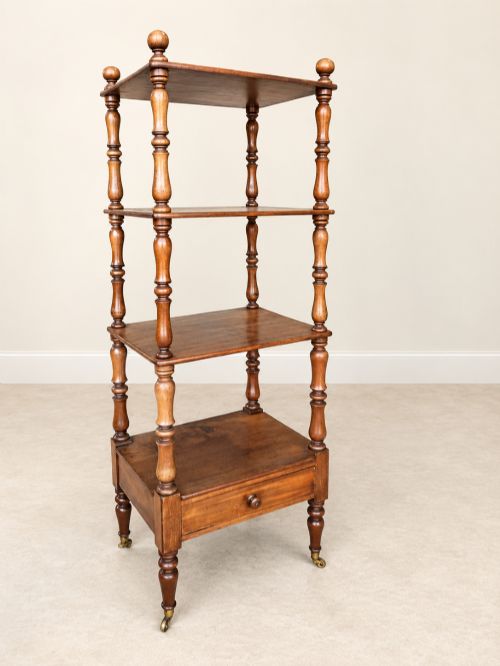
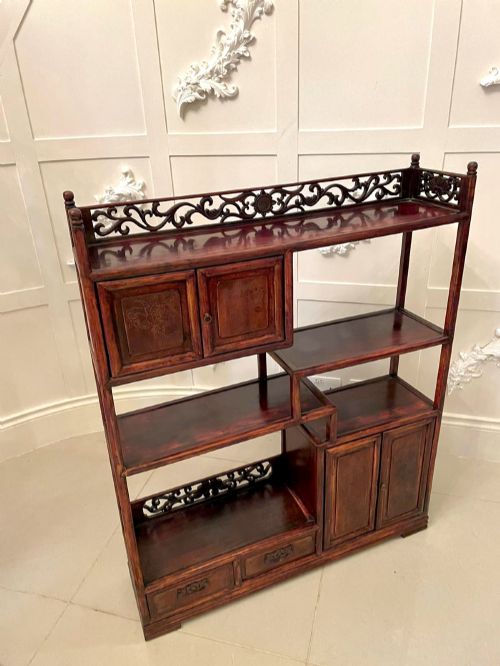
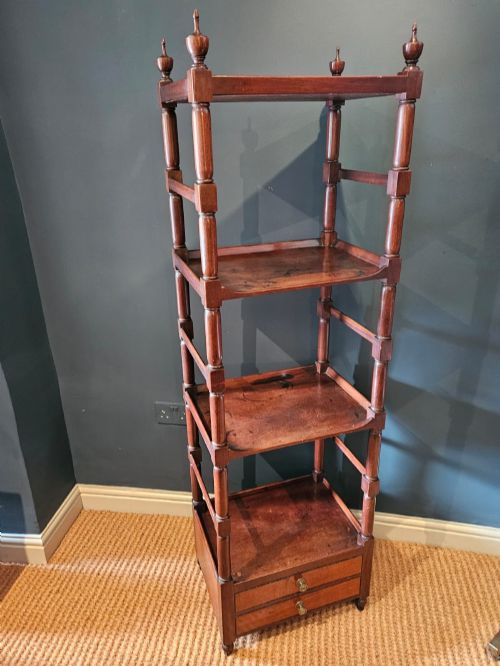
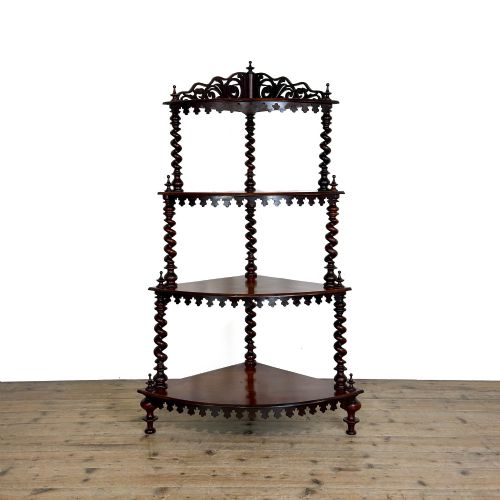
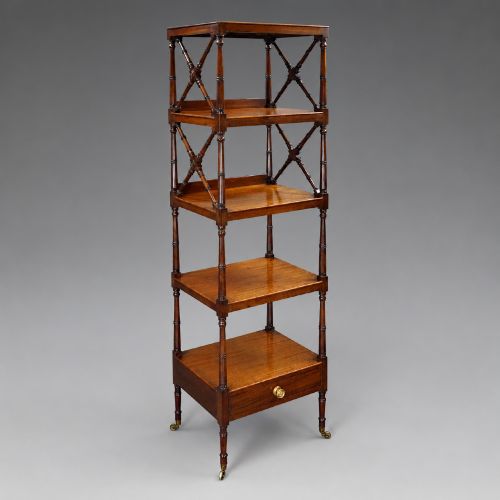
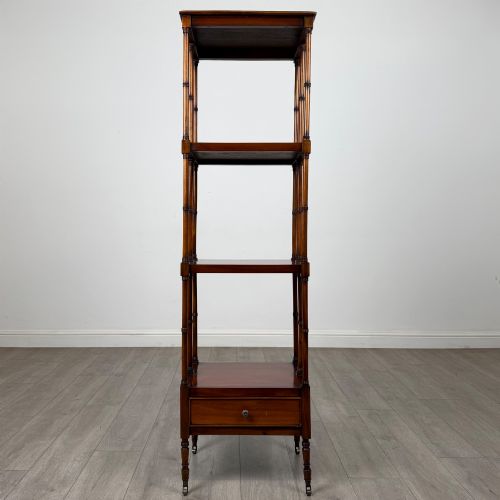
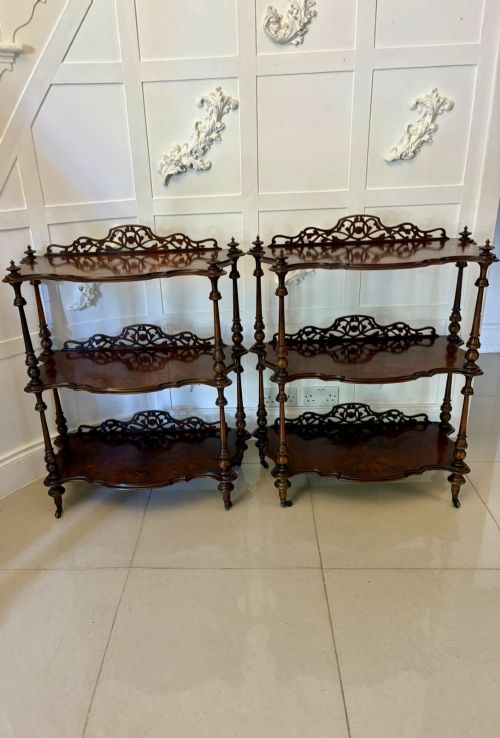
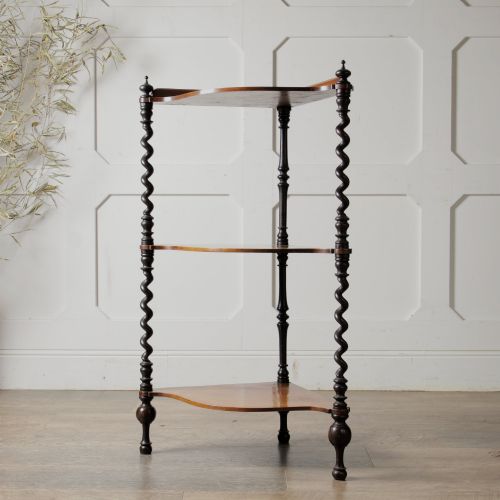
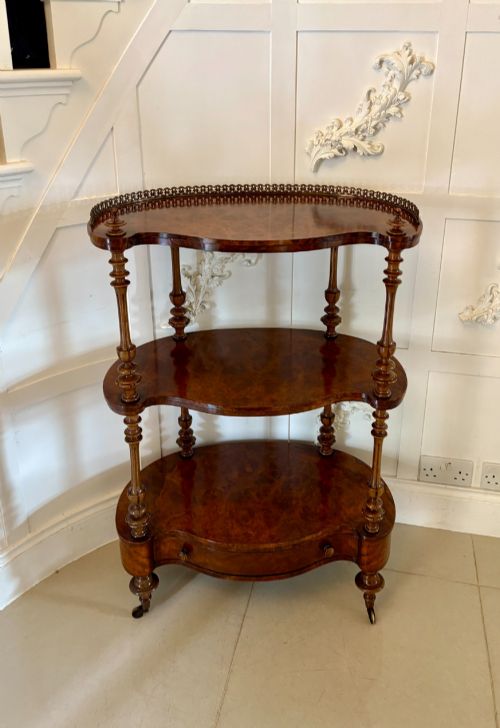
Forms include traditional whatnots, music cabinets, corner shelves and low buffets. Walnut, mahogany and rosewood dominate the construction, often featuring turned supports or barley twist columns.
Materials and construction
Cabinetmakers utilised dense timbers such as mahogany, walnut, burr walnut and rosewood for their stability and grain. Hardwoods provided the structural integrity required to support multiple tiers of shelving without sagging under the weight of books or porcelain.
Joinery methods involved precise mortise and tenon joints to secure upright supports to the platforms. Turned elements, bobbin turnings and barley twist columns appeared on nineteenth-century pieces, turned on lathes by hand.
Surface treatments included French polishing to enhance timber figures, alongside ebonised finishes, parcel gilding and parquetry inlay. Metal elements such as brass mounts or hardware appeared on specific functional types.
The selection includes pieces constructed from mahogany, walnut, rosewood, burr walnut, bamboo and brass, spanning the Regency and Victorian eras.
Judging quality in tiered furniture
Quality rests in the selection of timber veneers and the crispness of turned supports. Burr walnut and figured mahogany indicate a higher tier of production, displaying deliberate grain matching across the shelves.
Construction detail separates standard items from exceptional examples. Dovetailed joints in drawers, substantial timber thickness in the shelves, and solid brass fittings demonstrate superior workshop standards.
Gabriel Viardot·Gillows·Edwards & Roberts
The Etagere Display Shelf Glossary
- Etagere
- A piece of furniture consisting of a set of open shelves for displaying small objects. The form originated in France during the eighteenth century.
- Whatnot
- A nineteenth-century multi-tiered piece of furniture used for displaying ornaments or holding books. It typically stands on slender uprights or legs.
- Barley twist
- A spiral turning resembling a twisted rope, carved or turned onto furniture legs and supports. This decorative detail appeared frequently on nineteenth-century pieces.
- Parquetry
- Geometric patterns of wood veneer laid down on a structure to create a mosaic effect. Cabinetmakers used contrasting timbers to form decorative surfaces on tabletops and shelves.
- Ebonised
- Wood treated with a dark stain or finish to imitate ebony. This technique gained popularity during the Victorian period for accentuating cabinetwork.
Etagere Display Shelf: Frequently Asked Questions
How were etagere shelves used historically?
These tiered units served in Victorian drawing rooms to display porcelain figures, small clocks and collected curiosities. Their open design allowed decorative items to be viewed from multiple angles.
Over time, owners also utilised them in libraries and studies to keep frequently referenced volumes within arm reach.
How do I care for antique walnut and mahogany?
Keep wooden tiers away from direct heat sources and strong sunlight to prevent the timber from drying and splitting. Dust regularly with a soft, dry cloth.
Apply a quality beeswax polish periodically to nourish the surface and maintain the depth of the polish without building up a heavy residue.
What is the difference between an etagere and a whatnot?
An etagere originated in France as an open tiered stand primarily intended for display. A whatnot is largely considered the British equivalent from the nineteenth century.
Both terms describe multi-tiered shelving units, though nineteenth-century English makers favoured the label whatnot for corner and freestanding varieties.