
Open Shelf Dresser
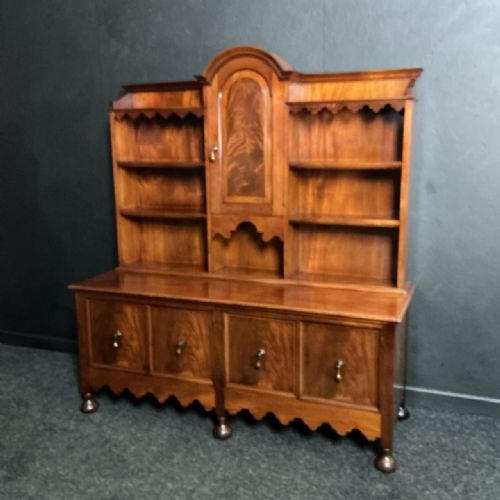
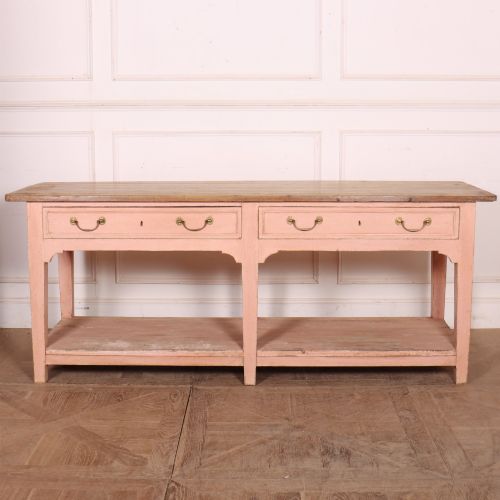
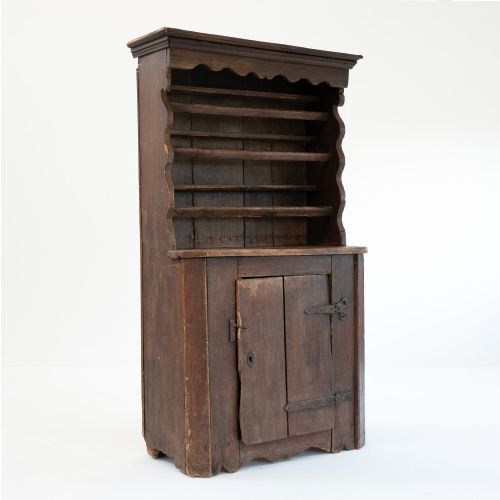
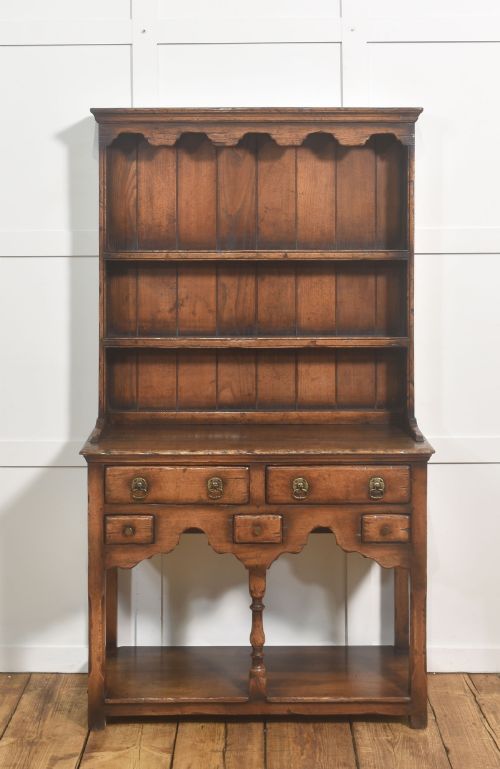
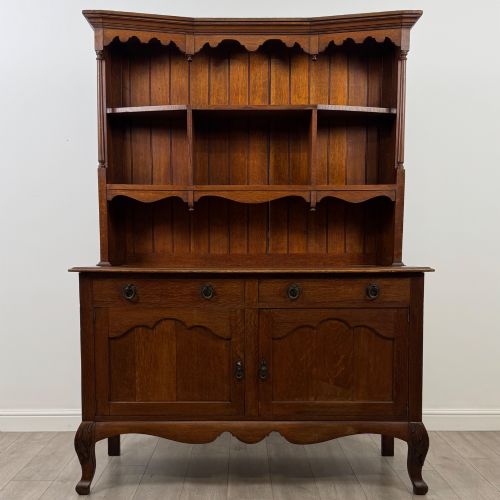
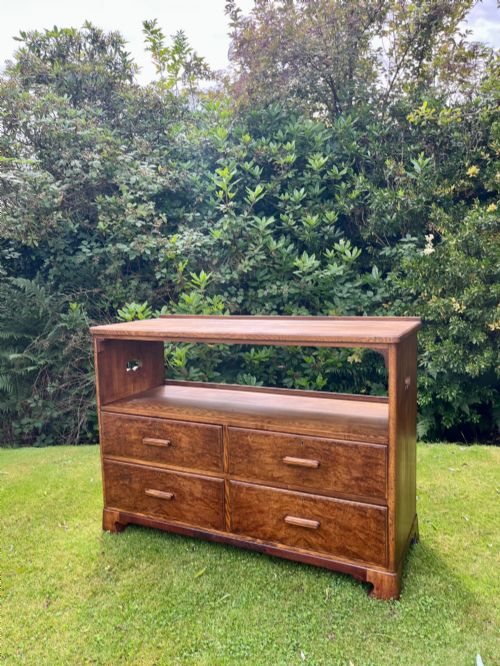
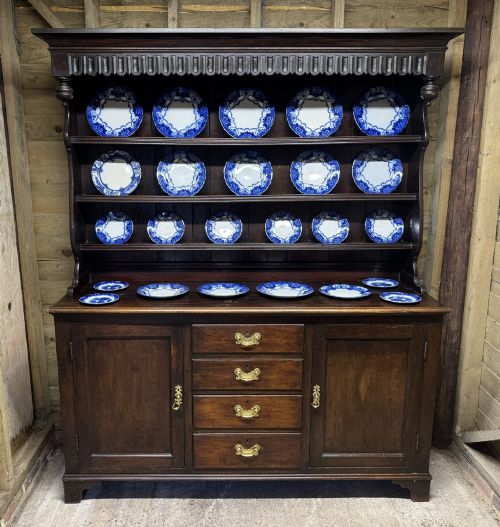
An open shelf dresser brings practical display and sturdy storage together, offering a traditional kitchen centrepiece with open shelving for plates and bowls.
Open Shelf Dresser
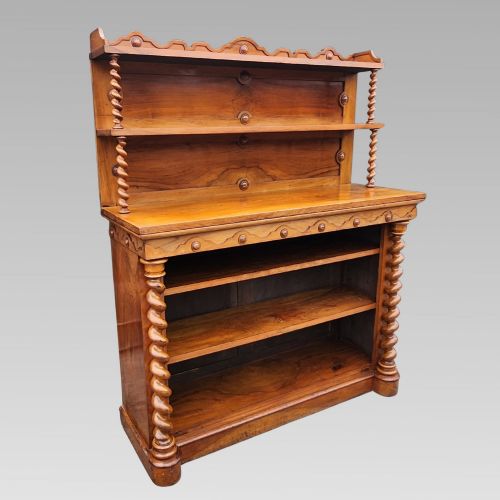
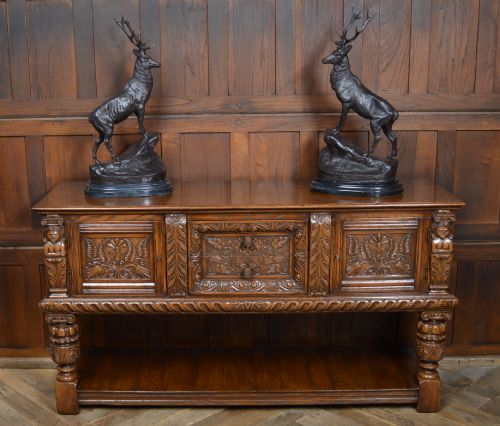
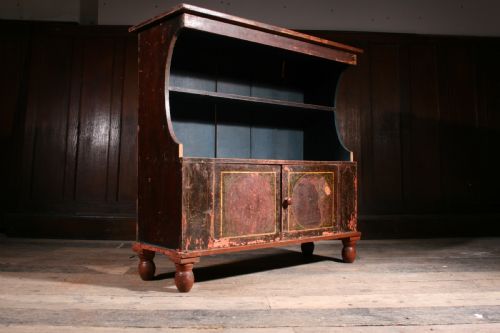
An open shelf dresser combines a lower base of cupboards or drawers with an upper tier of open shelves, designed for domestic storage and display. These items emerge from periods ranging from the 18th century through the Edwardian era and 1930, spanning regional styles like English Country, Welsh, Irish Country, and French Provincial.
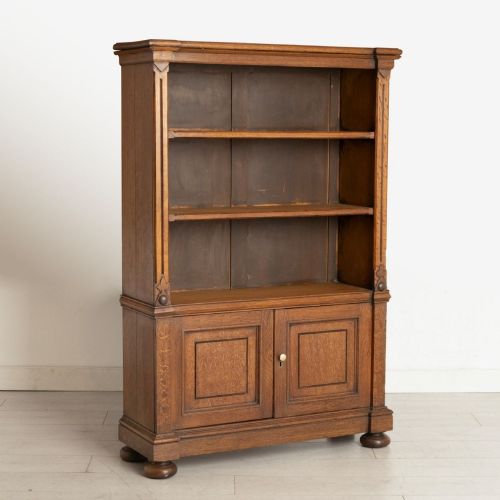
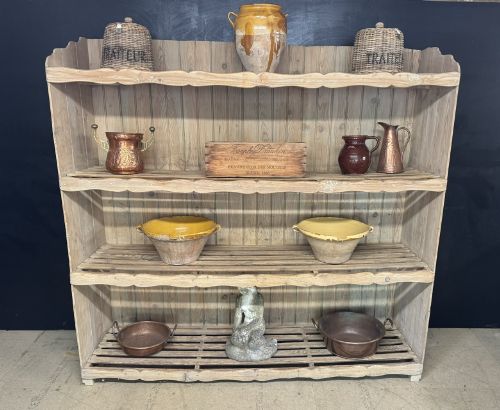
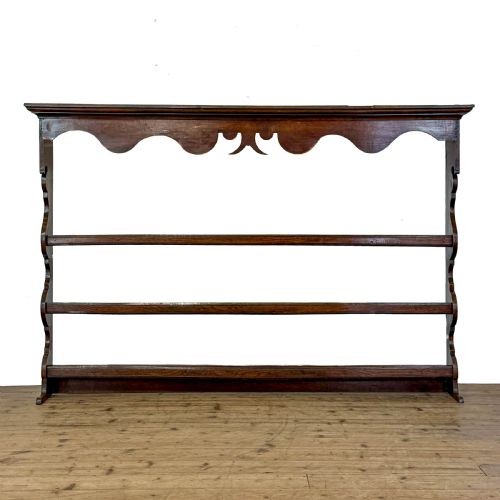
The selection here includes kitchen dressers with plate racks, potboard dresser bases, and tall bookcases with open top shelves. Oak and pine dominate the forms, alongside mahogany, walnut, painted wood, and mixed woods reflecting utilitarian origins.
Buyers meet sturdy country furniture alongside formal Georgian and Victorian iterations, demonstrating how the open shelf dresser adapted from rural farmhouse utility to genteel domestic display over successive centuries.
How they were made
Timbers such as oak, pine, mahogany, and walnut provide the structural integrity for these pieces, often joined using traditional methods suited to heavy daily use. Pine and oak appear frequently in regional farmhouse examples, whilst mahogany and walnut serve more polished Edwardian and Victorian designs.
Surface finishes range from original paint and bleached oak to polished hardwoods and mounted brass or iron hardware. Potboard bases and plate racks utilise straightforward joinery to support heavy earthenware and provisions.
Listings feature oak, pine, mahogany, and walnut woods across periods from the 18th century to the 1930s.
What varies in quality
The integrity of timber and the survival of original surface finishes determine the standing of an open shelf dresser. Pieces retaining untouched paint, patinated oak, or original brass hardware hold greater archaeological and aesthetic coherence.
Proportion and regional character separate standard utility items from finer workshops. Well-balanced cornices, integrated potboards, and crisp carving distinguish superior vernacular craftsmanship from plain utilitarian replacements.
Gillows·Whytock and Reid
The Open Shelf Dresser Glossary
- Potboard
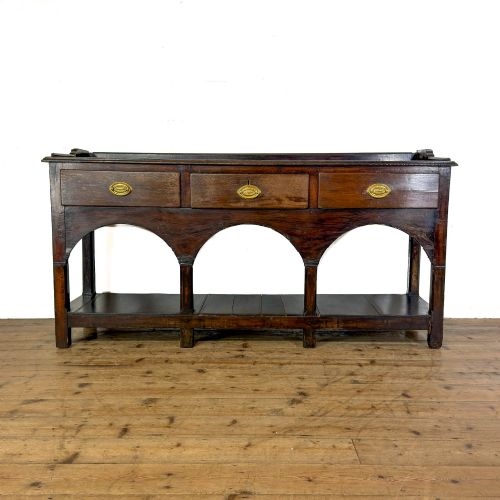
- A low open shelf situated beneath the main base of a dresser, historically used for storing pots and pans. This platform sits just above the floor on sturdy legs.
- Plate rack
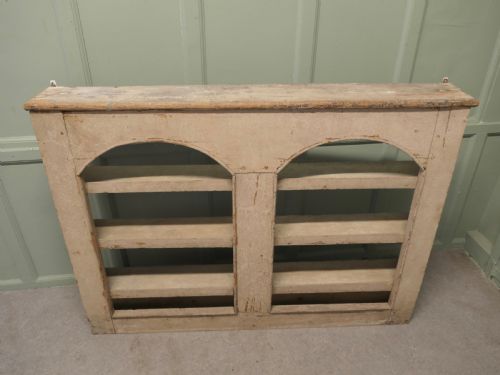
- An upper wooden framework featuring vertical slats or grooves designed to hold plates upright against a wall. This component forms the open shelf section of a traditional kitchen dresser.
- Credenza
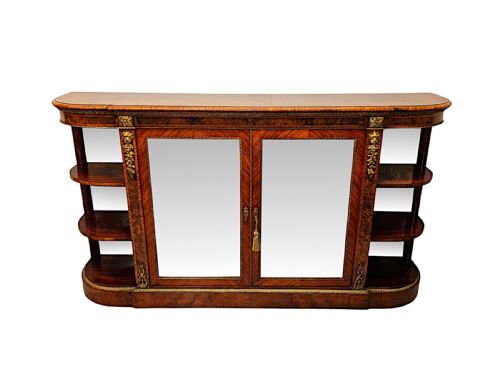
- A sideboard or buffet cabinet often featuring decorative mounts and display space. Examples in walnut and ormolu demonstrate a more formal urban cabinetmaking tradition.
- Vaisselier
- A traditional French term for a plate rack or dresser used for storing tableware. These pieces share the open shelving and base storage characteristic of British country furniture.
- Chiffonier
- A small sideboard or cabinet featuring open bookshelves or a raised back. This form emerged during the 19th century for domestic parlours and sitting rooms.
Open Shelf Dresser: Frequently Asked Questions
What is an open shelf dresser?
An open shelf dresser is a traditional storage item combining a lower cabinet or drawer base with upper open shelving. It serves to store and display domestic tableware, kitchenware, and books.
Such furniture evolved in regional workshops and farmhouses to meet everyday practical needs before finding a place in more formal domestic interiors.
Where were open shelf dressers used?
These pieces were traditionally placed in kitchens, sculleries, and dining rooms for easy access to daily utensils and plates. Country houses and farmhouses relied on them as central storage units.
Today, they function equally well in contemporary kitchens and living spaces to display ceramics, books, and decorative collections.
How do I date an open shelf dresser?
Dating relies on observing timber choices, construction techniques, and stylistic markers associated with specific eras like the Georgian or Edwardian periods. Regional variations in oak and pine usage also offer clues to age.
Hand-cut joints, original hardware, and surface patination help distinguish 18th-century vernacular pieces from later 19th-century revivals.
Are potboard dressers different from standard dressers?
Potboard dressers feature a distinct open platform base near the floor instead of enclosed cupboards. This lower shelf provided a dry space for heavy pots and kitchen earthenware.
Standard dressers often incorporate enclosed drawers and cupboards in the lower section rather than an open slatted or planked potboard.