



Distressed Cream Sideboard
A distressed cream sideboard brings painted warmth and storage to a room, drawing on centuries of European country house and provincial styles.
Distressed Cream Sideboard
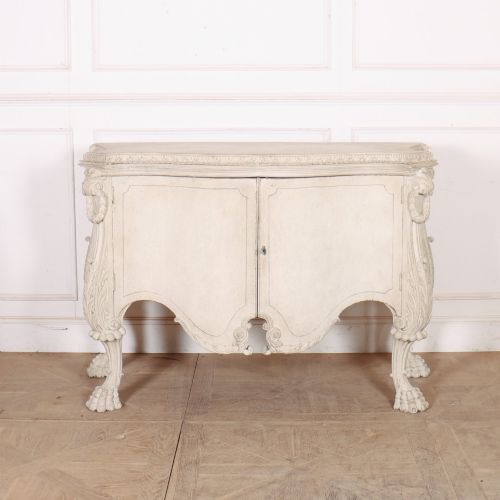
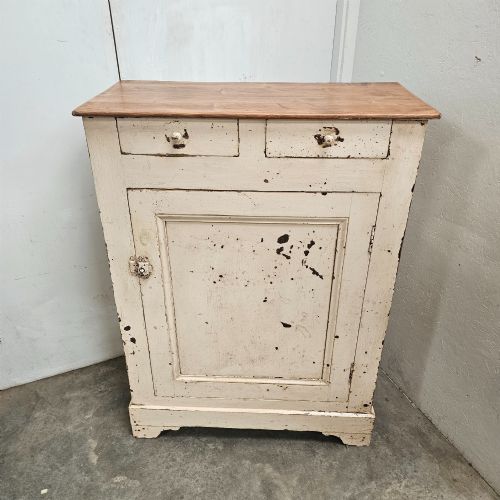
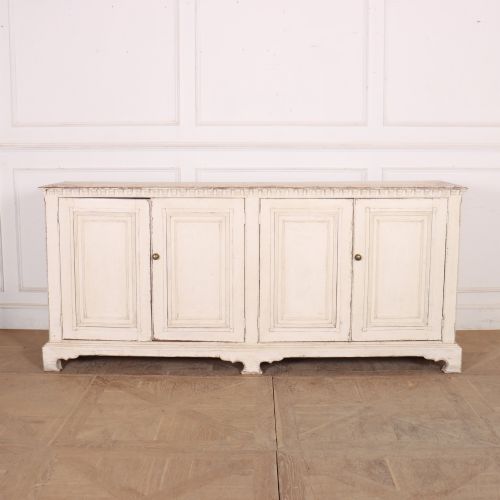
A distressed cream sideboard search brings up storage furniture spanning the eighteenth and nineteenth centuries, taking the form of dressers, commodes, enfilades, and side cabinets. These pieces originate from English farmhouses, French chateaux and provincial homes, Swedish country houses, and Italian estates.
The version most commonly met on this page is the painted pine or wood sideboard, buffet, or dresser base finished in cream paint. These range from French confituriers and Swedish cabinets to Italian serpentine commodes and monumental English country house dresser bases.
Materials and construction
Makers built these pieces primarily from pine and oak, incorporating brass, iron, and metal hardware such as hinges and pulls. Glass occasionally appears in upper cabinet doors where present on related dresser forms.
Surfaces receive layers of paint to achieve the characteristic cream finish that ages over time, while styles span French Provincial, Italian Rococo and Neoclassical, English Country House, and Swedish Country.
Distressed Cream Sideboard Retail Price Guide 2026
Typical asking prices for distressed cream sideboard among the pieces listed under this phrase on Sellingantiques today, from the lower quarter to the upper quarter. They describe what is for sale here now, not the wider market.
Assessing quality
Quality rests in the proportion of the timber frame, the grace of forms like serpentine fronts, and the integrity of period construction methods. Pieces from eighteenth-century workshops show distinct joinery compared to nineteenth-century examples.
The character of the painted surface and the authenticity of the period finish separate standard vernacular pieces from finer regional commodes and enfilades.
The Distressed Cream Sideboard Glossary
- Commode
- A low cabinet or chest of drawers, often featuring a serpentine front in eighteenth-century Italian and French pieces. These served primarily for storage in domestic rooms.
- Enfilade
- A long sideboard or cabinet designed for formal dining rooms, common in Italian provincial interiors. It provides extensive surface and interior storage space.
- Confiturier
- A French jam cupboard designed to store preserves and small provisions. This compact painted pine form is a staple of provincial interiors.
- Dresser base
- The lower section of a kitchen or dining room dresser, offering heavy timber storage beneath a wide surface. English farmhouse examples show robust vernacular construction.
Distressed Cream Sideboard: Frequently Asked Questions
What rooms suit a distressed cream sideboard?
These sideboards fit dining rooms, hallways, and living spaces where generous surface area and enclosed storage are required. Their painted finishes complement neutral and rustic interiors alike.
Larger dresser bases and enfilades need substantial wall space, while compact confituriers and commodes fit smaller corners or tighter hallways.
How do I date an older painted sideboard?
Dating relies on examining the timber construction, hardware, and the profile of the piece, such as serpentine fronts or straight provincial lines. Eighteenth-century pieces often display hand-cut joinery and period brass fittings.
Nineteenth-century examples, including Victorian pine pieces and Swedish cabinets, tend to feature more standardised construction methods while retaining traditional painted finishes.
What is the difference between a commode and a buffet?
Commodes are typically lower, chest-like cabinets with drawers or doors, frequently associated with eighteenth-century French and Italian designs. They offer refined serpentine or straight profiles.
Buffets and enfilades are longer storage units traditionally used in dining rooms for serving food and storing tableware, spanning French and English country house traditions.
Are these pieces made of solid wood?
The listings consist primarily of solid pine and oak timbers, reflecting traditional workshop practices of the eighteenth and nineteenth centuries. Metal and brass elements form the structural and decorative hardware.
Painted finishes applied over wood give these sideboards their characteristic cream appearance, which develops natural wear across decades of use.