
Open Face Timepiece
An open face timepiece offers unhindered access to the dial, carrying the portable timekeeping of the Victorian, Edwardian, and mid-century eras.
Open Face Timepiece
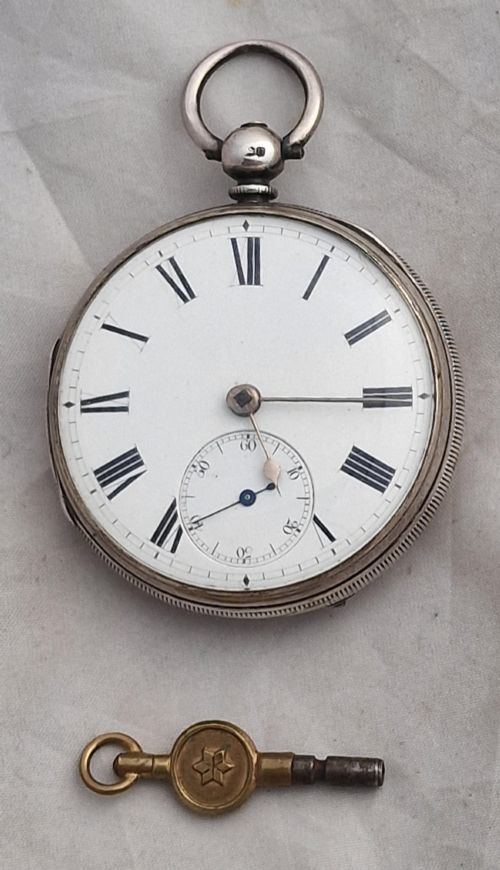
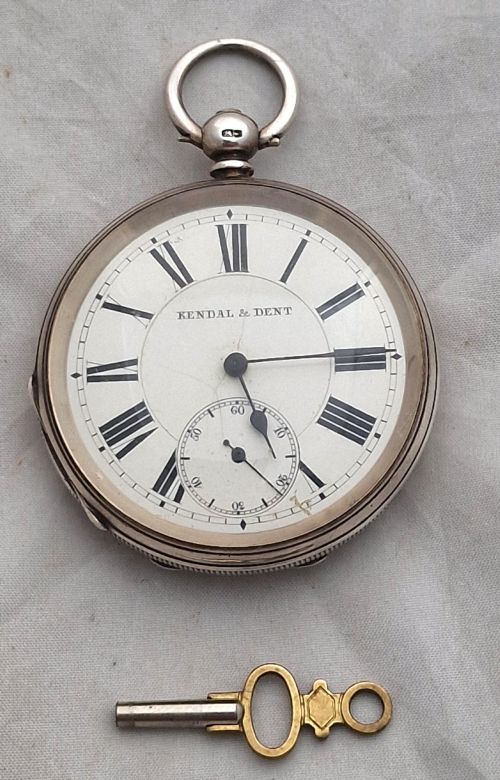
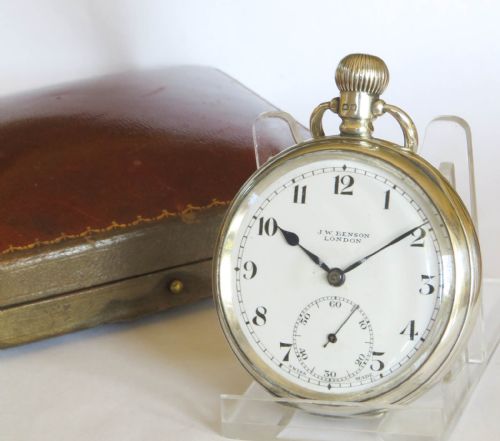
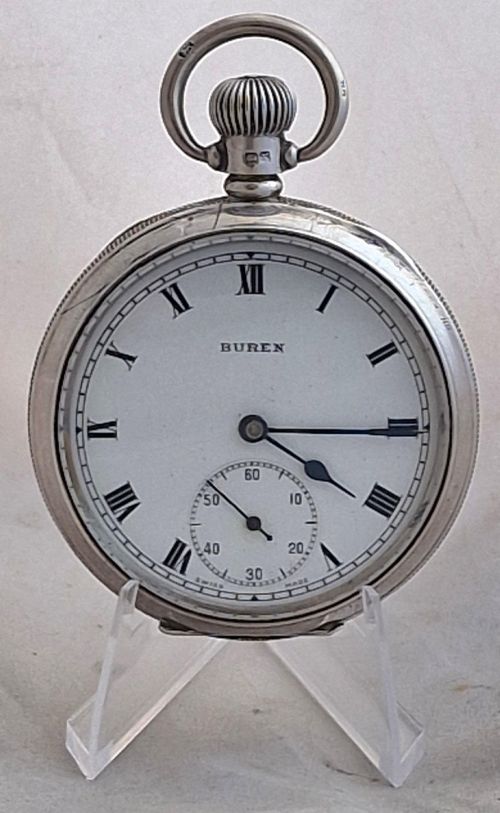
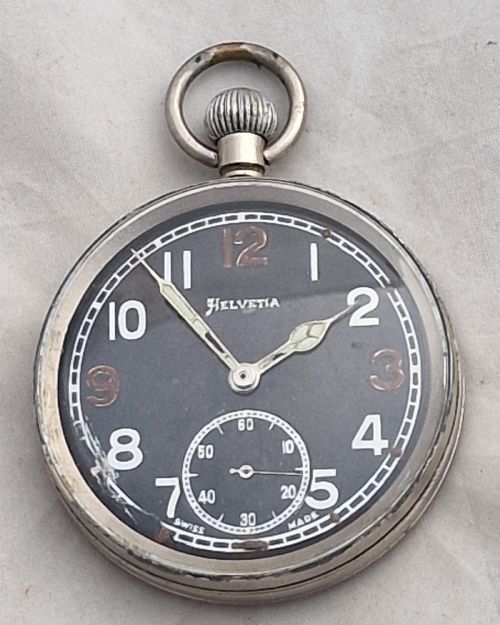
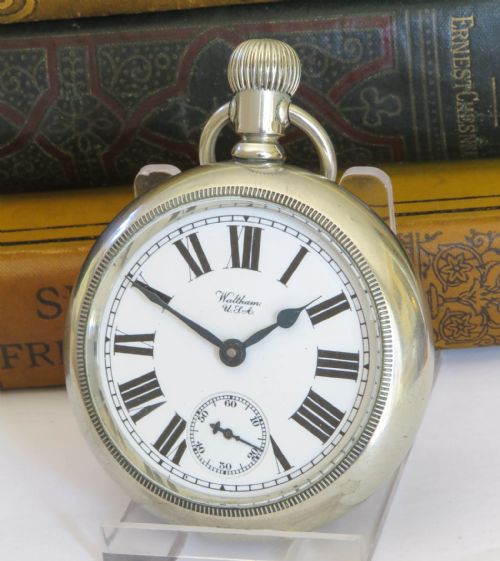
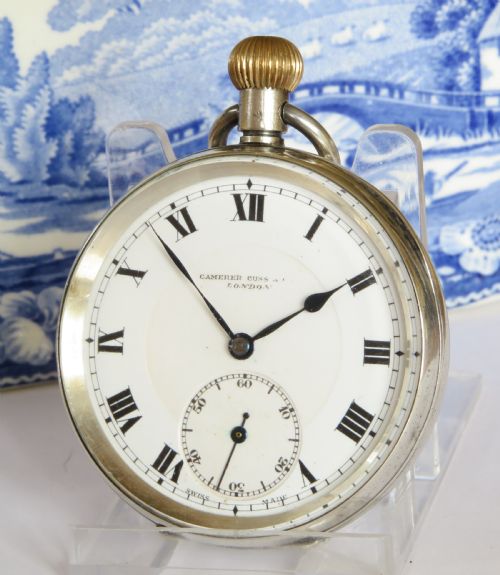
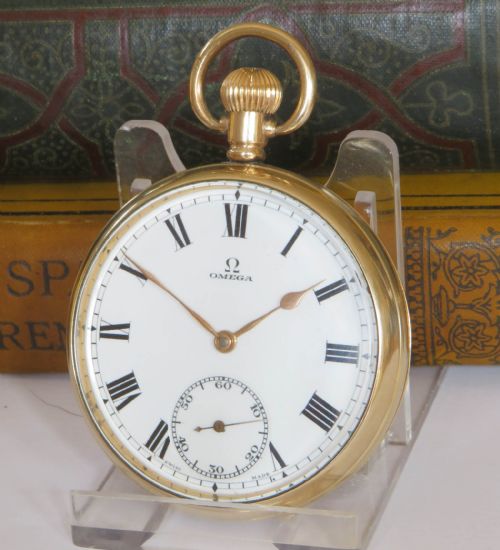
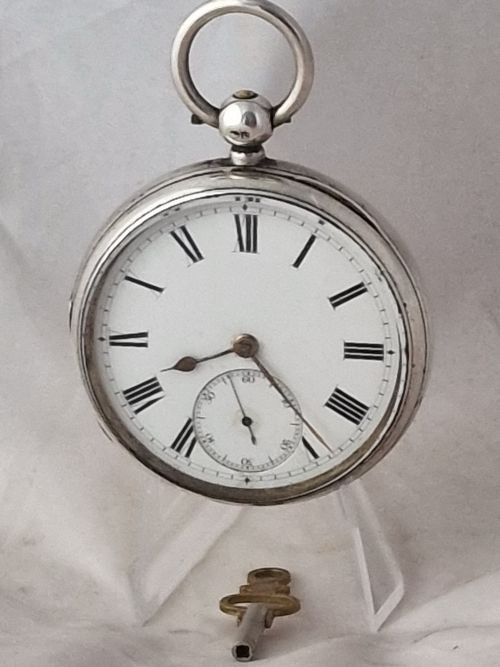
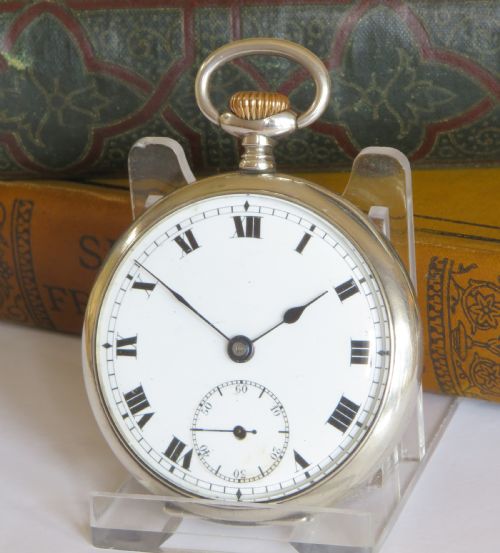
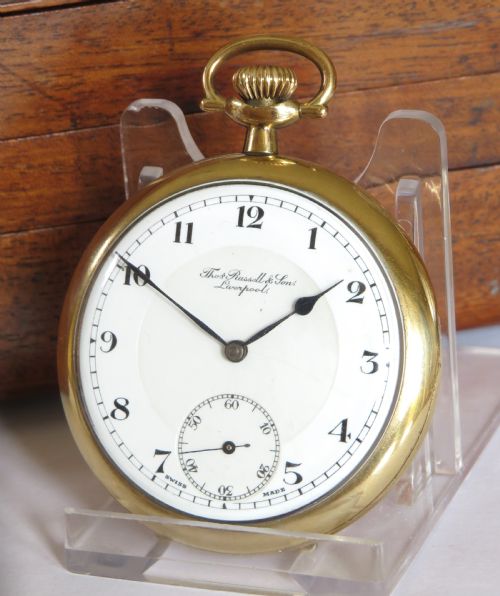
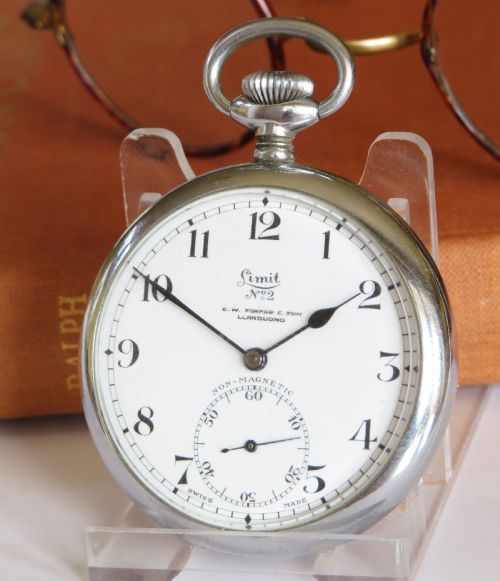
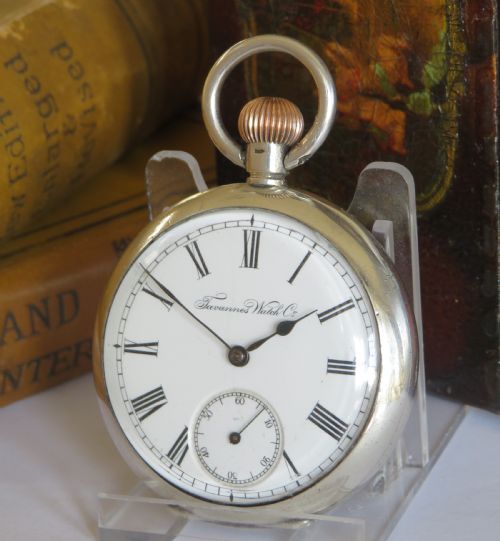
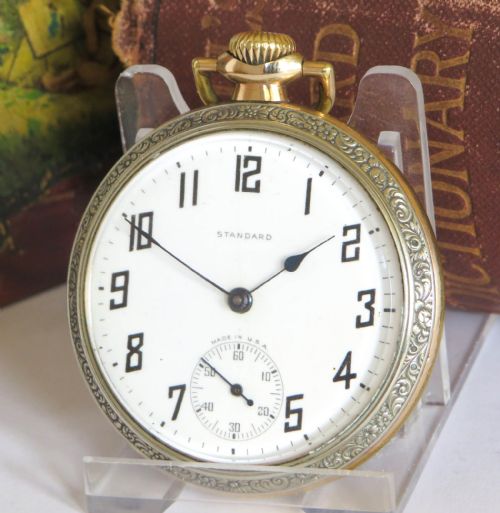
An open face timepiece is a pocket watch designed without a protective metal front cover over the glass. This configuration allows the user to read the hours at a glance without needing to depress a crown or flip open a lid. Most examples seen here date from the Victorian period through to the 1950s, spanning robust railway pieces and refined dress watches.
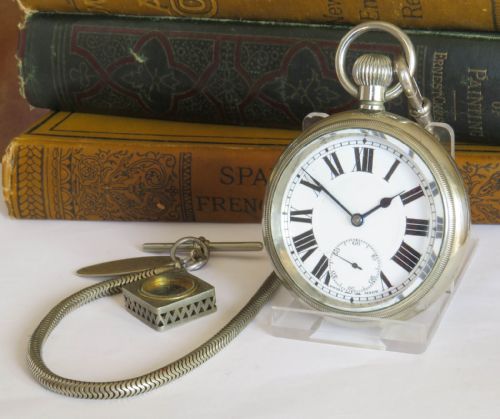
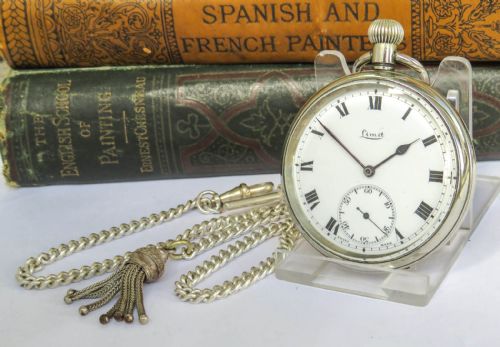
The format encompasses plain silver utility pieces, railway timekeepers with subsidiary seconds, and elaborate Art Deco designs. Many are paired with albert chains, compasses, or fobs, reflecting how these items were worn and carried in daily life. Originating from British, Swiss, and American workshops, they show a diverse range of regional styling and mechanical layouts.
Materials and Construction
Cases are formed from sterling silver, gold plate, nickel, brass, steel, and solid gold, housing delicate mechanical movements behind glass and enamel dials. Fusee movements, prevalent in Victorian pieces, utilise a chain and cone pulley system to equalise the mainspring's pull as it unwinds. Later twentieth-century movements adopt more standard barrel arrangements for improved reliability and simpler servicing.
Dials are predominantly white enamel with painted Arabic or Roman numerals, occasionally featuring contrasting niello decoration or subsidiary dials for seconds. Glass crystals protect these delicate faces, while metal cases are stamped with hallmarks or maker marks indicating origin and metal purity.
Several watches arrive with tiny compasses dangling from their chains, ready to guide owners who might have lost track of more than just time.
Determining Quality
Quality in an open face timepiece rests upon the sophistication of the movement and the crispness of the case finishing. High-grade examples feature jewelled lever escapements, adjusted movements for temperature and position, and signed dials by respected makers. Simpler pin-pallet or unadjusted movements represent the more utilitarian end of production.
The condition of the enamel dial and the tightness of the case hinges also define standard. Hairlines on the enamel or loose bezels reduce the integrity of the piece, whereas pristine dials and heavy silver cases indicate superior preservation and original manufacturing intent.
J W Benson·Kendal & Dent·Camerer Cuss·Thomas Russell & Son·Lange & Sohne·Stauffer
The Open Face Timepiece Glossary
- Fusee
- A conical pulley connected to the mainspring by a fine chain, designed to equalise the power delivered to the gear train. This complex mechanism is typical of older British pocket watches.
- Enamel
- A glassy substance fused to a metal dial substrate under high heat, providing a smooth, durable surface for painted numerals. It is susceptible to chipping or hairline cracking under sharp impacts.
- Subsidiary seconds
- A small auxiliary dial, usually positioned above the six o'clock mark, tracking the seconds independently of the main hour and minute hands. This feature indicates a higher degree of mechanical division.
- Albert
- A chain attached to a pocket watch, secured to a waistcoat buttonhole or pocket. Named after Prince Albert, these chains often carry fobs, medals, or miniature compasses.
- Niello
- A black metallic alloy used as an inlay on engraved metal surfaces to highlight decorative patterns. It creates a striking contrast against silver cases.
Open Face Timepiece: Frequently Asked Questions
How do I wind an open face timepiece?
Most pieces require you to rotate the crown clockwise until you feel firm resistance, indicating the mainspring is fully tensioned. Some older key-wound examples require a dedicated winding key inserted into a rear port or directly onto the dial.
Avoid overwinding, as this can strain the internal spring. Regular, gentle winding keeps the movement lubricated and running accurately.
Can I wear a pocket watch daily?
These pieces were built for everyday use by railwaymen, labourers, and gentlemen alike. Placing the watch in a dedicated waistcoat or jacket pocket protects it from knocks and magnetic fields.
Pairing the watch with a secure albert chain prevents accidental drops. Regular servicing by a horologist ensures the vintage lubricants remain effective during daily wear.
How are these watches dated?
Dating relies on a combination of hallmarked metal cases, movement serial numbers, and stylistic markers such as typography and dial layout. British silver cases often feature date letters corresponding to specific assay office assay years.
Maker records and movement calibre tables further narrow down the exact decade of production. Military-issued pieces frequently bear broad arrow stamps and service numbers on the case back.