
Open Adjustable Bookcase
An open adjustable bookcase provides versatile display and storage, bringing timeless timber grain and adaptable shelf heights directly into your room.
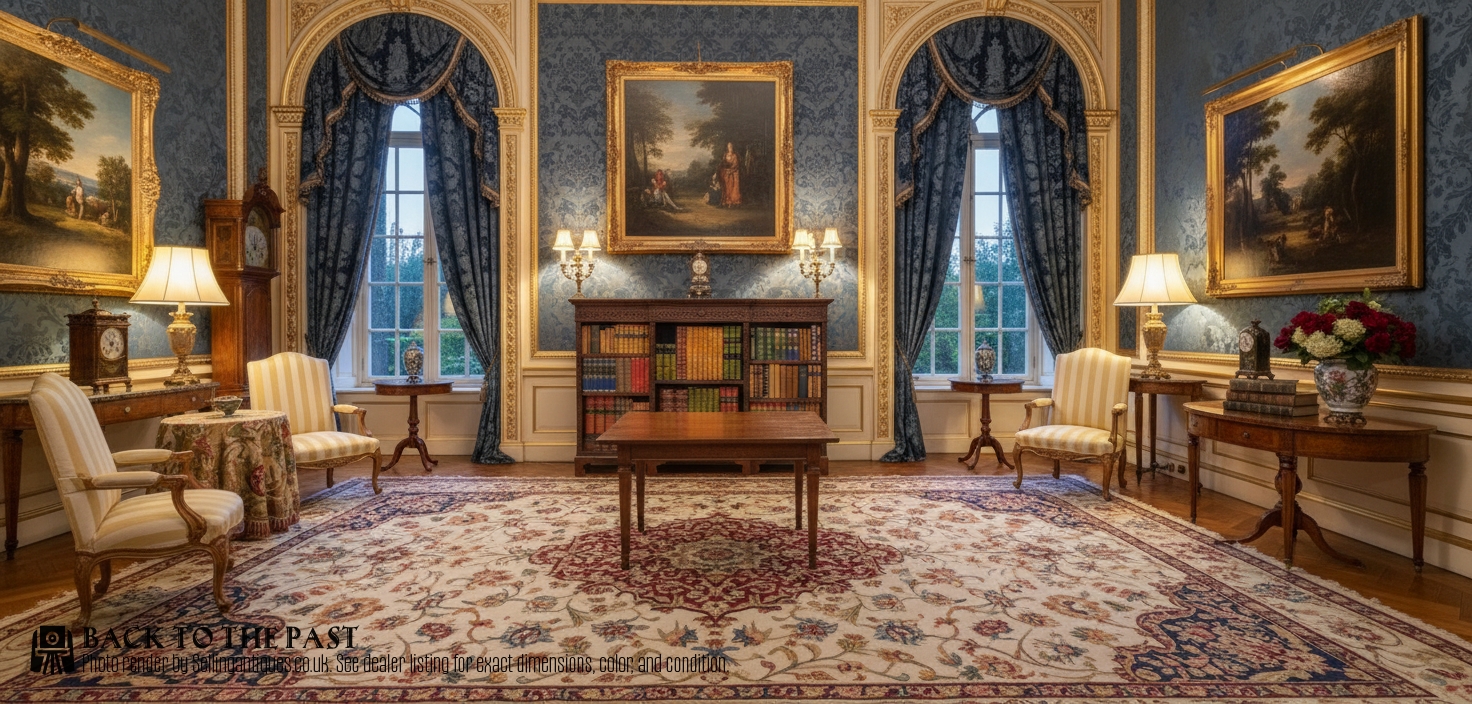
Open Adjustable Bookcase
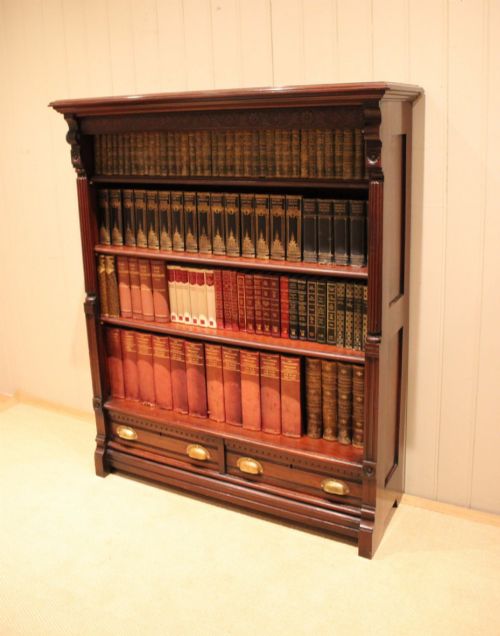
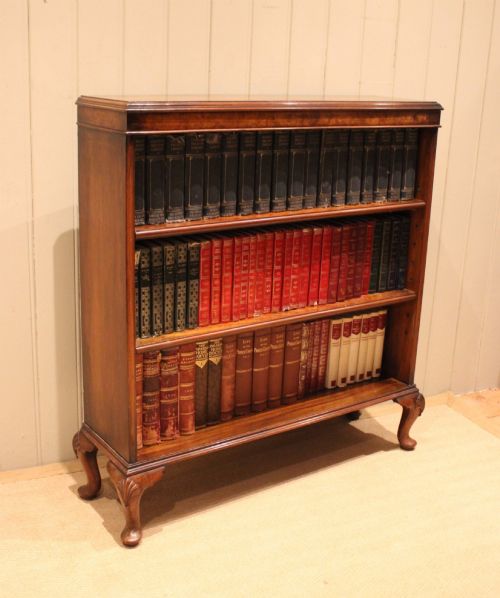
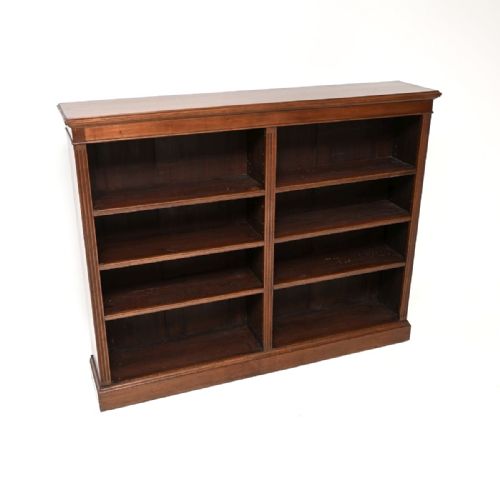
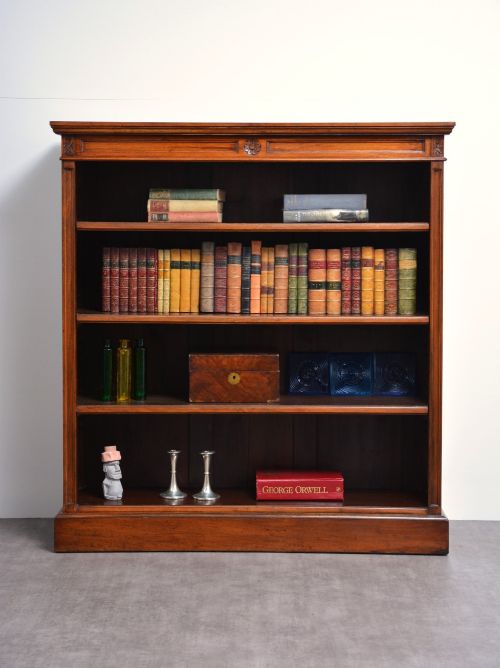
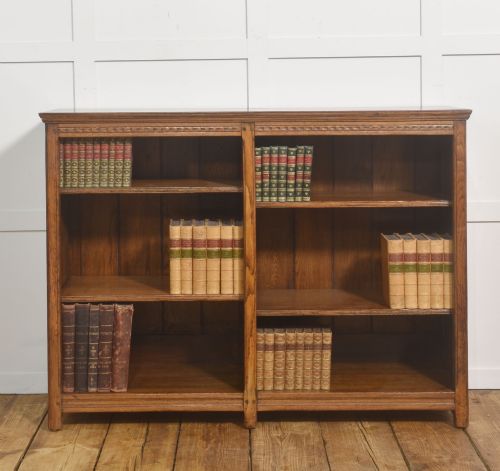
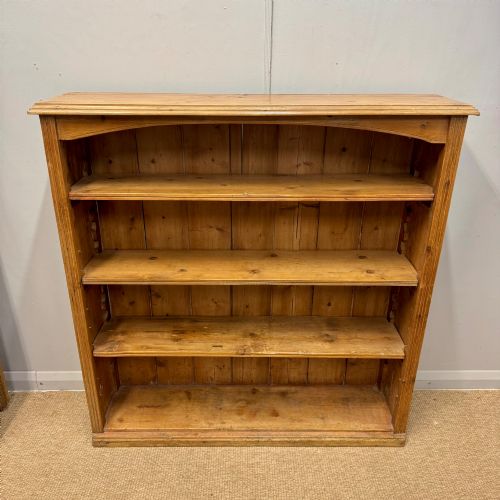
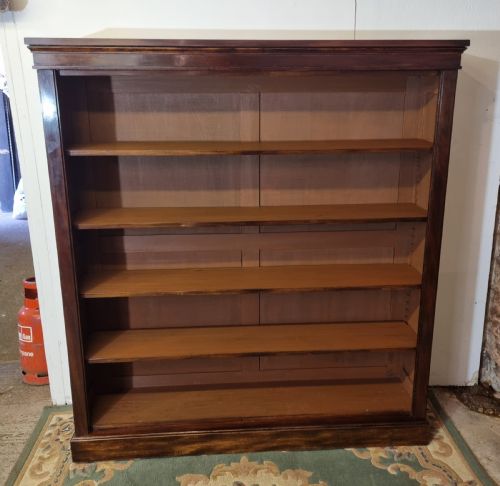
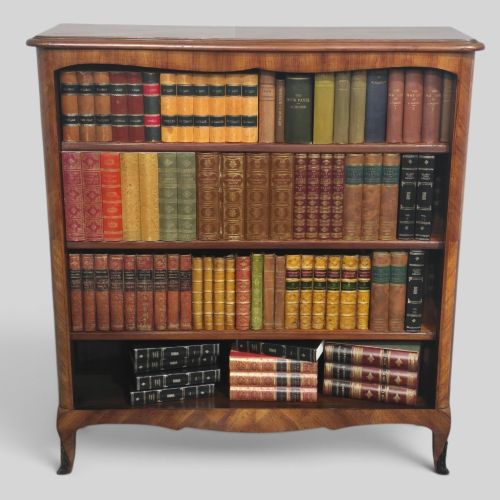
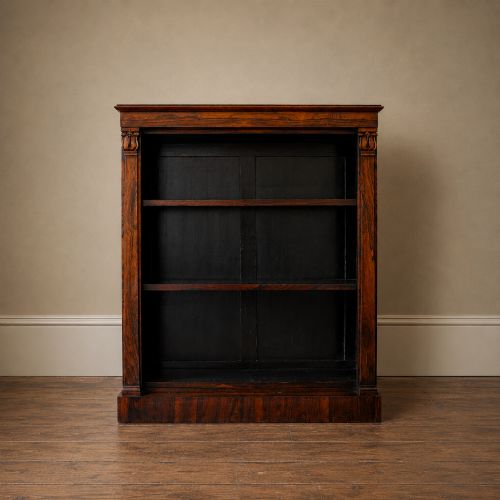
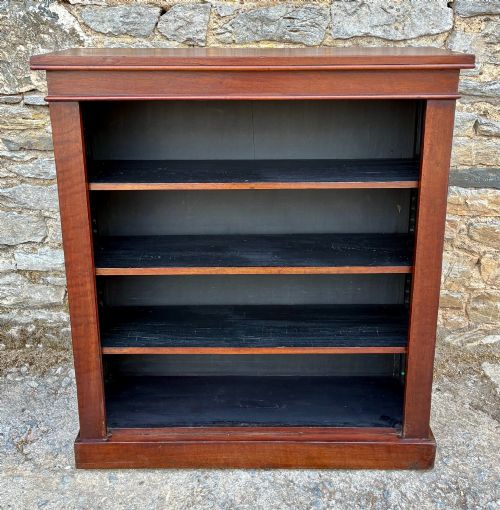
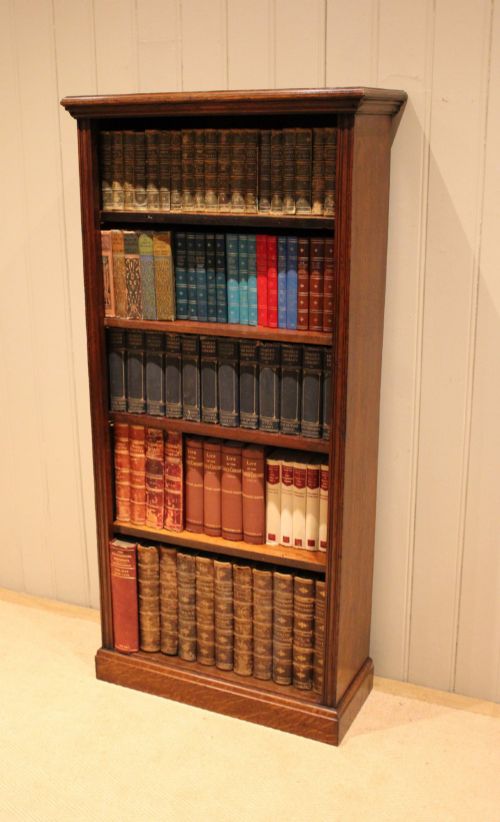
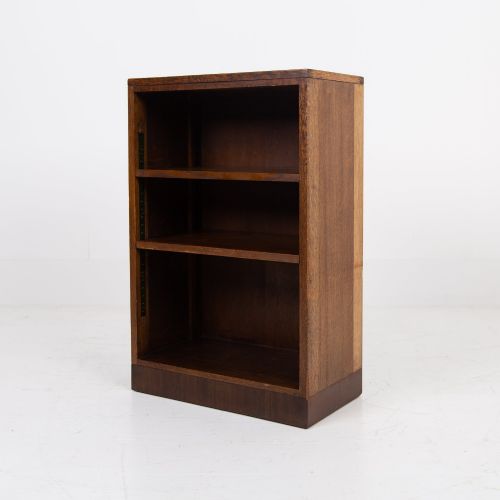
An open adjustable bookcase gives you unfettered access to rows of books while letting you alter shelf positions to suit different volumes. When you search for an open adjustable bookcase, you meet pieces built mainly during the nineteenth and early twentieth centuries, spanning periods from the Regency era through Victorian and Edwardian times down to the 1930s.
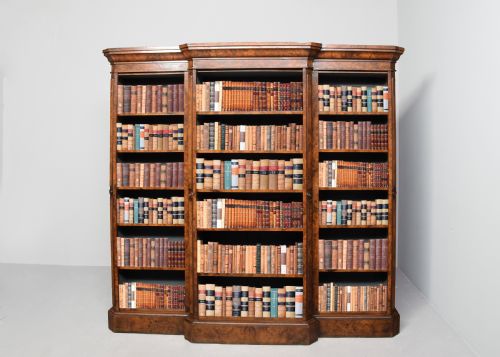
Most examples you encounter on this page take the form of upright freestanding furniture, though you will also find low dwarf formats and grand breakfront library bookcases with multiple sections. These pieces serve living rooms, studies and libraries, offering straightforward utility combined with period presence.
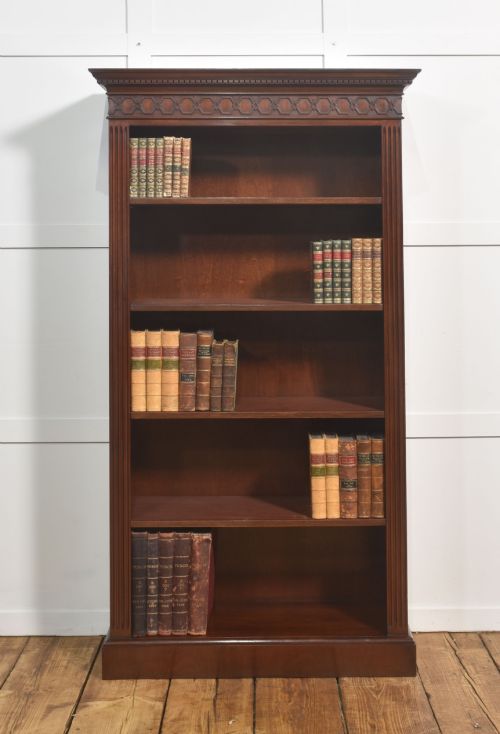
Makers shaped these bookcases in various proportions, from neat single bays to tall, imposing structures designed for extensive collections. The defining characteristic across nearly all of them remains the movable shelving system, which accommodates everything from small pocket editions to folio volumes.
How they were made
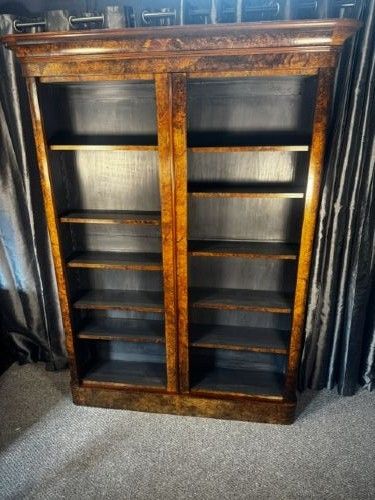
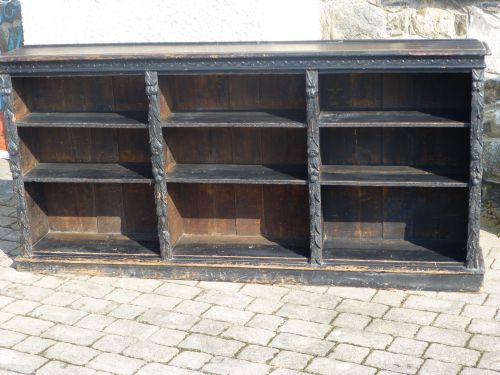
Cabinet makers built these bookcases using solid timbers like mahogany, oak, walnut and pine, often applying veneers of burr walnut or rosewood to display rich grain patterns. Many pieces incorporate brass fittings within the adjustable shelf mechanisms, while select examples feature marble tops or ebonised carved details.
Joinery techniques relied on sturdy carcase construction to support heavy loads of books without sagging over time. Workshops utilised clever internal rack-and-pinion systems, wooden tooth moulding or brass stud strips to allow simple height adjustments for each shelf.
Some Victorian bookcases feature carved green men peering out from the woodwork to guard your reading collection.
What varies in quality
The distinction between standard utility pieces and top-tier library bookcases rests on the selection of timber and the sophistication of the cabinetry. Superior examples display figured mahogany, burr walnut or golden oak with meticulous attention to plinth and cornice mouldings.
The refinement of the adjustable mechanism also signals quality, with cleanly cut brass tracks or smooth wooden ratchets outperforming crude peg-and-hole supports. Breakfront configurations, multi-section break-downs and carved ornamentation further elevate the standing of a piece.
Waring and Gillows
The Open Adjustable Bookcase Glossary
- Breakfront
- A bookcase design where the central section projects forward from the flanking wings. This architectural arrangement creates depth and visual rhythm in larger library pieces.
- Ebonised
- Timber treated with a chemical stain or black finish to simulate ebony. Cabinet makers used this technique to achieve striking dark contrasts, particularly during the Victorian period.
- Cornice
- The decorative moulded projection running along the top edge of a bookcase. It crowns the structure and provides a finished architectural transition to the ceiling.
- Plinth
- The heavy horizontal base block upon which the bookcase stands. It elevates the body of the furniture off the floor and grounds the composition.
- Dwarf bookcase
- A low shelving unit designed to sit beneath window height or along domestic walls. These pieces keep floor space open while offering accessible top surfaces.
Open Adjustable Bookcase: Frequently Asked Questions
How do adjustable shelves work on antique bookcases?
Antique adjustable shelves typically rely on vertical wooden toothed ratchets, brass studs inserted into holes, or metal rack strips fixed inside the bookcase walls. These systems let you lift and reposition shelves to precise heights.
Such mechanisms ensure that heavy folios or small novels fit securely without wasting vertical space between shelves.
Where should I place a low open bookcase?
Low open bookcases suit spaces where tall furniture would block light or overwhelm the room, such as beneath windows or along hallway walls. Their top surfaces also provide a convenient shelf for lamps or decorative objects.
Placing them away from direct heat sources helps protect the solid timber and veneer surfaces from drying out.
How do I identify a Victorian open bookcase?
Victorian open bookcases often display dense mahogany, oak or walnut timbers, sometimes with rich burr veneers or carved details like green men or Gothic motifs. Their proportions tend to be substantial and sturdy, built to handle heavy private library collections.
Examining the backboards, screw types and interior shelf supports helps confirm the nineteenth-century origins of the piece.