


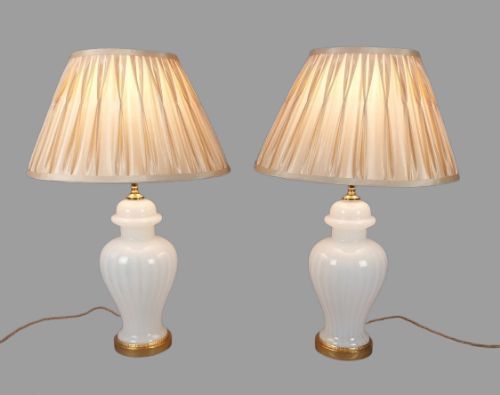


Opaline Glass Shade
Opaline glass shade selections bring soft, diffused illumination to interiors, combining milk glass diffusion with period hardware.
Opaline Glass Shade
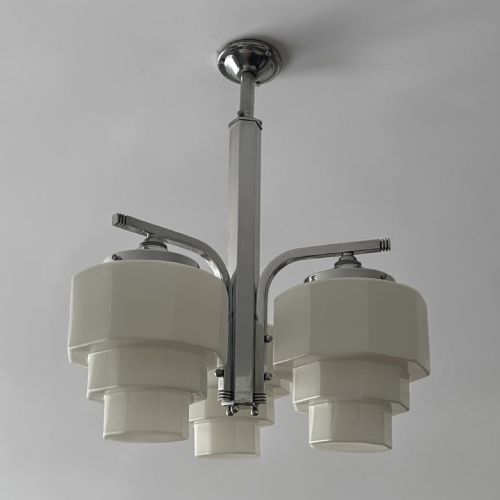
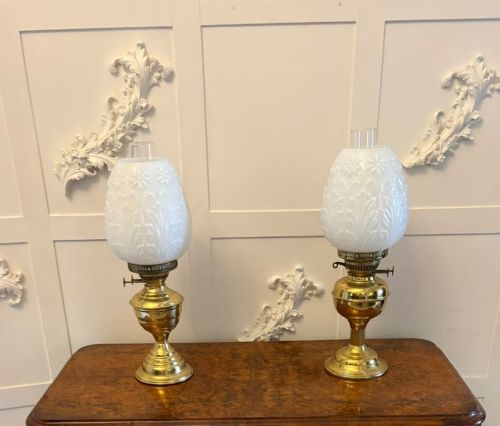
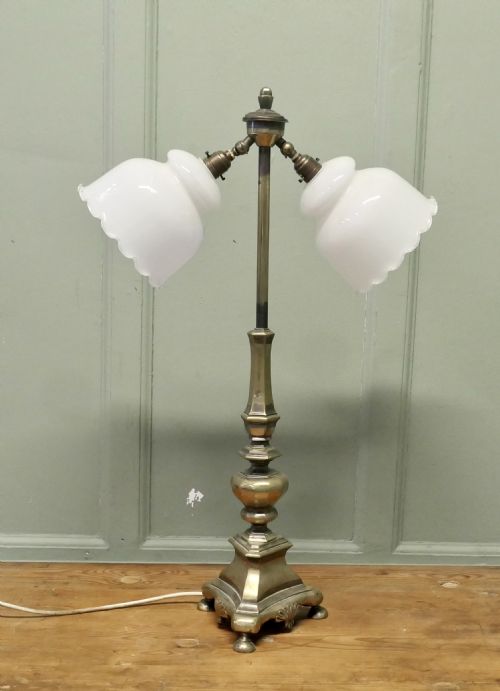
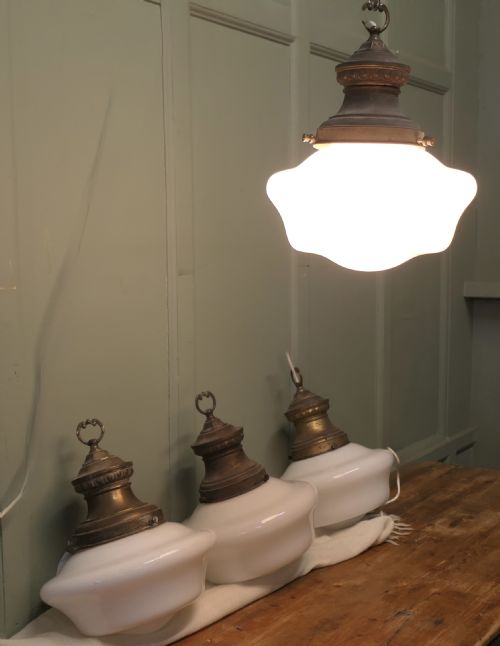
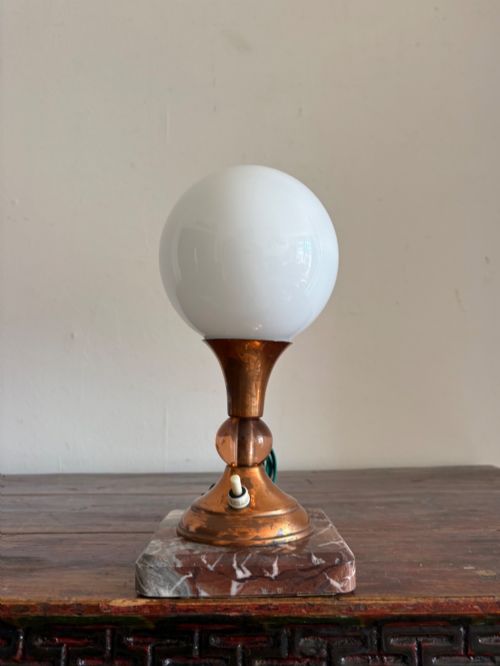
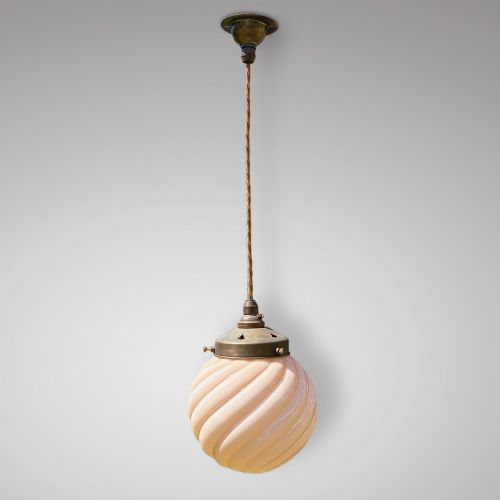
An opaline glass shade diffuses light with a milky opacity, softening glare while brightening a room. Buyers searching for an opaline glass shade encounter various lighting forms spanning the Victorian era through the Art Deco period.
The selection includes pendant lights, hanging lamps, table lamps, and ceiling light shades. Brass, chrome, and bronze mountings frequently accompany these glass components across Edwardian and twentieth-century examples.
How they were made
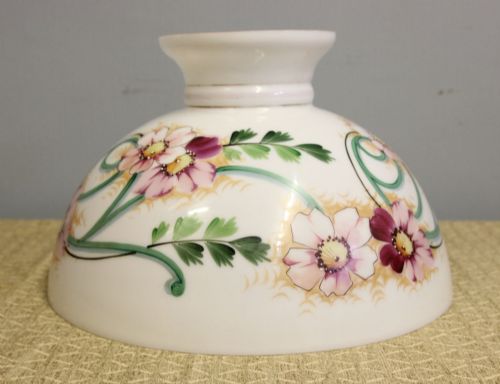
Glassmakers created opaline glass by adding bone ash or metal oxides to the molten batch, achieving the characteristic dense, milky white appearance. Artisans often shaped the glass using moulds, sometimes incorporating hand-finished frilled edges or hand-painted details.
Metalwork components such as brass galleries, copper chains, and bronze mounts were cast or spun to support the shades securely. Chrome and enamel elements appear on later twentieth-century pieces, reflecting shifts in manufacturing materials.
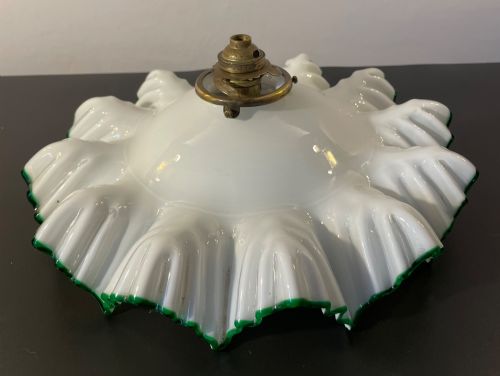
Some Victorian shade edges were crimped by hand while still hot, ensuring no two frilled lampshades share the exact same wave.
What varies in quality
Quality rests in the density and uniform thickness of the glass, which determines how evenly the light diffuses. Fine examples display smooth surfaces free from heavy ripples, alongside crisply formed decorative elements like reeding or fish scale patterns.
The execution of the metal mounts further separates pieces, with finely cast brass, bronze, or copper galleries providing structural integrity and aesthetic balance. Original chains and patinated hardware indicate higher preservation standards.
Perry And Co·Wild And Wessel
The Opaline Glass Shade Glossary
- Opaline glass
- A translucent white or tinted glass developed to mimic porcelain and diffuse light effectively. It remains a defining feature of period lighting fixtures.
- Gallery
- The metal ring or collar that holds a lampshade in place. Galleries are frequently cast from brass, copper, or bronze.
- Pendant light
- A hanging light fixture suspended from the ceiling by a cord, chain, or metal rod. These fixtures often utilise conical or domed glass shades.
- Plafonnier
- A ceiling-mounted light fixture positioned flat or close against the ceiling surface. Painted glass versions appear in early twentieth-century interiors.
Opaline Glass Shade: Frequently Asked Questions
How do I clean an opaline glass shade?
Wash the glass gently in warm soapy water using a soft cloth, avoiding abrasive pads that might scratch the surface. Dry thoroughly before reattaching it to any metal hardware.
Keep metal galleries dry to preserve their original patina, wiping them only with a dry or slightly damp cloth.
Can I use modern bulbs with these shades?
Modern LED bulbs work well inside historical shades because they generate less heat than traditional incandescent lamps, protecting fragile glass and historic wiring.
Select bulb shapes and colour temperatures that complement the milky diffusion of the opaline glass.
How do I date an opaline glass shade?
Examine the mounting hardware, manufacturing techniques, and overall silhouette to determine the period. Victorian and Edwardian examples often pair heavy brass with hand-finished glass edges, while 1930s pieces lean towards geometric lines and chrome.
Patina on the metal galleries and original chains also offer reliable clues to the age of the fixture.
Were these shades used in specific rooms?
Original installations spanned functional workspaces, chapels, hallways, and living areas where glare-free illumination was required. Desk lamps and reading lights directed focused light downward for tasks.
Ceiling pendants and hallway lights provided general ambient illumination across domestic and institutional interiors.