


1930s Ceiling Light
These fixtures combine geometric forms and industrial metals to transform a room with period character.
1930s Ceiling Light
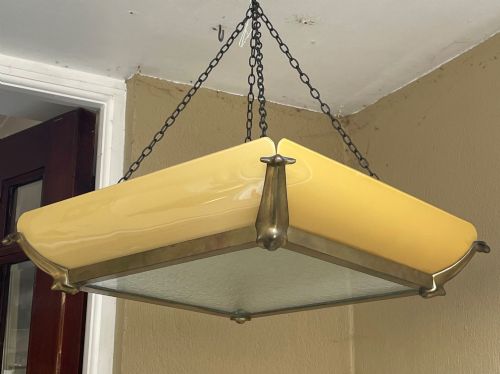
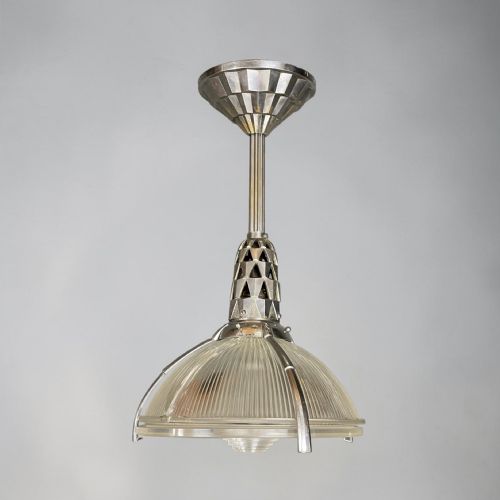
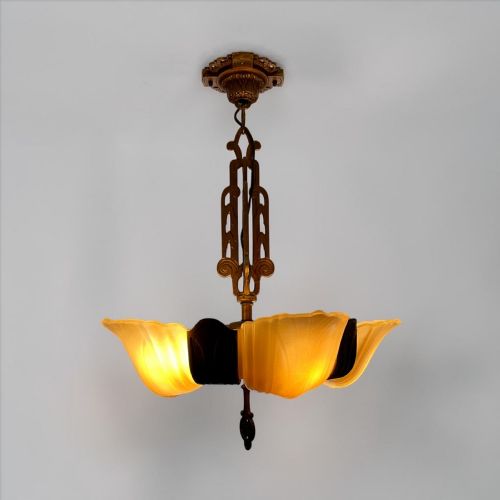
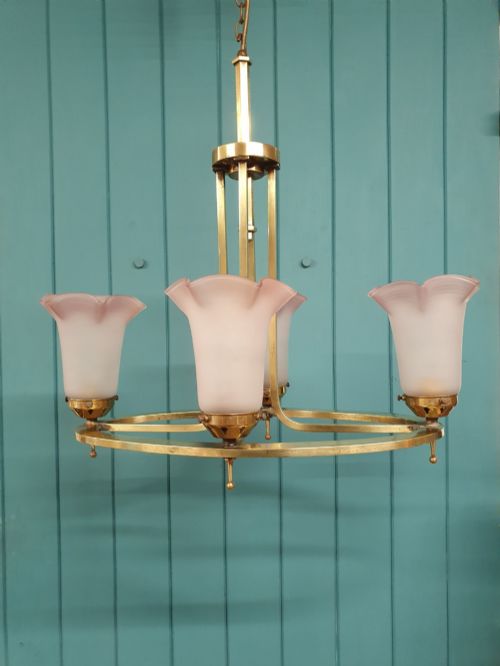
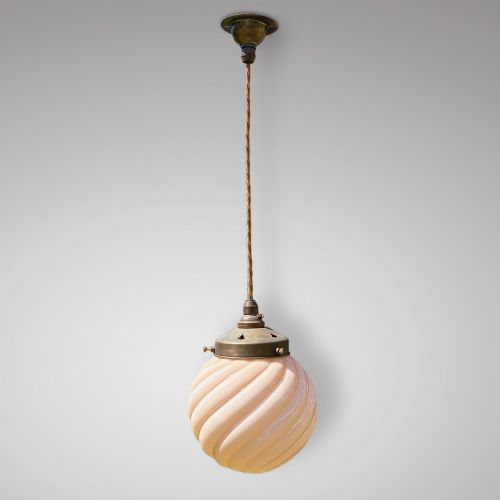
When you search for a 1930s ceiling light, you encounter diverse forms ranging from single-bulb pendants and flush mounts to multi-arm chandeliers and hallway lanterns. The selection leans heavily into Art Deco design, alongside industrial schoolhouse fixtures and glass bag chandeliers.
Most examples originate from the 1920s and 1930s periods, showing styles such as French Country, Dutch Revival, and Highland Lodge alongside dominant modernist aesthetics. These fittings vary from compact hallway lights to large multi-light chandeliers designed for principal rooms.
Materials and construction methods
Metals form the structural backbone of these fixtures, with brass, chrome, copper, steel, and metal frames supporting the weight of the glass components. Workmanship relies on casting, pressing, and soldering to shape metal mounts and decorative lanterns.
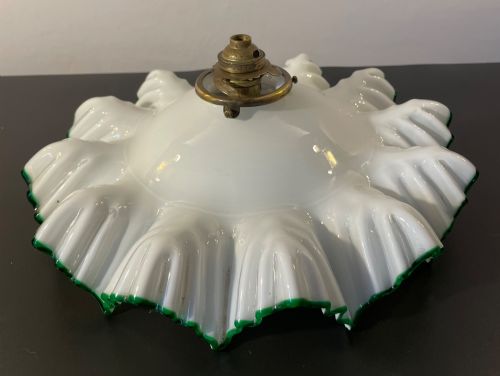
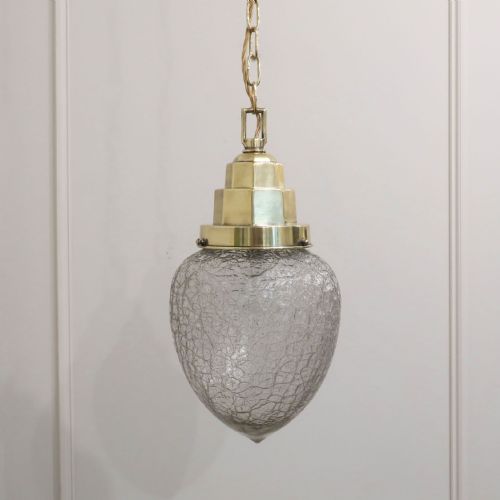
Glass elements are integral, utilising frosted glass, opaline glass, crackle glass, crystal, pressed satin glass, and alabaster for shades and diffusers. These glass shades are often moulded into geometric, slip shade, or organic pear and shell shapes.
Some fixtures are shaped like giant clams or pineapples, proving that 1930s lighting designers possessed a splendid sense of botanical whimsy.
Distinctions in quality
The refinement of the glasswork distinguishes standard pieces from superior examples, particularly where moulds produce sharp geometric lines or delicate opalescent effects. Heavy, thick glasses and complex cut crystal elements denote a higher standard of manufacture.
Metal fabrication creates further divergence, where solid brass or finished chrome assemblies surpass simple pressed metal components. Signed pieces or works associated with known designers show superior finishing in their metal mounts and hanging mechanisms.
Émile-Jacques Ruhlmann·Jean Gauthier·Ezanville
The 1930s Ceiling Light Glossary
- Plafonnier
- A ceiling-mounted light fixture with a shallow bowl or shade positioned close to the ceiling rather than hanging on a cord or chain. This form suits rooms with lower ceiling heights.
- Slip Shade
- A type of glass shade that slips into a metal frame or basket to form the body of the light fixture. These shades are frequently found in Art Deco multi-light chandeliers.
- Opaline Glass
- A milky, semi-translucent glass that diffuses light evenly across its surface. It was widely utilised for pendant lights and schoolhouse shades during this era.
- Bag Chandelier
- A style of crystal light fixture where drops are arranged in a tapered sack or bag shape. These fittings catch and reflect light through cut glass prisms.
- Alabaster
- A fine-grained, translucent stone carved into bowls and shades for hanging lights. It provides a soft, warm glow when illuminated from within.
1930s Ceiling Light: Frequently Asked Questions
How do I hang a heavy chandelier?
Heavy fixtures require secure anchoring into ceiling joists or the use of heavy-duty toggle bolts to support the combined weight of metal and glass.
Consulting a professional electrician ensures the ceiling box and wiring can safely handle the electrical and physical load.
Can I use modern LED bulbs?
Modern LED bulbs fit most vintage sockets while generating significantly less heat than traditional incandescent lamps, protecting old glass shades.
Selecting warm white LED bulbs preserves the intended amber or soft glow characteristic of period lighting.
How do I clean opaline glass?
Opaline glass shades clean easily using warm water and mild dish soap with a soft sponge to remove dust and grease.
Avoid abrasive scouring pads or harsh chemical cleaners that can scratch the delicate surface of vintage glass.
What rooms suit a flush mount?
Flush-mount fixtures mount directly against the ceiling, making them ideal for hallways, kitchens, and bedrooms with lower ceiling clearances.
They provide adequate ambient illumination without the physical intrusion associated with hanging pendant cords or chandeliers.