
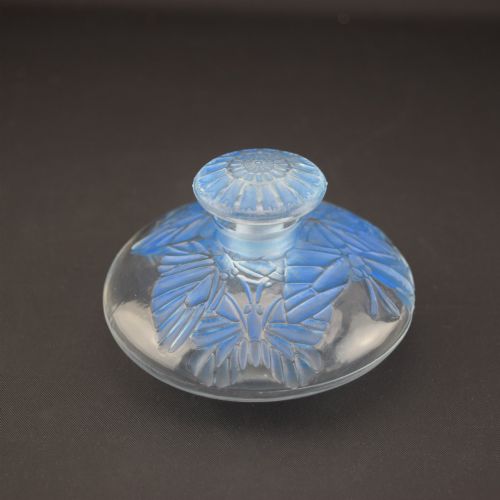


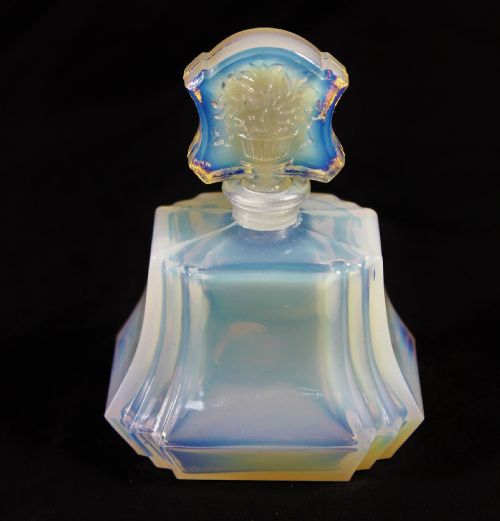


Opalescent Glass Perfume Bottle
An opalescent glass perfume bottle catches the light with milky blue and amber tones, offering a tactile piece of dressing table history.
What these pieces are
An opalescent glass perfume bottle is a small vessel designed for holding scent, distinguished by glass that diffuses light into milky or bluish tones. These pieces range from Victorian examples to Art Deco designs.
Art Deco pieces from the nineteen thirties dominate the selection, bringing stylised moulding and characteristic milky luminescence to dressing tables. Victorian and turn of the century examples provide an alternative aesthetic with distinct stylistic cues.
How they were made
Makers utilised pressed glass and blown glass techniques to shape these vessels, incorporating optical effects that create the characteristic opalescence. The interaction of light relies on specific chemical content within the glass mix during cooling.
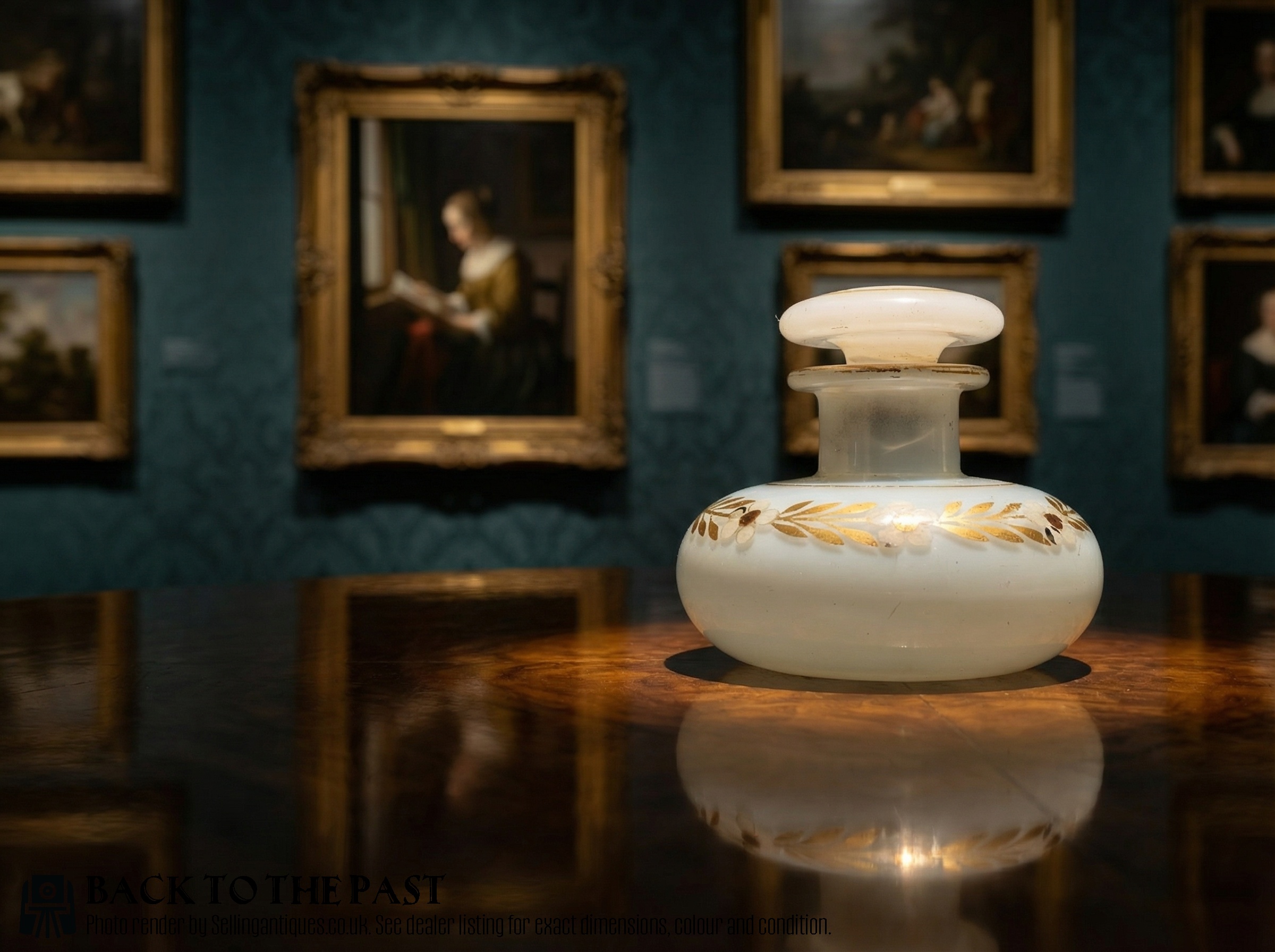
Certain pieces integrate enamel and gold leaf surface decoration applied over the glass body. These supplementary materials add contrast and detail to the tactile moulded surfaces.
Listings span Victorian and Art Deco periods, utilising opalescent glass, pressed glass, enamel and gold leaf.
What varies in quality
Quality rests in the depth and clarity of the opalescent effect within the glass, which determines how vividly the milky and iridescent tones catch the light. Superior moulding reveals crisp details in the design rather than softened edges.
The presence and preservation of delicate surface details such as enamel or gold leaf elevate certain examples above plain glass bodies. Maker attribution also plays a role, with established workshops demonstrating greater refinement in finishing.
Sabino·Salviati
The Opalescent Glass Perfume Bottle Glossary
- Opalescent glass
- Glass that displays a milky, bluish or amber translucency caused by the refraction of light through bone ash or other agents. This optical property creates shifting tones depending on the angle of illumination.
- Pressed glass
- Glass shaped by being pressed into a metal mould using a plunger, allowing for consistent patterns and relief decoration. This technique became widespread during the nineteenth century.
- Art Deco
- A design style from the interwar period characterised by stylised geometric forms, streamlined shapes and modern motifs. It heavily influenced French glass production.
- Enamel
- Opaque vitreous material fused to the surface of the glass through heat for decoration. It provides contrasting colour and tactile relief.
Frequently Asked Questions
How do I date an opalescent glass perfume bottle?
Dating relies on stylistic indicators such as Victorian ornamentation versus Art Deco geometry, alongside manufacturing methods and maker attribution.
Examining the depth of the glass and any signature marks helps place the piece within a specific era of production.
Were these bottles meant for display or travel?
Most surviving examples served as dressing table accessories intended for domestic display and daily personal use rather than rugged travel.
Their decorative qualities made them centrepieces on vanity trays alongside other cosmetic vessels.
How should I clean my perfume bottle?
Gentle dusting with a soft cloth preserves the delicate glass surface and any applied enamel or gold leaf details without causing abrasion.
Harsh chemical immersion should be avoided to protect the exterior finish and internal residue.
What causes the milky blue effect?
The milky blue luminescence results from specific glass recipes that scatter light waves as they pass through the translucent material.
This optical phenomenon is deliberately triggered during the cooling process by the glassmaker.