


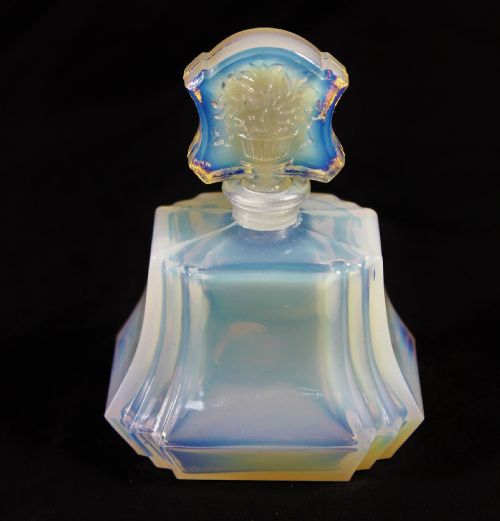


Sabino Opalescent Glass
Sabino opalescent glass combines French Art Deco design with luminous milky tones, offering collectors striking figures, dishes, and perfume bottles from the nineteen thirties.
Sabino Opalescent Glass
Sabino opalescent glass encompasses decorative objects from the Art Deco period, notably originating in France during nineteen thirty. Buyers hunting for these pieces frequently encounter perfume bottles, sculptures, figurines, and decorative dishes.
The selection ranges from sculptural figures such as caryatids to functional perfume bottles and chargers. Fish motifs appear across chargers and vases within the available forms.
Light shades also emerge in the records, demonstrating the breadth of decorative items produced. Perfume bottles represent the most commonly met form on this page.
Making Sabino opalescent glass
Makers utilised pressed glass techniques to shape objects while incorporating opalescent and frosted glass properties. This method allowed artisans to achieve the distinctive milky blue glow characteristic of the material.
Pieces frequently carry signatures identifying their origin from the French workshops. The interaction between light and the glass surface relies entirely on the specific moulding and cooling processes of the nineteen thirties.
Listings feature items exclusively from the Art Deco period, centred around nineteen thirty.
Evaluating quality in Sabino opalescent glass
Quality depends upon the crispness of the moulded detail in sculptural figures and decorative dishes. Sharper definition in complex forms like caryatids or fish motifs indicates superior production standards.
The intensity and distribution of the opalescent effect across the glass surface influence the visual appeal of each piece. Consistency in the frosted finish and clarity of signatures further distinguish individual items.
Marius Ernest Sabino
The Sabino Opalescent Glass Glossary
- Opalescent glass
- Glass that diffuses light to display a milky blue or white appearance. This optical effect shifts depending on the angle of illumination.
- Art Deco
- A design style dominant in the nineteen thirties characterised by stylised motifs and sleek lines. Objects from this period reflect contemporary French aesthetic trends.
- Pressed glass
- Glass shaped by being pressed into a mould using a plunger. This technique enabled the consistent production of intricate decorative patterns and figures.
- Frosted glass
- Glass with a textured, matte surface created by acid etching or sandblasting. It diffuses light gently and highlights the contours of sculptures.
- Charger
- A large decorative plate or dish used for display. These items often feature central motifs such as fish.
Sabino Opalescent Glass: Frequently Asked Questions
What is Sabino opalescent glass?
Sabino opalescent glass consists of decorative items produced in France during the Art Deco period. These objects display a characteristic milky blue glow when light strikes the surface.
The range includes perfume bottles, sculptures, figurines, chargers, and light shades. Most examples date from around nineteen thirty.
How do I identify Sabino glass?
Identification relies on finding signatures on the glass surface alongside distinct Art Deco styling. The presence of opalescent or frosted glass is a primary indicator.
Common forms such as perfume bottles and fish motifs help verify the origin. French production in the nineteen thirties provides the historical context for these pieces.
Where were these pieces made?
These glass objects were manufactured in France during the nineteen thirties. French workshops produced items ranging from small perfume bottles to large sculptural figures.
The design reflects the prevailing Art Deco aesthetic of the era. Makers utilised pressed glass techniques to achieve the desired forms.
How should I display opalescent glass?
Displaying these pieces effectively requires thoughtful placement near light sources. Light passing through opalescent and frosted glass enhances the milky blue visual effect.
Objects like chargers, vases, and figurines benefit from open placement where their contours remain visible. Perfume bottles can be grouped together to showcase variations in form.