
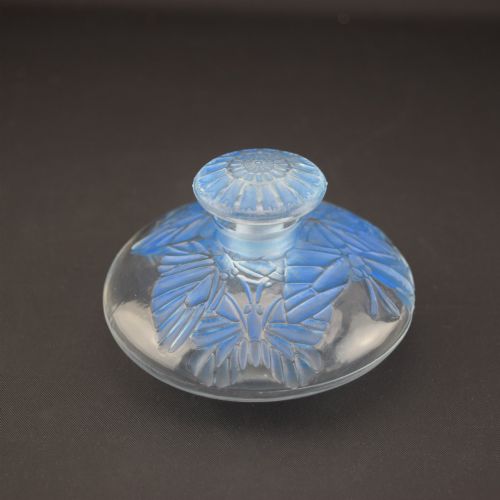


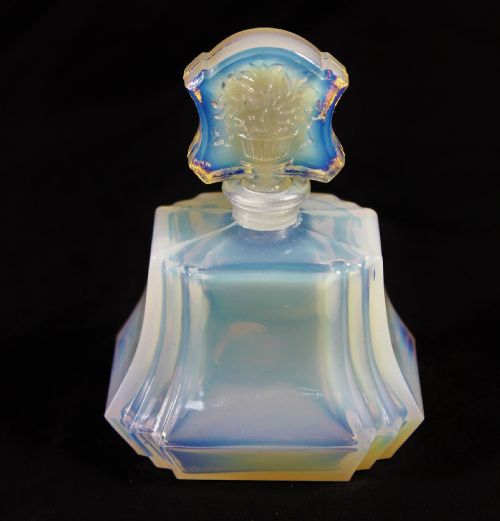


Blue Opalescent Vanity Bottle
A blue opalescent vanity bottle brings a translucent milky glow to a dressing table, catching the light with soft shifts from azure to pale amber.
Blue Opalescent Vanity Bottle
When you search for a blue opalescent vanity bottle, you are looking at small glass vessels designed for scent and dressing table use during the early decades of the twentieth century. These pieces combine utilitarian function with decorative glassmaking from the Art Nouveau and Art Deco periods.
The most common examples you will meet on this page are French pieces originating from the nineteen-tens through to the nineteen-thirty decades. They frequently take the form of perfume bottles featuring moulded stoppers and distinct opalescent glass effects.
How they were made
Makers utilised pressed glass techniques to shape intricate sculptural details into the body and stopper of each vessel. This method allowed workshops to produce complex floral and insect motifs consistently across multiple examples.
The characteristic blue opalescence is achieved through specific chemical agents added to the glass batch during melting, which scatter light to create a milky, iridescent glow. Frosted glass areas are often incorporated to contrast with the translucent blue depths.
Some stoppers take the form of delicate butterflies, ensuring the scent bottle appears ready to flutter away from the dressing table.
What varies in quality
The distinction between standard production and exceptional work lies in the crispness of the moulded relief and the depth of the opalescent effect. Finer pieces display sharply defined motifs on both the bottle and its matching stopper.
The quality of the glass itself, including the even distribution of the opalescent haze and the purity of the blue tint, separates simpler glassware from the output of master glassmakers.
Rene Lalique·Sabino
The Blue Opalescent Vanity Bottle Glossary
- Opalescent Glass
- Glass that diffuses light to display a milky, iridescent appearance that often shifts in colour when viewed from different angles. This effect is a defining characteristic of the vanity bottles found here.
- Pressed Glass
- Glassware shaped by pressing molten metal into a metal mould using a plunger. It enabled the mass production of highly decorated scent bottles with complex surface patterns.
- Frosted Glass
- Glass treated to achieve a textured, matte surface finish rather than a clear transparency. It is frequently used on stoppers and body details to contrast with polished glass.
- Art Deco
- A design style spanning the nineteen-twenties and nineteen-thirties characterised by sleek geometric lines and stylised motifs. Many vanity bottles from this era reflect these modern aesthetic tendencies.
- Art Nouveau
- An earlier stylistic movement favouring organic forms, flowing lines, and inspirations drawn from nature. Perfume bottles from this period often incorporate butterfly or floral stoppers.
Blue Opalescent Vanity Bottle: Frequently Asked Questions
What is a blue opalescent vanity bottle used for?
These vessels were originally manufactured to hold perfume or scented water on a dressing table or vanity surface. Their decorative qualities meant they served as ornamental objects as much as functional containers.
Today, collectors acquire them primarily for display, appreciating the way the glass interacts with natural light in a domestic setting.
How do I identify an Art Deco vanity bottle?
Art Deco pieces typically display clean geometric lines, symmetrical moulding, and stylised decorative motifs that reflect the design sensibilities of the nineteen-thirties. The stoppers often feature bold, stepped shapes or simplified natural forms.
Comparing the overall silhouette and moulding style against known period examples helps confirm the design era.
What causes the blue glow in opalescent glass?
The milky blue effect is created by adding specific minerals, such as bone ash or arsenic compounds, to the molten glass batch. When light strikes the cooled glass, these microscopic particles scatter the shorter blue wavelengths.
This optical phenomenon produces the characteristic opalescence that changes appearance depending on the angle of illumination.
How should I display these glass bottles?
Place them near a natural light source, such as a window or a vanity mirror, to allow the opalescent glass to catch and scatter the illumination. Adequate spacing between pieces ensures each bottle can be viewed individually.
Ensure the display surface is stable and secure, as these historic glass objects are delicate and prone to tipping.