




Opalescent Scent Bottle
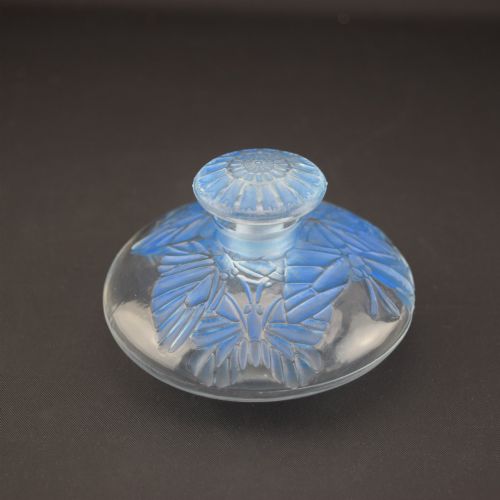
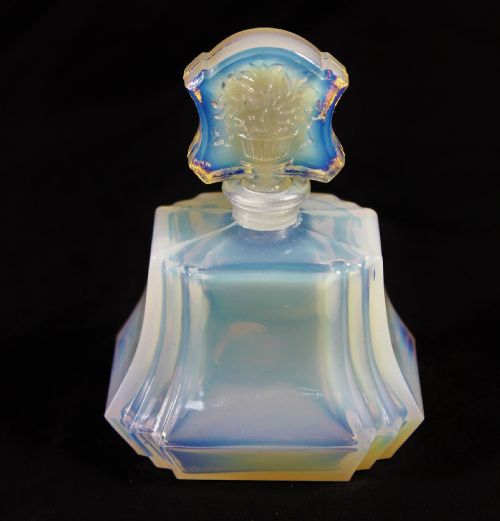
An opalescent scent bottle catches the light with milky, shifting colours, offering a tactile piece of dressing table history.
Opalescent Scent Bottle
When you search for an opalescent scent bottle, you encounter small glass containers designed to hold perfume that display a milky, translucent quality with fire-opal highlights. These objects span several decades of design, appearing most frequently in French Art Deco and Victorian forms.
The pieces on this page range from Victorian silver-mounted designs of the late nineteenth century to French moulded glass productions of the nineteen-thirties. You will find both stoppered bottles and atomisers, reflecting the changing dressing table habits of collectors over the periods represented.
Materials and construction
The manufacture relies primarily on opalescent glass, frosted glass, and pressed glass, occasionally incorporating blue stained glass or vaseline glass. These materials are shaped through moulding and pressing techniques to achieve the characteristic play of light across the surface.
Many examples are finished with sterling silver mounts, screw caps, or hinged lids that secure the contents. Makers employed specialised cooling and chemical additions to the glass batch to create the translucent, milky glow visible in the finished items.
Several bottles feature delicate glass butterflies perched permanently on their stoppers, ready to take flight from the dressing table.
Assessing quality and craftsmanship
The distinction between tiers of the range lies in the crispness of the moulded relief and the depth of the opalescent fire within the glass. Superior examples show precise control over the milky iridescence, particularly where the glass thickens at the edges or in low relief.
Design complexity also marks the upper tier, seen in sculptural stoppers shaped as butterflies or intricate geometric motifs. The integration of metalwork, such as hallmarked sterling silver mounts, adds structural and decorative weight that elevates the construction.
Rene Lalique·Sabino·Salviati
The Opalescent Scent Bottle Glossary
- Opalescent glass
- Glass that exhibits a milky, bluish or amber translucence when viewed in transmitted light, caused by the addition of bone ash or arsenic to the melt. This optical effect creates the characteristic shimmering edge highlights.
- Vaseline glass
- Transparent or translucent yellowish-green glass containing uranium dioxide, which glows brightly under ultraviolet light. It appears frequently in nineteenth-century and early twentieth-century decorative objects.
- Pressed glass
- Glass formed by pressing molten metal into a mould using a plunger, allowing for rapid and consistent replication of intricate patterns. This technique defined much of the mass production in the Victorian era and later.
- Frosted glass
- Glass rendered opaque and non-reflective through acid etching or sandblasting. The resulting matte texture diffuses light softly across the surface of the bottle.
Opalescent Scent Bottle: Frequently Asked Questions
How do I date an opalescent scent bottle?
Dating relies upon stylistic markers such as Victorian silver mounts or Art Deco geometric moulding. The distinct design eras, spanning from the eighteen-seventies to the nineteen-thirties, guide attribution.
Examining the signature, if present, and the manufacturing technique helps confirm the period of origin.
What is vaseline glass?
Vaseline glass is a distinct type of greenish-yellow glass containing trace amounts of uranium. It derives its name from its yellowish petroleum-like colour.
Under ultraviolet light, this glass produces a bright green fluorescent glow.
How were these bottles used?
These containers served as functional dressing table accessories for holding liquid perfumes and scent waters. The stoppers kept the volatile contents sealed between uses.
Many featured silver lids or atomiser attachments for daily application.
Are these bottles fragile?
Like all antique glassware, these pieces require careful handling to prevent chipping or cracks, particularly around the delicate rims and moulded stoppers. Silver mounts add some structural protection.
Displaying them away from high-traffic edges ensures their preservation.