
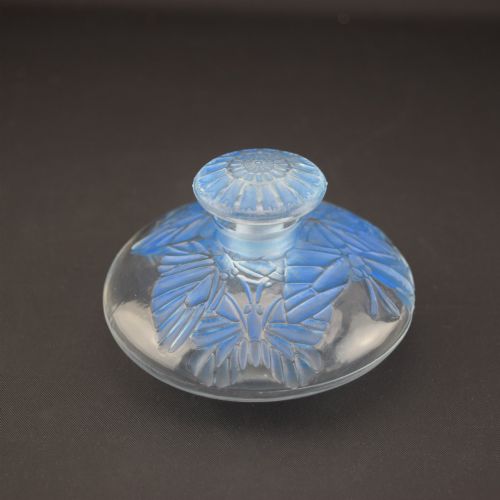


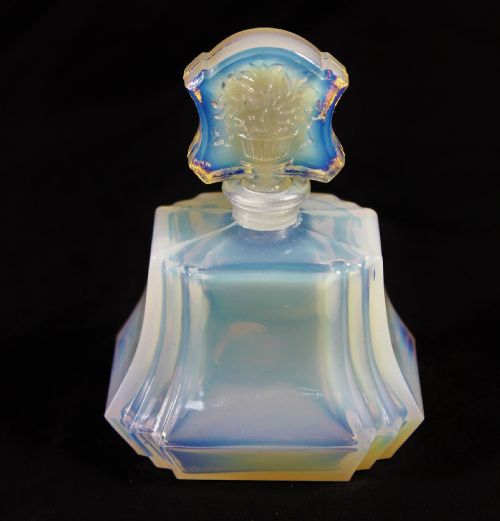


Antique Opalescent Perfume Bottle
These antique opalescent perfume bottle examples shift light between milky white and blue, catching the eye on any dressing table.
Antique Opalescent Perfume Bottle
An antique opalescent perfume bottle combines translucent glass with a milky or bluish shimmer that reacts to changing light conditions. When collectors search for an antique opalescent perfume bottle, they frequently encounter pieces spanning from the Victorian era through the Art Deco period.
The selection here ranges from Victorian vaseline glass and Venetian glass to French Art Deco moulded pieces. Moulded glass forms dominate the later decades, often bearing signatures from notable glassworks.
Early examples include Victorian sterling silver mounted scent bottles alongside delicate Art Nouveau creations. The twentieth century brought stylised motifs such as butterflies and geometric mouldings to these small vessels.
Materials and manufacture
Glassmakers created the characteristic milky refraction in an antique opalescent perfume bottle by adding bone ash or other agents to the molten batch. Subsequent reheating or pressing brought out the distinctive fire in the glass.
Pressed glass techniques allowed makers to achieve sharp relief on decorated stoppers and bodies. Silver mounts on Victorian scent bottles required traditional metalworking skills to secure glass collars.
Listings feature opalescent glass, frosted glass, and vaseline glass across Victorian, Art Nouveau, and Art Deco styles.
Assessing quality and craftsmanship
Depth of colour and clarity of the opalescent effect distinguish finer vessels from simpler production pieces. Crispness in moulded details, particularly around figural stoppers, indicates superior execution by the glassworks.
The integration of metal elements, such as sterling silver collars on Victorian scent bottles, reflects the original tier of manufacture. Clean signatures or moulded marks provide clear attribution to individual designers and houses.
Rene Lalique·Sabino·Salviati
The Antique Opalescent Perfume Bottle Glossary
- Opalescent glass
- Glass that exhibits milky blue or white highlights when lit from the front, changing appearance against transmitted light. This optical property defines the primary aesthetic of these scent bottles.
- Vaseline glass
- Glass containing uranium dioxide that glows under ultraviolet light. Victorian makers frequently utilised this material for scent bottles.
- Pressed glass
- Molten glass shaped by being pressed into a metal mould with a plunger. This technique enabled intricate surface patterns on Art Deco perfume bottles.
- Sterling silver
- Silver alloy containing 92.5 percent pure silver by mass. Victorian makers used this metal for bottle caps and collars.
Antique Opalescent Perfume Bottle: Frequently Asked Questions
How do I date an opalescent scent bottle?
Dating relies on stylistic clues, mounting materials, and moulded signatures. Victorian pieces often feature sterling silver collars, whereas Art Deco examples display geometric or stylised natural motifs.
Maker signatures pressed or etched into the glass base offer the most precise chronological indicator. Comparing the manufacturing technique against known periods narrows the timeline further.
What causes the milky blue glow?
The optical effect stems from specific chemical additives suspended within the glass mixture. Light scattering through these microscopic particles creates the characteristic translucent shimmer.
Different glass houses formulated their batches to achieve varied intensities of blue and white refraction. This reaction to light remains the defining characteristic of the material.
Are stoppers usually original to the bottle?
Matching stoppers present a key consideration for collectors of moulded glass perfume vessels. Production methods often involved custom grinding the stopper to fit its specific neck.
Examining the interior neck and the base of the stopper helps confirm if they were made together. Original stoppers retain consistent wear patterns and glass tone.
How should I display these glass bottles?
Positioning these vessels near natural light sources enhances the opalescent colour shift. Shelving with backlighting allows the characteristic blue and milky tones to activate fully.
Stable surfaces away from edge risks protect delicate moulded glass and silver mounts from accidental knocks. Minimal handling preserves the surface finish.