




French Opalescent Glass Bottle
A french opalescent glass bottle catches the light with milky blues and amber fires, bringing tangible French artistry to a dressing table.
French Opalescent Glass Bottle
When you search for a french opalescent glass bottle, you are looking at small dressing table vessels designed primarily to hold perfume. The pieces gathered here date from the early decades of the twentieth century, spanning the Art Nouveau and Art Deco periods.
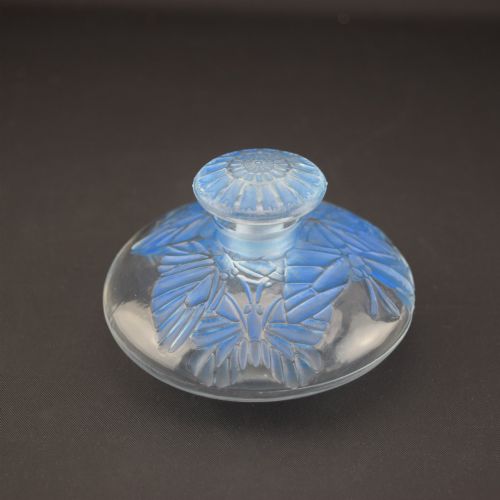
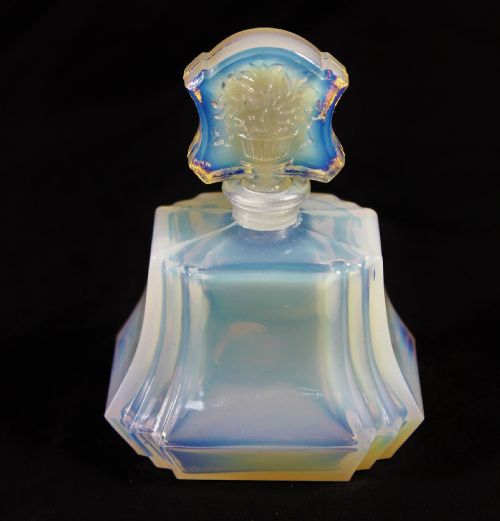
The version you are most likely to meet on this page takes the form of a moulded perfume bottle created by makers such as Rene Lalique and Sabino. These examples demonstrate the characteristic milky, light-capturing quality that defines the opalescent medium.
Manufacture and materials
Makers utilised pressed glass techniques to achieve intricate moulded motifs, ranging from butterflies to geometric Art Deco patterns. The addition of special agents during melting caused the glass to scatter light, appearing blue against a dark background and warm amber when lit from the front.
Frosted glass finishes were frequently employed to contrast with polished highlights, giving depth and texture to the surface of each perfume bottle. Blue stained glass details also appear, enhancing specific elements of the moulded decoration.
The site listings span three distinct decades from 1910 to 1930, capturing the transition from Art Nouveau curves to Art Deco geometry in pressed glass.
Assessing quality and distinction
The distinction between standard production and exceptional work rests on the crispness of the moulded relief and the intensity of the opalescent effect. Finer pieces display sharper details in motifs like butterflies and possess a more luminous inner glow when turned in the light.
Signature placement and clarity also distinguish the output of major workshops. Clear, legible signatures or moulded marks confirm the origin of the piece and separate named studio work from unmarked production.
Rene Lalique·Sabino
The French Opalescent Glass Bottle Glossary
- Opalescent glass
- Glass that diffuses light so that it appears milky-blue from one angle and warm amber from another. This optical property results from the chemical composition and cooling process used by the glassmaker.
- Pressed glass
- Glass shaped by being pressed into a metal mould using a plunger. This technique allowed makers to produce complex decorative relief patterns consistently.
- Frosted glass
- Glass treated to achieve a matte, non-reflective surface texture. It was frequently used to create contrast against clear or polished sections.
- Art Deco
- A design style dominant in the 1920s and 1930s characterised by streamlined geometric forms and stylized motifs. Many items on this page reflect this aesthetic.
French Opalescent Glass Bottle: Frequently Asked Questions
What is a french opalescent glass bottle?
A french opalescent glass bottle is a decorative perfume vessel produced in France during the early twentieth century. These objects combine moulded glass techniques with a signature milky optical effect.
They serve as both dressing table accessories and collected examples of twentieth-century glass design.
How do I date these perfume bottles?
Dating relies on stylistic markers such as Art Nouveau floral designs or geometric Art Deco lines. The listings here centre on the decades between 1910 and 1930.
Makers' signatures and specific manufacturing methods further help anchor each piece to its production era.
How should I display them?
Place these bottles where natural light can pass through them to activate the opalescent colour shift. Positioning them near a window or on a mirrored tray enhances their translucent qualities.
Keep them away from busy backgrounds so the moulded details remain clearly visible.
How do I clean my bottle?
Clean opalescent glass gently using lukewarm water and a mild detergent. Avoid harsh scrubbing or abrasive cloths that could damage frosted surfaces or delicate moulded details.
Dry the piece thoroughly with a soft, lint-free cloth to maintain its finish.