





Opalescent Centrepiece Dish
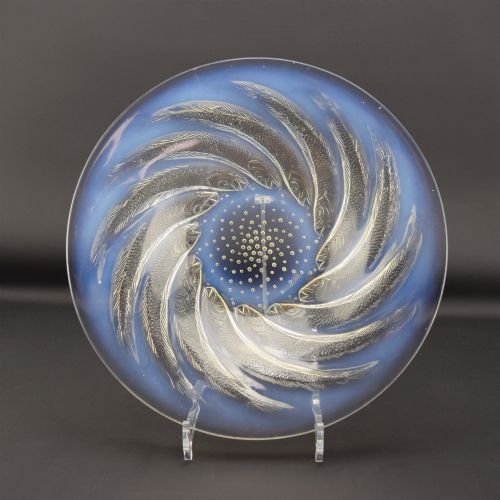
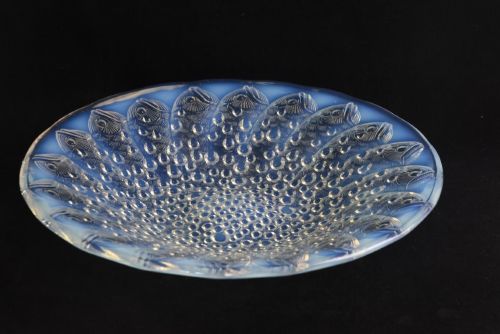
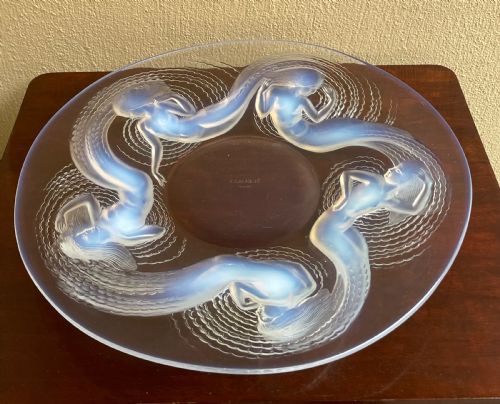
An opalescent centrepiece dish catches the light with milky blues and amber tones, bringing undeniable presence to a table.
Opalescent Centrepiece Dish
An opalescent centrepiece dish is a striking decorative vessel designed to command attention in the middle of a table or sideboard. These items emerge primarily from the Edwardian period and the 1920s through to the 1930s, capturing the spirit of Art Deco design.
The pieces you encounter on this page span several specific forms, including shallow bowls, footed bowls, chargers, salvers, and tazzas. Makers such as Rene Lalique, Jobling, and Etling dominate these examples, presenting moulded glass works that rely on optical effects.
Buyers seeking an opalescent centrepiece dish want a functional work of art that uses milk-like translucency and surface relief to play with ambient illumination. Every piece listed here demonstrates how glassmakers manipulated chemical compounds to create shifting colour play across raised motifs.
Materials and Techniques
Makers utilised glass, frosted glass, and specifically opalescent glass to achieve the signature milky and iridescent qualities of these vessels. By adding bone ash or other agents to the molten batch, manufacturers produced glass that appeared blue when viewed by transmitted light and warm amber or yellow by reflected light.
Production relied heavily on press-moulded and mould-blown techniques, allowing workshops to achieve deep relief decoration. Molten metal was pressed into intricate iron or bronze moulds, capturing fine sculptural details of fish, flowers, and geometric patterns before the piece was cooled and hand-finished.
Opalescent Centrepiece Dish Retail Price Guide 2026
Typical asking prices for opalescent centrepiece dish among the pieces listed under this phrase on Sellingantiques today, from the lower quarter to the upper quarter. They describe what is for sale here now, not the wider market.
Glassmakers accidentally discovered opalescent recipes by adding bone ash and arsenic to molten batches, turning kitchen waste into table royalty.
Evaluating Quality
Quality in these glass vessels rests upon the crispness of the mould relief and the depth of the opalescent fire. Superior examples display sharp, well-defined motifs where the milky opalescence concentrates evenly on the raised surfaces.
The handling of the glass surface also distinguishes superior production. Better pieces exhibit careful polishing and finishing that enhances the contrast between clear and frosted areas, creating a more pronounced play of light across the design.
Rene Lalique·Jobling·Etling
The Opalescent Centrepiece Dish Glossary
- Opalescent glass
- Glass that diffuses light so that it appears milky-blue in daylight and warm amber against a dark background. This optical effect is achieved through specific chemical additions during the melting process.
- Press-moulded
- A manufacturing method where molten glass is forced into a metal mould using a plunger. This technique allows for consistent, highly detailed relief patterns on the exterior of bowls and dishes.
- Coupe ouverte
- French term for an open bowl or shallow dish. It describes the wide, open form frequently utilised for display centrepieces during the Art Deco era.
- Tazza
- A decorative shallow bowl or plate raised on a central foot or pedestal. These pieces function visually to elevate fruit or floral arrangements above the table surface.
- Salver
- A flat or slightly dished decorative plate traditionally used for presentation. In glass production, these items feature broad rims decorated with moulded motifs.
Opalescent Centrepiece Dish: Frequently Asked Questions
What is an opalescent centrepiece dish?
An opalescent centrepiece dish is a moulded glass bowl or charger designed for display, featuring milky, light-catching qualities that shift in tone.
These vessels date predominantly from the Edwardian era through the 1930s and showcase prominent Art Deco motifs.
How do I style a glass centrepiece dish?
Place the dish on a dining table, sideboard, or wooden surface where natural light can pass through the glass to activate the opalescent effect.
Because of their striking sculptural relief, these pieces work well empty as standalone decorative objects or holding seasonal displays.
What is the difference between frosted and opalescent glass?
Frosted glass has a uniformly matte, acid-etched surface that diffuses light evenly across the entire piece. Opalescent glass scatters light unevenly, creating a distinct colour play where raised areas appear milky-blue and recessed parts glow amber.
Many centrepieces combine both techniques, using frosted backgrounds to make the opalescent relief details stand out.