

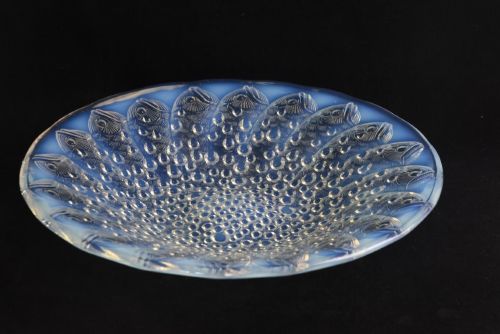


Clear Opalescent Glass Dish
These pieces of clear opalescent glass dish capture light with a milky blue fire, offering striking tableware from the early twentieth century.
Clear Opalescent Glass Dish
A clear opalescent glass dish takes the form of decorative bowls, glass bowls, plates, plates and chargers, and decorative plates. When buyers search this phrase, they find moulded glass vessels created during the art deco period.
The objects stem predominantly from the nineteen-twenties and nineteen-thirties. Formations range from deep coupe ouverte bowls to flat plates featuring named motifs.
Moulded glass items dominate the selections encountered on this page. Each example relies on the interplay between transparent glass and milky, blue-white surface refraction.
Methods of manufacture
Makers utilised moulded glass techniques during the art deco period to shape these vessels. Molten material was pressed into metal forms to yield defined relief patterns.
Opalescent glass derives its characteristic appearance from specific chemical agents added to the batch, which scatter light and create a characteristic blue or orange glow under direct illumination.
Clear Opalescent Glass Dish Retail Price Guide 2026
Typical asking prices for clear opalescent glass dish among the pieces listed under this phrase on Sellingantiques today, from the lower quarter to the upper quarter. They describe what is for sale here now, not the wider market.
These glass pieces change their colour depending on how the light hits them, glowing blue in the room and amber against the window.
Judging quality in opalescent glass
Quality rests upon the crispness of the moulded relief and the depth of the opalescent effect within the glass. Stronger contrast between the clear body and the milky highlights marks superior examples.
The artistic execution of specific floral or aquatic motifs, such as shells, leaves, and fish, dictates the desirability of individual bowls and plates.
Rene Lalique
The Clear Opalescent Glass Dish Glossary
- Opalescent glass
- Glass that displays a milky blue or white appearance when viewed by reflected light, yet appears yellowish-brown by transmitted light. This optical property defines the entire category.
- Moulded glass
- Glass formed by pressing molten metal into a metal or wooden mould rather than blowing it freehand. This technique allows for consistent production of patterned tableware.
- Coupe ouverte
- An open bowl shape with wide, shallow sides often utilised for display or serving. Such forms showcase the luminous qualities of the material.
- Art deco
- A design style characterised by stylised motifs, geometric symmetry, and streamlined forms. The pieces seen here sit firmly within this aesthetic movement.
Clear Opalescent Glass Dish: Frequently Asked Questions
What periods do these dishes come from?
The available items date from the nineteen-twenties and nineteen-thirties. These decades represent the height of art deco design in glassware.
Production during this era relied on specific moulding methods that produced characteristic opalescent effects.
How were these glass dishes used?
These vessels served primarily as decorative bowls and decorative plates within fashionable homes. Their light-catching properties made them suitable for central display.
Smaller examples functioned as plates and chargers for dining tables, combining utility with decorative art deco styling.
What materials make glass opalescent?
Opalescent glass contains specific opacifying agents added during the melting process. These agents cause the glass to scatter shorter wavelengths of light.
This chemical reaction creates the milky blue glow characteristic of moulded glass items from the period.