





Opalescent Centerpiece Dish
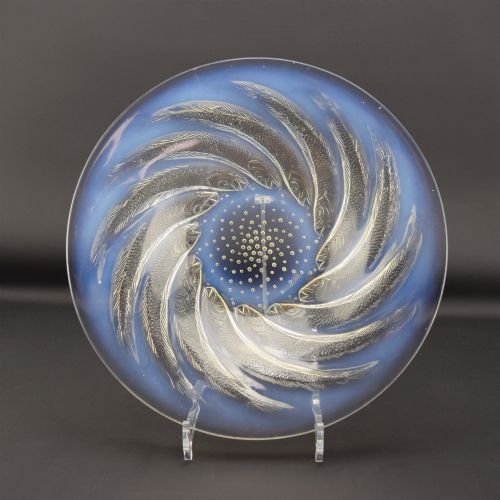
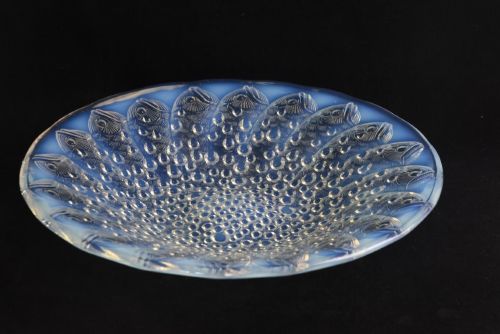
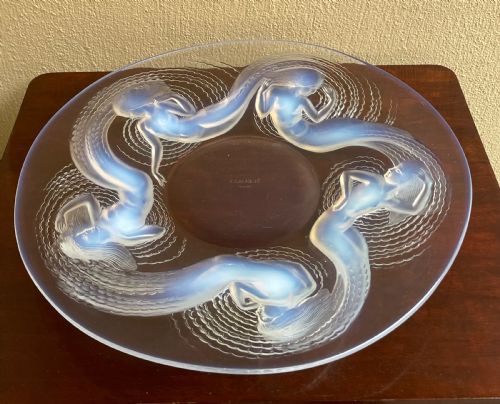
An opalescent centerpiece dish catches the light with milky blues and amber fires, bringing Art Deco presence to any room.
Opalescent Centerpiece Dish
An opalescent centerpiece dish is a striking table vessel designed to catch the light, appearing milky blue in transmitted light and warm amber in reflected light. These pieces emerge predominantly from the Art Deco period, spanning the nineteen twenties and nineteen thirties, alongside Edwardian examples.
Buyers will encounter various forms on this page, including shallow bowls, footed bowls, chargers, salvers, plates, and tazzas. These decorative dishes serve as visual anchors for a room, combining practical form with sculptural glass artistry.
The selection ranges from large open bowls decorated with floral heads and fish to specialised designs like the Roscoff, Poissons, and Ondines models. Each object demonstrates the distinctive visual properties of opalescent glass within domestic settings.
How they were made
Makers utilised press-moulded and moulded glass techniques to shape heavy molten material into intricate low-relief patterns. The characteristic opalescence results from precise chemical agents added to the glass batch, which scatter light as the material cools.
Some examples incorporate frosted glass finishes alongside clear areas to heighten the contrast of the design. Workshops occasionally mounted glass bowls in metal or wood holders to create elevated centrepieces for the dining table.
Opalescent Centerpiece Dish Retail Price Guide 2026
Typical asking prices for opalescent centerpiece dish among the pieces listed under this phrase on Sellingantiques today, from the lower quarter to the upper quarter. They describe what is for sale here now, not the wider market.
Some bowls are named after garden flowers like dahlias and cornflowers, bringing perpetual blooms indoors without the need for watering.
What varies in quality
Quality rests on the crispness of the moulded relief and the depth of the opalescent effect within the glass. Finer examples display sharp definition in floral heads, fish scales, or figurative motifs, whereas lesser pieces exhibit softer contours.
The uniformity of the glass body and the subtle play of amber and blue tones separate standard production from superior artistry. Weight and thickness also contribute to the substantive feel of a well-executed charger or bowl.
Rene Lalique·Jobling Opalique·Etling
The Opalescent Centerpiece Dish Glossary
- Opalescent Glass
- Glass that diffuses light so that it appears milky or bluish when viewed by transmitted light and yellowish or reddish by reflected light. This optical property creates the distinctive shimmer seen across Art Deco decorative bowls.
- Coupe Ouverte
- French term meaning open bowl or open coupe, frequently used in period nomenclature for shallow vessels. These open forms display the moulded interior decoration to maximum effect.
- Tazza
- An Italian term for a shallow bowl or cup mounted upon a stem and foot. They function as elevated centrepieces on tables and sideboards.
- Charger
- A large decorative plate or dish used historically for ceremonial purposes or as a base beneath other courses. In glass, these massive pieces serve as prominent wall or table displays.
- Press-Moulded Glass
- Glass formed by pressing molten metal into a metal mould using a plunger. This technique allowed makers to achieve consistent patterns and deep relief.
Opalescent Centerpiece Dish: Frequently Asked Questions
What is an opalescent centerpiece dish?
An opalescent centerpiece dish is a decorative glass vessel from the early twentieth century designed to refract light through chemical agents in the glass. They were produced primarily during the Art Deco period.
These pieces take forms such as shallow bowls, chargers, and footed tazzas meant to sit on dining tables or sideboards as visual focal points.
How do I date an opalescent bowl?
Dating relies on stylistic markers of the Art Deco period, specific named glass models, and registered design numbers where applicable. Most pieces on this page originate from the nineteen twenties and nineteen thirties.
Maker signatures and registration marks stamped into the glass provide further chronological evidence for individual items.
How were these glass dishes used?
These vessels functioned primarily as decorative tableware and centrepieces for dining rooms and drawing rooms. Their reflective surfaces caught the gas or electric lighting of period interiors.
Larger chargers and salvers were displayed flat on tables or mounted for wall viewing, while deep bowls held fruit or flowers.
What causes the opalescent colour effect?
The milky blue and warm amber tones result from specific mineral additives mixed into the glass batch during manufacture. As the glass cools, these agents cause light scattering within the material.
Transmitted light reveals a cool blue shimmer, while reflected light shows a warm, fiery amber glow.
How do I care for antique glass?
Antique glass requires gentle cleaning with lukewarm water and mild soap to protect the delicate surface and frosted areas. Harsh scrubbing or chemical detergents can damage the exterior finish.
Ensure heavy bowls and chargers rest on stable, flat surfaces away from the edges of furniture to prevent accidental impact.