




Onyx Classical Urns
Onyx classical urns are stately decorative objects and converted lamps that bring nineteenth-century French elegance and warm stone tones into a room.
Onyx Classical Urns
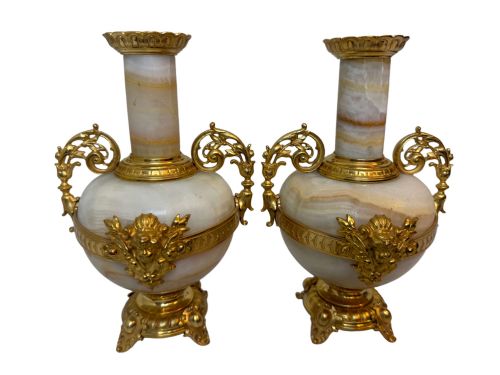
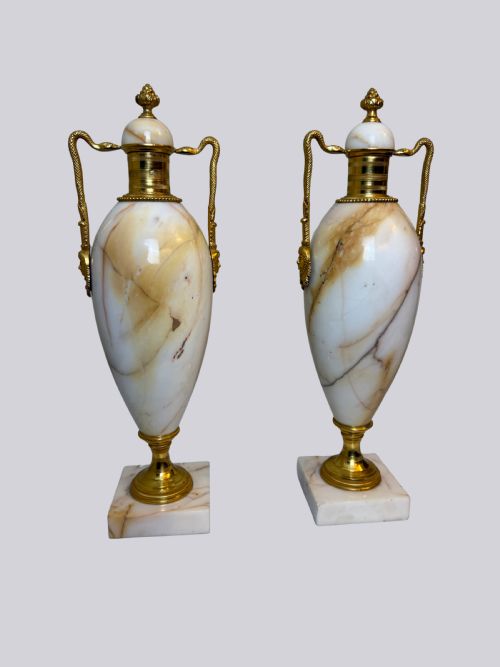
Most examples lean towards Neoclassical, French Empire, and Louis XVI styles, drawing directly on Grand Tour aesthetics. You will find amphora shapes, lidded urns, and dual-purpose cassolettes designed to function as both vases and perfume burners.
How they were made
Makers shaped natural white onyx and marble on lathes to create smooth, symmetrical urn bodies and lamp columns. Stonemasons turned the mineral blocks with precision, highlighting the natural banding and translucency of the material.
Foundries cast metal mounts in gilt bronze, ormolu, or gilt metal to embellish the stone bodies. Craftsmen applied these handles, collars, paw feet, and cherub motifs with mechanical pins and adhesives, uniting mineral and metal.
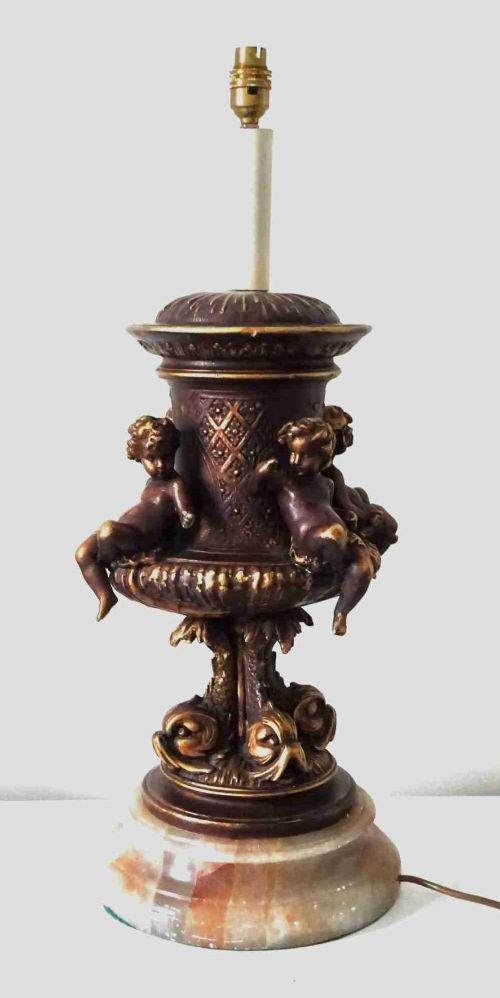
Several pairs feature sculpted dolphins and cherubs clinging to the stone, proving that nineteenth-century desks needed significantly more mythological sea creatures.
What varies in quality
The distinction between standard production and the finest work lies in the crispness of the cast metal mounts and the selection of the stone. Superior pieces display heavily chased gilt bronze with sharp relief work, whereas simpler items utilise plain brass or gilt metal.
Proportion and matching also determine the standing of a pair. The best examples exhibit carefully selected onyx with harmonious natural veining across both urns, alongside balanced neoclassical forms.
The Onyx Classical Urns Glossary
- Cassolette
- A decorative vessel with a reversible lid that functions either as a closed urn or a perfume burner. In antique pairs, the top often inverts to reveal a candle socket or a small basin.
- Ormolu
- Finely ground high-carat gold mercury-gilded onto a bronze base, creating a rich golden surface. This technique was widely employed by French makers on nineteenth-century mounts.
- Grand Tour
- A cultural journey undertaken by wealthy young Europeans in the eighteenth and nineteenth centuries to collect classical antiquities and art. Pieces from this tradition emulate ancient Greek and Roman forms.
- Amphora
- A two-handled jar with a narrow neck used in antiquity for storing oil or wine, which inspired nineteenth-century decorative urn shapes. The silhouette forms the base for many period table lamps.
Onyx Classical Urns: Frequently Asked Questions
Are onyx classical urns heavy?
These pieces possess substantial weight due to the solid stone bodies and cast bronze mounts. Placement requires a sturdy surface capable of supporting dense marble and mineral components.
Lamps and decorative urns should rest on stable furniture away from edges where accidental knocks might occur.
How do I clean onyx urns?
Dust the stone and metal components gently with a soft, dry cloth. Avoid commercial cleaning liquids, water, and chemical polishes which can damage the porous stone or strip the gilding from the bronze mounts.
Professional restoration is recommended for older pieces that require deep cleaning or rewiring.
Can these urns be used as lamps?
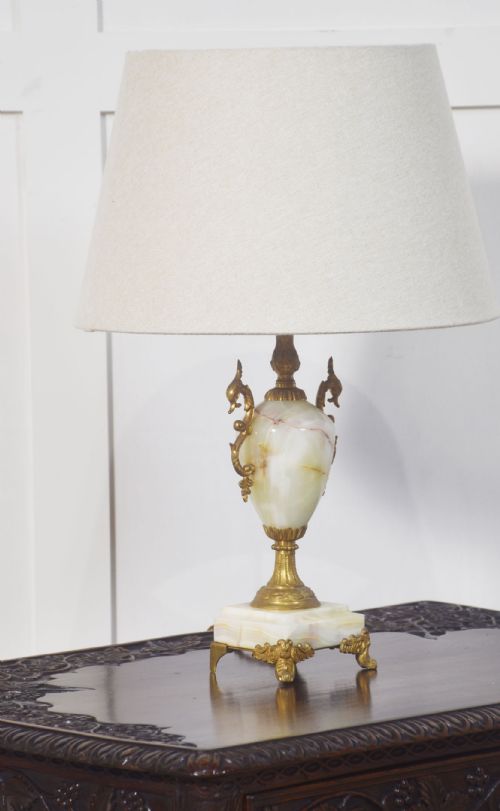
Many surviving examples were converted into table lamps during the early twentieth century or later. Wiring typically runs through the centre or alongside the mounts to illuminate the form.
Original decorative urns can sometimes be adapted for lighting, though conversion alters the piece from its initial state.
What styles define these pieces?
French Neoclassical, Empire, and Louis XVI aesthetics dominate this group. Design elements include paw feet, dolphin motifs, cherubs, and classical foliate mounts.
These decorative choices reflect nineteenth-century revivals of ancient Greek and Roman art.