






Onyx Base Statuette
An onyx base statuette brings the sleek dynamism of the early twentieth century into a room through figures mounted upon striking stone plinths.
Onyx Base Statuette
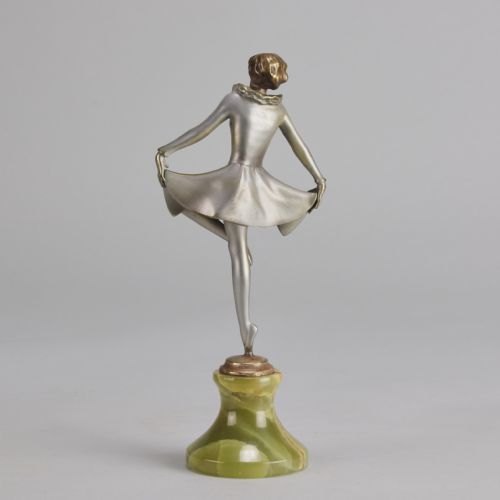
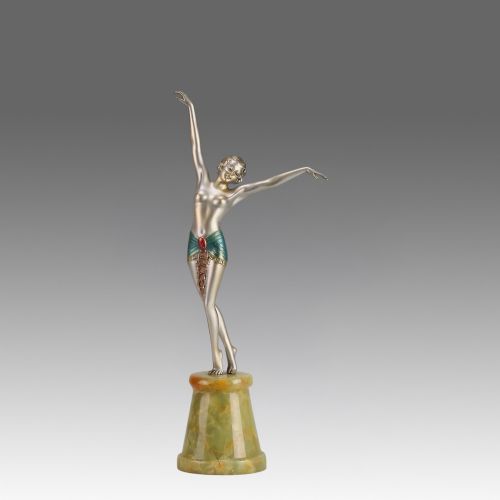
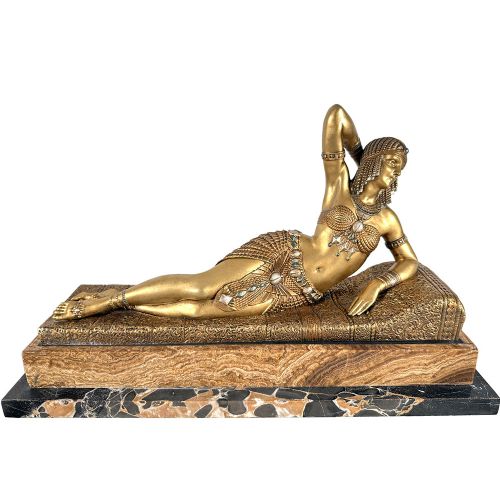
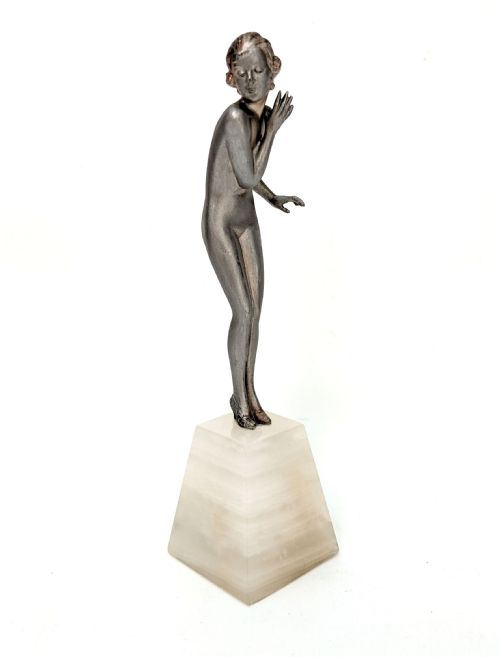
When you search for an onyx base statuette, you encounter sculptural works produced during the nineteen twenties and nineteen thirties. These pieces capture the distinctive Art Deco aesthetic through figures of dancers, female nudes, animals, and sporting subjects.
The objects take several forms across the current selection, appearing as sculptures, figurines, and even a table lighter. The figures themselves stand firmly anchored to heavy plinths of green onyx or marble, providing a solid architectural foundation for the metalwork above.
The most common examples on this page combine cast metal figures with polished stone bases characteristic of the interwar period. They represent both named European artists and anonymous foundry productions from the early twentieth century.
Materials and Construction
Foundries created the figurative elements of these statuettes using bronze or spelter as the primary casting metals. Makers then finished the surfaces with patination, gilding, silvering, or detailed cold-painted enamel colours to bring out the textures of clothing and skin.
The distinctive mounts utilise natural stone, specifically green onyx and marble, cut and polished into geometric or stepped plinths. Craftsmen secured the metal figures to these heavy stone bases using threaded bolts or pins inserted through the underside.
Onyx Base Statuette Retail Price Guide 2026
Typical asking prices for onyx base statuette among the pieces listed under this phrase on Sellingantiques today, from the lower quarter to the upper quarter. They describe what is for sale here now, not the wider market.
All listed statuettes date from the nineteen twenties and nineteen thirties, uniting bronze and spelter figures with green onyx or marble bases.
Assessing Quality and Execution
The distinction between ordinary and superior pieces rests in the crispness of the metal casting and the subtlety of the surface finishing. Finer statuettes display sharply rendered facial expressions, delicate hand-painted details, and smooth patination that retains its original depth.
The quality of the stone base contributes significantly to the overall presence of the object, with dense, evenly marked green onyx or marble elevating the work. Well-executed pieces show precise matching between the proportions of the metal figure and the geometric weight of the stone plinth beneath.
Josef Lorenzl·Demetre Chiparus·Marion Willis Stanfield·Bruno Zach
The Onyx Base Statuette Glossary
- Art Deco
- A design style of the nineteen twenties and thirties characterised by sleek lines, stylised forms, and modern materials. It dominates the aesthetic of interwar sculpture and decorative metalwork.
- Spelter
- A zinc alloy commonly used as a cost-effective alternative to bronze in twentieth-century figure casting. It often received bronze-like or cold-painted finishes to mimic higher-grade metals.
- Cold-Painted Bronze
- A technique where enamel paint is applied to a bronze casting without subsequent high-temperature firing. This method allowed for vibrant, multi-coloured clothing and facial details on figures.
- Green Onyx
- A banded variety of chalcedony prized for its translucent green tones, frequently utilised for architectural clock cases and sculpture bases. It provides a heavy, polished mounting surface for metal statuettes.
Onyx Base Statuette: Frequently Asked Questions
What materials make up these statuettes?
The listings combine cast metals such as bronze and spelter with heavy polished stone plinths.
Surfaces frequently feature cold-painted enamel, silvering, or patination applied directly to the metal figures.
How do I identify the period?
These works date strictly to the nineteen twenties and nineteen thirties during the height of the Art Deco movement.
Stylised drapery, dynamic poses, and the use of green onyx bases serve as primary indicators of this era.
Where were these figures placed originally?
Owners displayed them on mantelpieces, desks, and side tables as decorative ornaments within domestic interiors.
Some iterations served dual purposes, functioning as functional items like table lighters alongside their sculptural role.
Why is green onyx used for the bases?
Green onyx provided a heavy, stable foundation that prevented tall or dynamic figures from tipping over.
Its polished surface and variegated green patterning complemented the metallic finishes of the Art Deco period.