






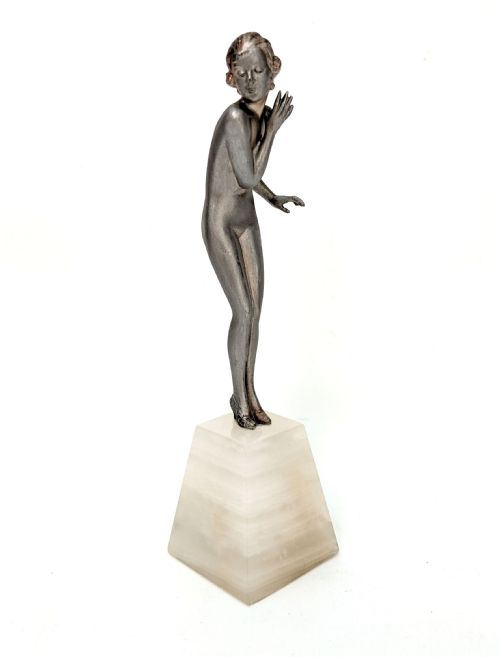


1930s Spelter Dancer
These 1930s spelter dancer figures and lamps capture the bold energy of Art Deco design, offering a striking display for any room.
1930s Spelter Dancer
When you search for 1930s spelter dancer, you are looking at figural sculptures, table lamps, and table lighters that embody the distinctive Art Deco aesthetic. The female figure remains the dominant form across these pieces, captured in dynamic motion or graceful poses.
You are most likely to meet figures mounted on substantial bases of marble, onyx, or alabaster. These sculptural works celebrate the dynamism of the dance through the distinctive medium of patinated metal.
How they were made
The figures are cast in spelter, a zinc-based alloy that permitted sharp detail during the interwar period. Artisans applied patinated finishes to these metal casts to simulate bronze or provide distinctive surface colouring.
Makers paired the metal figures with stone bases such as marble, onyx, and alabaster, while lamp variations integrated glass or frosted glass elements to diffuse light.
1930s Spelter Dancer Retail Price Guide 2026
Typical asking prices for 1930s spelter dancer among the pieces listed under this phrase on Sellingantiques today, from the lower quarter to the upper quarter. They describe what is for sale here now, not the wider market.
Listings show figures and lamps produced in the 1920 and 1930 periods, executed in spelter, marble, onyx, and frosted glass.
What varies in quality
The sophistication of the casting and the crispness of the surface detail distinguish finer figures from simpler production. Superior patination and careful finishing of the metal surface elevate the overall presence of the piece.
The choice and integration of the base material also mark the distinction between standard and finer examples. Dense, well-figured marble or onyx mounts provide structural balance and visual weight that lesser mountings lack.
Josef Lorenzl
The 1930s Spelter Dancer Glossary
- Spelter
- A zinc-based alloy commonly used as a cost-effective alternative to bronze for decorative sculptures and lamps. It accepts patination readily to mimic other metals.
- Patinated Metal
- Metal treated with chemicals or heat to alter its surface colour and tone. This finish protects the metal and defines the contours of the dancer's form.
- Art Deco
- The dominant design style of the interwar period, characterised by sleek lines, geometric forms, and stylised representations of the human figure. It heavily influenced sculpture and lighting design.
- Onyx
- A banded variety of chalcedony used frequently for the heavy bases of interwar lamps and figures. Its natural variation adds texture to the mount.
1930s Spelter Dancer: Frequently Asked Questions
What is a 1930s spelter dancer?
These pieces are decorative figures, lamps, and lighters cast from a zinc alloy during the interwar period. They typically depict stylised female dancers in dynamic poses.
Most examples reflect the Art Deco style and are mounted on heavy stone bases of marble, onyx, or alabaster.
How were these lamps and figures used?
Original owners displayed these figures as decorative sculptures on mantelpieces, sideboards, or display cabinets. Versions designed as lamps or table lighters served a dual function of illumination and utility.
They brought modern stylistic flair into domestic interiors during the interwar decades.
How do I care for a spelter figure?
Keep these pieces away from direct sunlight and excessive moisture to protect the patinated metal surface. Dust them gently with a dry, soft cloth.
Avoid using liquid cleaners or polishes that might strip the original finish from the metal.
How can I tell the period?
Look for the characteristic stylised forms, costume details, and geometric lines associated with the interwar period. The use of spelter combined with stone bases points directly to manufacturing trends of the era.
Materials like frosted glass and specific patination techniques further confirm the date.