
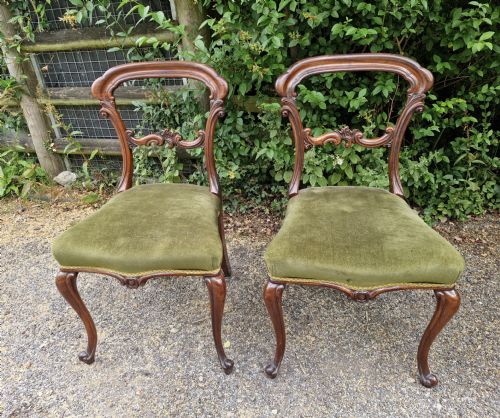


Olive Velvet Chair
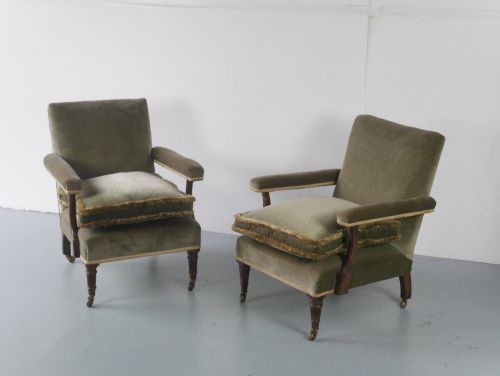
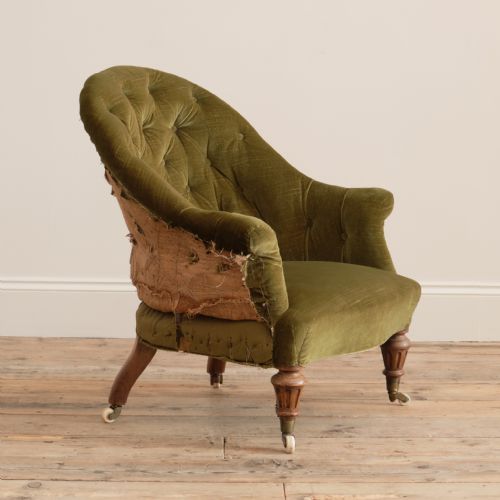
An olive velvet chair brings rich texture and deep colour into a room, offering both comfort and strong period character.
Olive Velvet Chair
When searching for an olive velvet chair, buyers encounter a diverse selection of seating forms spanning the nineteenth and early twentieth centuries. These encompass Victorian, Regency, Edwardian, and William IV periods, alongside French styles like Napoleon III and French Rococo.
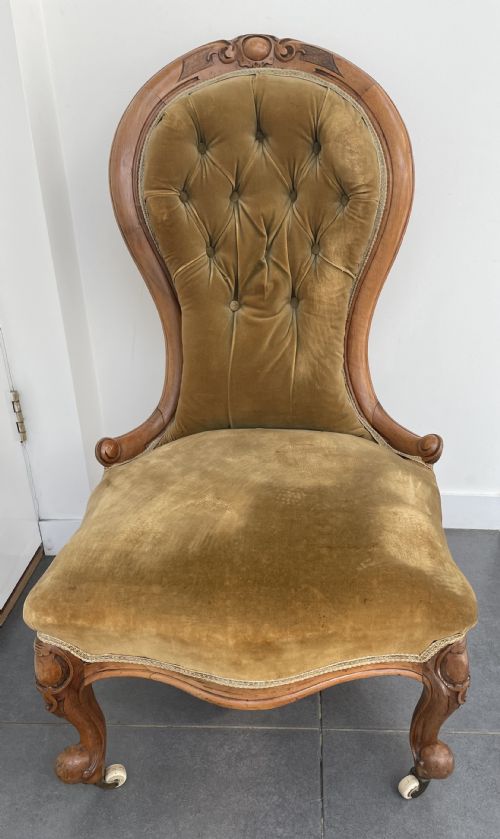
Makers and origins vary widely, from English country workshops to French chateau pieces and Swedish armchairs. Buyers find specific iterations such as walnut occasional seats, rosewood bedroom chairs, and mahogany library seating ready for integration into traditional or eclectic interiors.
Materials and construction
Frames rely on dense hardwoods such as mahogany, walnut, oak, and rosewood, selected for structural integrity and carved detail. Timber components often feature traditional joinery and exposed grain, supporting upholstered surfaces.
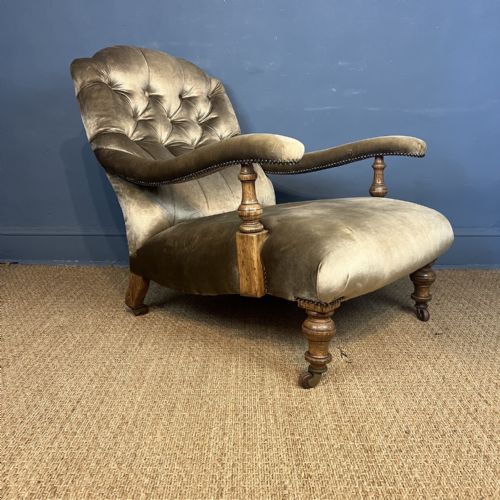
Upholstery employs plush velvet alongside structural elements like brass castors for mobility. Selected pieces incorporate button back detailing, carved wooden frames, and supportive sprung interiors designed for sustained comfort.
Assessing quality and craftsmanship
Quality rests in the precision of the timber carving and the architectural balance of the frame, whether dealing with a compact slipper chair or a large open armchair. Superior examples display crisp joinery, well-defined proportions, and rich, aged patination on woods like rosewood and walnut.
The sophistication of the upholstery work and the integrity of underlying frames distinguish finer pieces from simpler utilitarian seating. Original details, such as intact brass castors and robust hardwood framing, elevate the enduring character of each chair.
Hampton & Sons
The Olive Velvet Chair Glossary
- Velvet
- A woven tufted fabric with a dense, short pile that provides a soft texture and distinct depth of colour. This material forms the primary tactile surface for the seating found in these listings.
- Rosewood
- A heavy, dense timber valued for its dark grain and reddish-brown hues, frequently utilised in fine nineteenth-century frames. It takes a high polish and appears across Victorian armchairs and side chairs.
- Castor
- A small wheel mounted on a swivel assembly attached to the base of furniture legs to ease movement. Brass examples are common on nineteenth-century library and nursing chairs.
- Button back
- An upholstery technique where depressions are created by stitching through the padding and securing with buttons in a geometric pattern. This method adds tailored rigidity and visual texture to Victorian chairs.
- Chaise longue
- An upholstered sofa in the form of a chair with a long seat suited for reclining. Nineteenth-century examples often combine mahogany or rosewood frames with extended seating platforms.
Olive Velvet Chair: Frequently Asked Questions
What periods do these chairs come from?
The selection spans the nineteenth and early twentieth centuries, capturing Victorian, Regency, Edwardian, and William IV eras. Pieces reflect the prevailing design sensibilities of their respective decades.
Craftsmanship from these periods incorporates traditional joinery and distinct stylistic markers such as French Rococo influences or traditional American rocking chair forms.
How do I care for velvet upholstery?
Velvet requires gentle handling to preserve its soft pile and rich colour over time. Regular brushing with a soft-bristled tool helps maintain the nap and removes surface dust.
Avoid direct sunlight to prevent fading, and consult a professional upholstery specialist for deep cleaning needs to protect the underlying antique frame.
Are these chairs suitable for daily use?
Many of these pieces were built for functional living spaces, from library armchairs to comfortable occasional seating. Their sturdy hardwood frames of oak, walnut, and mahogany provide solid structural support.
Modern buyers often utilise them as statement reading chairs or comfortable bedroom seating, balancing historical charm with everyday practicality.
How do I distinguish between Victorian and Regency styles?
Regency seating typically exhibits cleaner, classical lines influenced by Greek and Roman antiquity, often utilising mahogany with restrained ornamentation. Victorian pieces tend to be more elaborately carved, featuring heavier walnut or rosewood frames and deeper button-tufted upholstery.
Examining the wood species, carving depth, and silhouette helps clarify the specific period of manufacture.
What woods were used for the frames?
Makers utilised a variety of dense hardwoods including mahogany, walnut, oak, rosewood, and general timber. These woods were chosen for their strength and ability to hold intricate carved details.
The natural grain and finish of the timber contribute significantly to the visual weight and authenticity of each piece.