


Traditional Gentleman Chair
These traditional gentleman chairs are substantial seats built for a library, study, or drawing room, combining sturdy timbers with deep upholstery.
Traditional Gentleman Chair
When you search for a traditional gentleman chair, you encounter a selection spanning the Georgian, Regency, Victorian, and early twentieth-century periods. These pieces take the form of library armchairs, open armchairs, wingback chairs, and club chairs designed for comfort and sustained use.
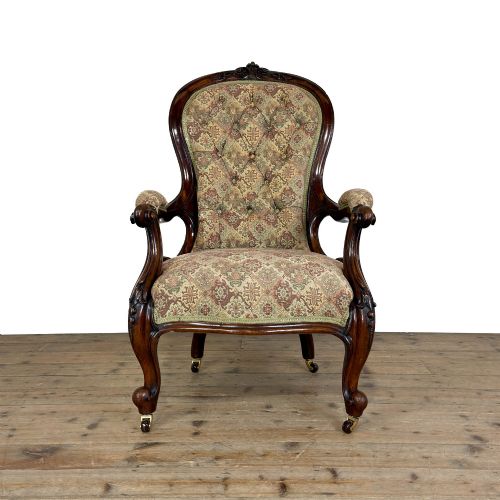
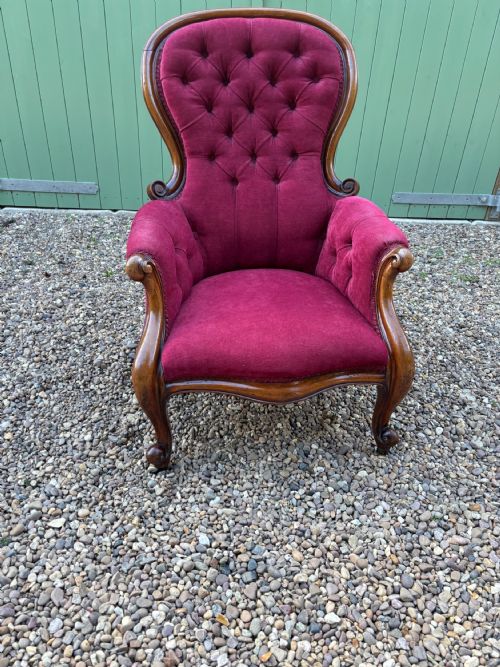
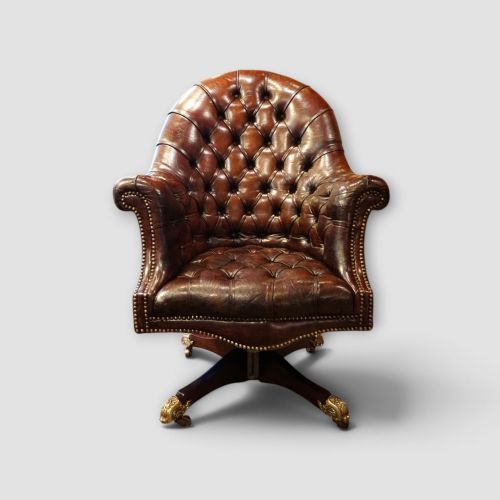
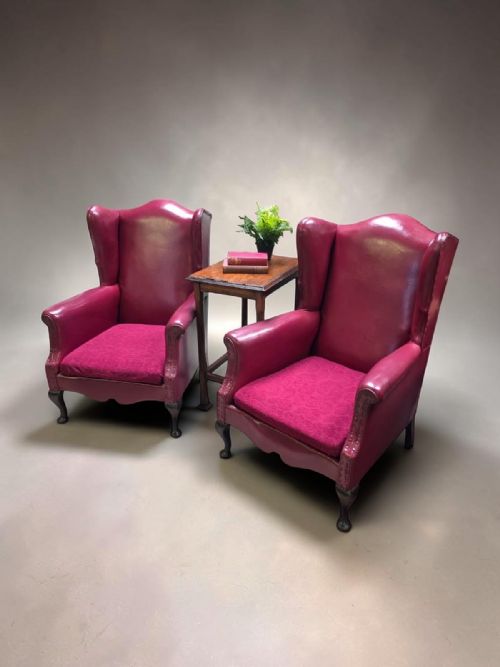
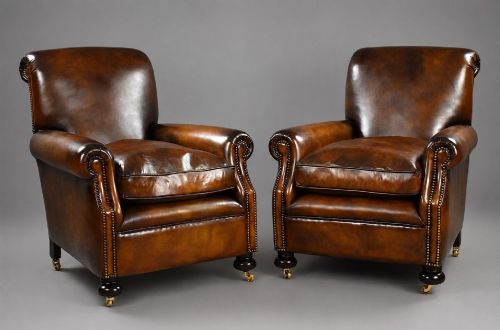
The Victorian era supplies the highest number of examples on this page, often featuring carved mahogany frames, scroll arms, and button backs. Alongside these are earlier Georgian and Regency designs, plus later twentieth-century club chairs upholstered in leather.
Materials and construction
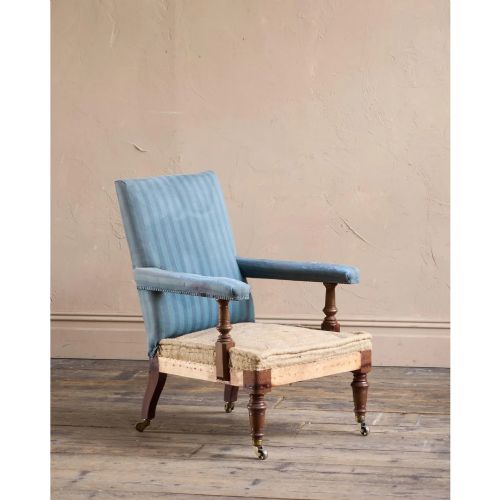
Frames are predominantly constructed from solid mahogany or rosewood, frequently exhibiting hand-carved details along the arms and legs. Brass castors often appear on the feet of library and easy chairs to assist movement across heavy carpets.
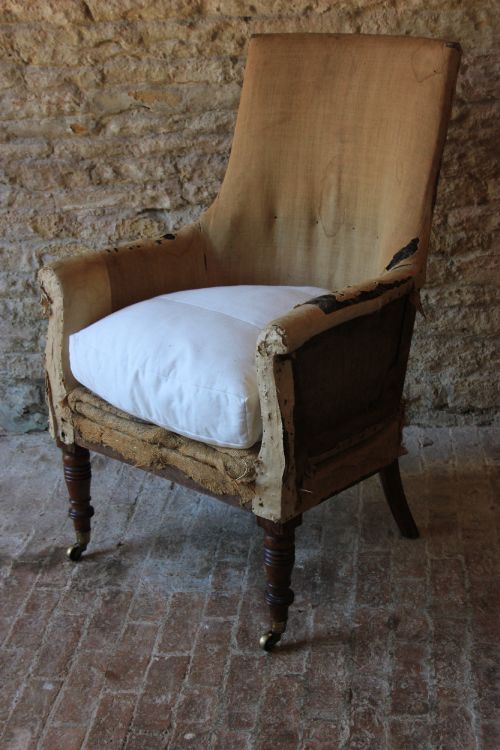
Upholstery relies on traditional stuffing secured with hessian and finished in leather, velvet, fabric, or calico. Some pieces retain a foundation ready for re-upholstery, while others feature finished red leather or buttoned textiles.
Mahogany is the dominant timber across these listings, appearing alongside rosewood in frames built during the Victorian and Georgian periods.
Judging quality in these armchairs
The distinction between standard examples and superior library chairs rests on the depth of the timber carving and the proportions of the frame. Generous proportions and robust mahogany structures command greater attention from collectors.
Originality of the frame and the retention of period leather or upholstery finishes elevate a piece. Subtle details such as scroll arms, carved rails, and well-turned legs differentiate workshop output.
Morison and Co
The Traditional Gentleman Chair Glossary
- Library armchair
- A sturdy, upholstered seat designed for reading rooms, typically featuring padded arms and a supportive high back. These chairs prioritize ergonomic comfort during long periods of study.
- Button back
- An upholstery technique where depressions are formed in the padding by pulling buttons deep into the stuffing in a diamond pattern. This method keeps the internal padding securely distributed.
- Scroll arm
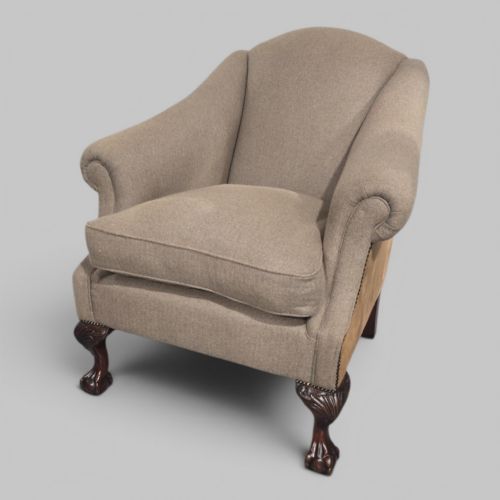
- An armrest curved outwards and downwards in a spiral shape, commonly found on Victorian and Georgian seating. This flourish softens the rigid lines of the wooden framework.
- Wingback armchair
- A high-backed seat featuring protective flaps or wings at the sides designed to shield the occupant from draughts. Early twentieth-century club versions adapt this enclosed comfort.
- Gainsborough chair
- A type of open-arm easy chair with a wide seat and low back, originating in the eighteenth century. It usually stands on straight legs connected by stretchers.
Traditional Gentleman Chair: Frequently Asked Questions
What is a traditional gentleman chair?
A traditional gentleman chair is a heavy, comfortable armchair typically built from mahogany and upholstered in leather or fabric. These seats were originally designed for studies, libraries, and smoking rooms.
They emphasise solid wooden frames, supportive armrests, and deep seating designed for long hours of reading or conversation.
How do I date a Victorian gentleman chair?
Dating relies on examining the timber, the style of the carved details, and the upholstery foundation. Victorian examples frequently utilise solid mahogany with scroll arms and button-backed padding.
Earlier Georgian and Regency pieces show lighter frames and distinct leg shapes, while twentieth-century versions lean towards club chair proportions.
Where should I place an antique armchair?
These armchairs suit studies, libraries, living rooms, and large hallways as statement seating. Their generous proportions require adequate floor space to let the carved timber and arms show clearly.
Pairing a library armchair with a matching desk or placing a leather club chair beside a fireplace highlights the traditional function of the furniture.
Are these chairs suitable for daily use?
Most of these chairs were built with robust hardwood frames intended for everyday utility in nineteenth and twentieth-century homes. Many retain strong internal structures capable of handling regular sitting.
Chairs listed as needing upholstery or restoration require professional attention to the internal webbing and springs before heavy daily use.