
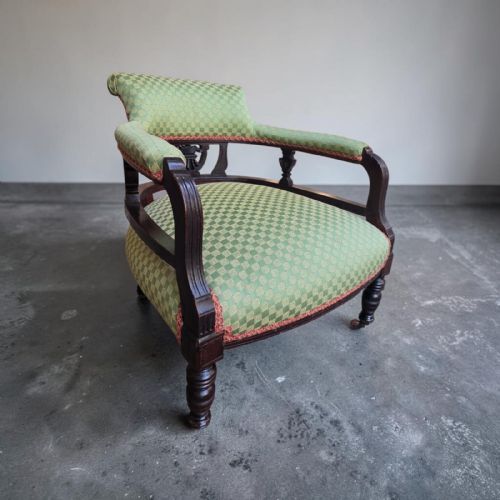
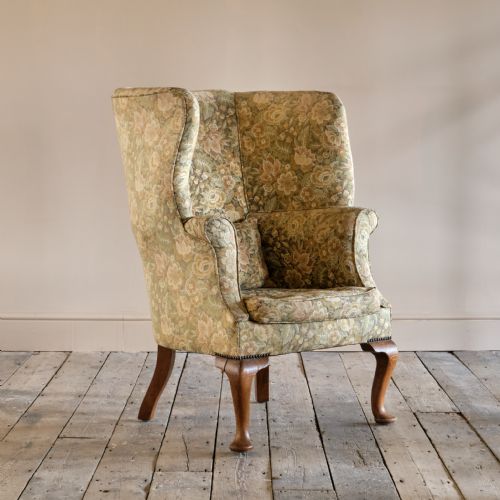


Green Barrel Chair
These green barrel chairs offer deep, enveloping comfort and sturdy timber frames that anchor a room with quiet presence.
Green Barrel Chair
A green barrel chair provides a curved, supportive backrest that wraps around the sitter, combining functional support with traditional seating forms. Buyers searching for a green barrel chair typically encounter Victorian, Edwardian, and Regency examples upholstered in leather, velvet, or fabric.
The selection on this page ranges from compact tub armchairs to library chairs and desk chairs. These pieces originate from various periods including the nineteenth and early twentieth centuries, reflecting changing domestic fashions.
Forms vary from simple timber frames to showwood mahogany and ebonised designs. Many feature distinctive barrel back shapes that were favoured for their draught-excluding qualities in period homes.
Materials and construction
Construction relies on solid hardwoods such as mahogany, oak, and simulated rosewood to form the structural frames and exposed showwood. Craftsmen shaped these timbers to create the curved barrel backs characteristic of the style.
Upholstery materials include leather, velvet, tapestry fabric, and standard fabrics, often secured with brass detailing. Frames incorporate traditional joinery to support the continuous curved backrest and upholstered seats.
Listings feature Victorian, Edwardian, and Regency pieces utilising mahogany, oak, brass, leather, and velvet.
Assessing quality and craftsmanship
Quality rests in the integrity of the timber frame and the precision of the curved joinery forming the barrel back. Superior examples display harmonious proportions and careful integration of showwood with the upholstered body.
The choice of covering material and the execution of the upholstery distinguish finer pieces from standard domestic seating. Original materials and well-maintained surfaces indicate higher historic standing and careful preservation.
The Green Barrel Chair Glossary
- Barrel back
- A seating form featuring a semicircular upholstered backrest that flows continuously into the arms. This design was originally intended to keep out drafts in older rooms.
- Showwood
- Timber framing that remains visible around the upholstered portions of a chair. It highlights the quality of the polished wood.
- Bergere
- A type of upholstered armchair with an enclosed wooden frame and cane or upholstered panels. The style often dates from the Regency period.
- Tub chair
- A deep-seated armchair with a rounded back resembling the shape of a halved cask. It provides a compact and enclosed seating experience.
Green Barrel Chair: Frequently Asked Questions
Where were barrel chairs used?
These chairs were traditionally placed in libraries, studies, and drawing rooms where comfortable, supportive seating was required for reading or conversation. Their enclosed backs made them suitable for sitting near fireplaces or drafty windows.
Over time, they transitioned into general living spaces and bedrooms as versatile accent seating. Their compact footprint allowed them to fit easily into corners while offering a substantial visual presence.
How do I date a barrel chair?
Dating relies on examining the timber species, construction methods, and the style of the frame. Regency pieces often feature simulated rosewood or classical lines, whereas Victorian and Edwardian examples lean towards mahogany, oak, or ebonised finishes.
Upholstery materials and decorative elements such as brass work also provide clues to the period of manufacture. Comparing the form against documented examples from the nineteenth and early twentieth centuries helps narrow down the origin.
What is a tub armchair?
A tub armchair is a seating form characterised by a rounded, bucket-like back that wraps around the user. This design offers a secure and enclosed feel compared to open-arm chairs.
Victorian makers frequently produced these chairs in various sizes, sometimes incorporating showwood frames. They remain popular for their ability to combine generous padding with a tidy silhouette.
Are these chairs comfortable?
The curved barrel back and deep seats were specifically engineered to provide sustained physical support. The enveloping shape naturally cradles the body during extended periods of sitting.
While comfort depends on the current state of the padding and springs, the original design prioritised ergonomic support. Many buyers choose them for daily use in studies and reading corners.