


Old English Silver
Old english silver encompasses formal dining flatware and domestic tablewares from Georgian and later periods, prized for traditional craftsmanship and historical utility.
Old English Silver
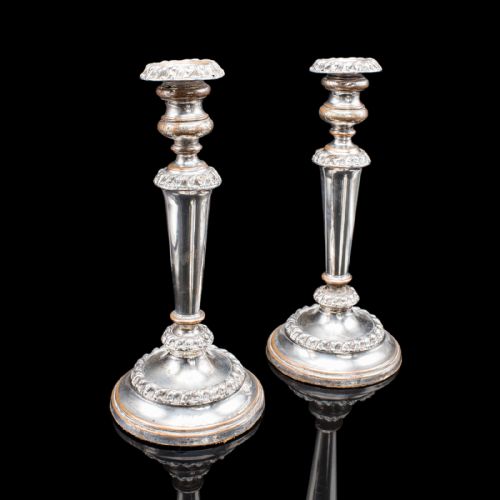
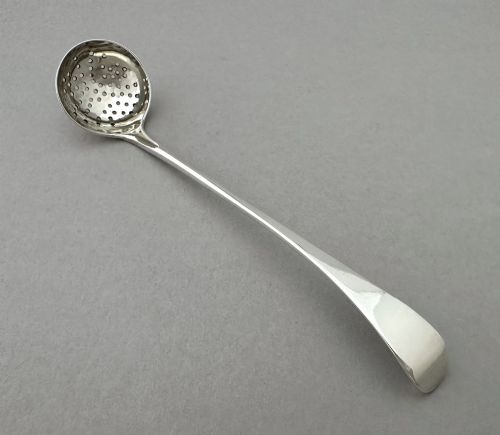
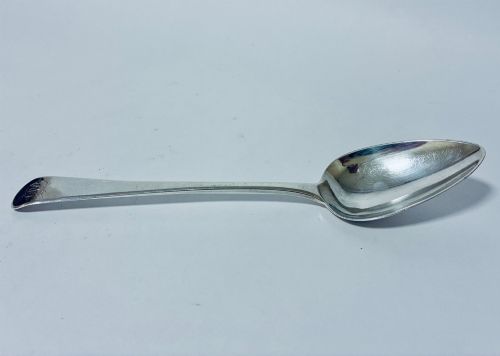
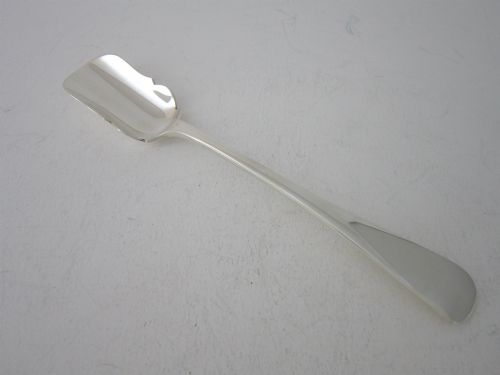
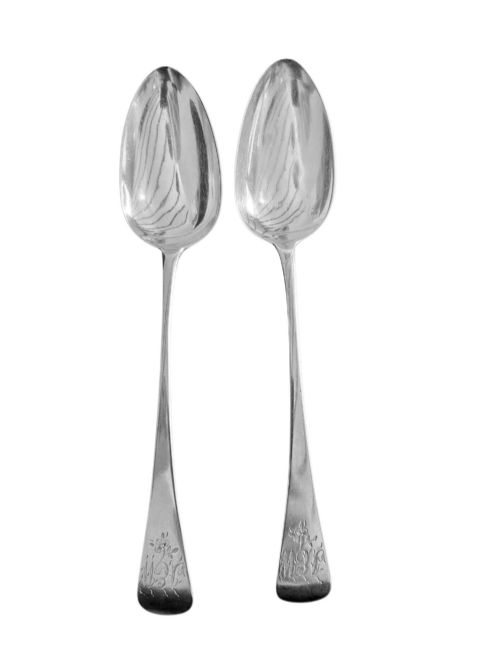
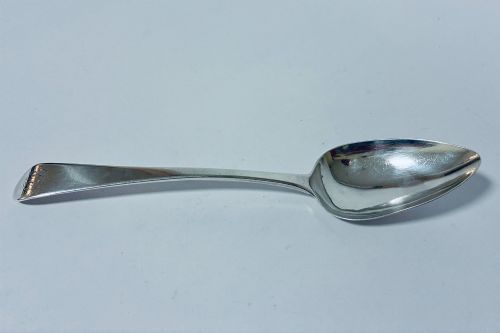
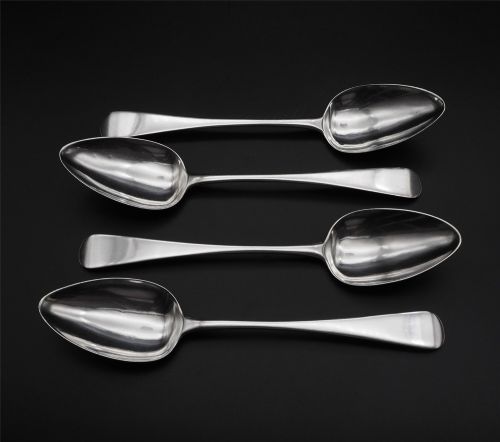
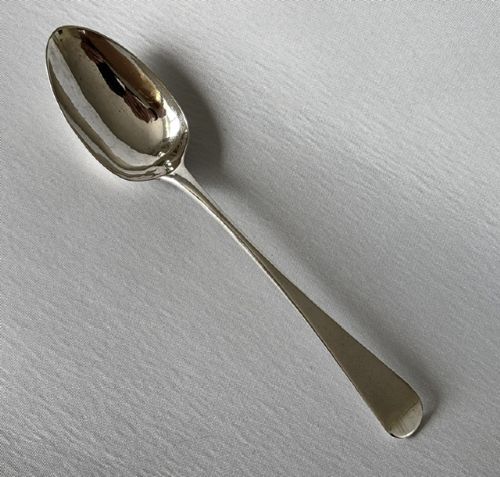
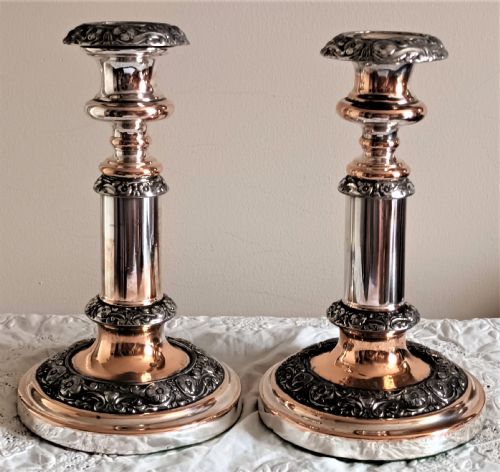
Old english silver brings together domestic items produced across the eighteenth and nineteenth centuries, including items designated by the distinct Old English cutlery pattern. Buyers seeking traditional dining accessories encounter large serving spoons, soup ladles, and flatware alongside wine coasters, candlesticks, and cheese scoops.
The selection on this page leans heavily toward Georgian table silver and Old Sheffield plate domestic accessories. These functional dining items reflect the social habits of elite households, where matched sets and durable serving vessels formed the backbone of formal entertaining.
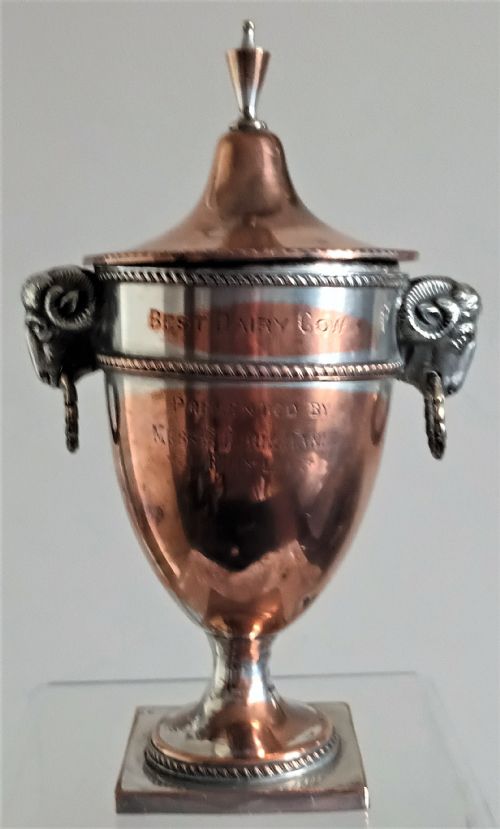
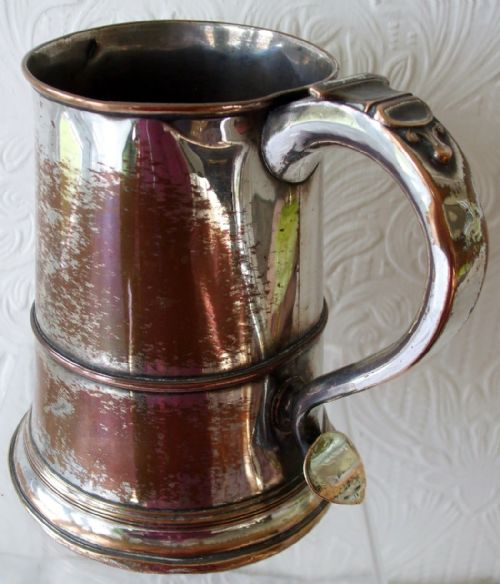
Beyond flatware, the category embraces decorative urns, mugs, and sauce boats spanning the Georgian, Regency, and later periods. Each form demonstrates the practical application of precious metals and plated copper in historic dining rooms.
How they were made
Makers utilised sterling silver and Old Sheffield plate, fusing copper and silver to create durable domestic items before electroplating became common. Artisans shaped these metals through casting, hammering, and piercing, often incorporating wooden bases or bone handles into utilitarian objects.
Sheffield and London smiths applied punch work and crisp engraving to define patterns such as the distinctive Old English flatware profile. Telescopic forms and weighted elements required precise mechanical joining alongside traditional silversmithing techniques.
Old English Silver Retail Price Guide 2026
Typical asking prices for old english silver among the pieces listed under this phrase on Sellingantiques today, from the lower quarter to the upper quarter. They describe what is for sale here now, not the wider market.
Listings feature sterling silver and Old Sheffield plate across forms from eighteenth-century basting spoons to twentieth-century menu holders.
What varies in quality
Quality rests in the crispness of the original hallmarks, the preservation of fine engraving, and the structural integrity of plated joints. Pieces retaining sharp transitions along handle midribs and unblemished surfaces represent the finest tier of production.
The weight of the metal and the balance of spoons or ladles dictate the utility and status of individual items. Exemplary examples show minimal wear to the underlying copper in Old Sheffield plate and deep, legible maker stamps.
Peter and Jonathan Bateman·Goldsmiths and Silversmiths Co.·Hester Bateman·Sampson Mordan·George Bowen and Sons·William Hutton
The Old English Silver Glossary
- Old English pattern
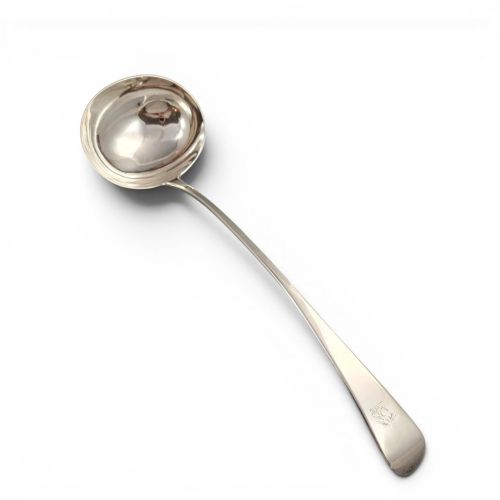
- A traditional flatware design characterised by a downward-curving handle terminal with a central midrib on the reverse. This profile became standard for tablespoons and soup ladles during the Georgian era.
- Old Sheffield plate
- An early fusing technique where a sheet of silver is fused to a thicker copper core by heat and pressure. Items made this way often reveal subtle lines of copper along high-wear edges.
- Basting spoon
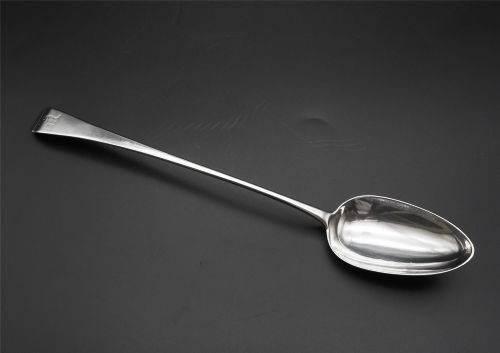
- A large utensil designed for spooning juices over roasting meat, measuring significantly longer than standard dining spoons. These heavy implements frequently feature provincial or London hallmarks from the eighteenth century.
- Wine coaster
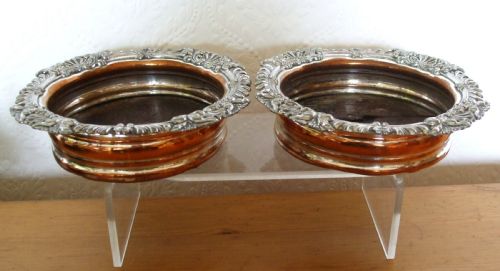
- A low, circular tray with a raised rim, often lined with wood, used for sliding bottles across the dining table. Georgian examples frequently employ Old Sheffield plate or sterling silver mounts.
- Stilton scoop
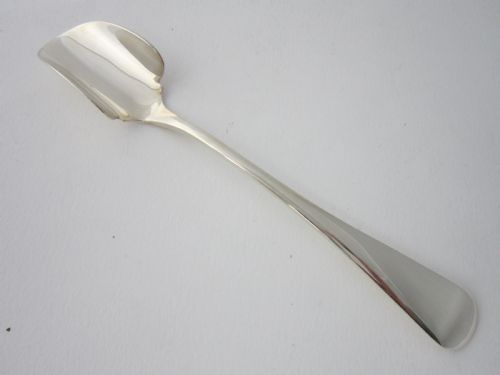
- A specialised utensil featuring a long, half-cylindrical blade for extracting portions of hard cheese. These implements often pair a silver bowl with an organic handle made of bone or wood.
Old English Silver: Frequently Asked Questions
How do I identify old sheffield plate?
Old Sheffield plate is produced by fusing a thin layer of silver onto a thicker copper base before shaping the item. Close inspection under magnification often reveals thin lines of exposed copper along high-wear edges and rims.
Unlike later electroplated wares, these pieces show the distinctive sandwich structure of the metals where the base material meets the fused surface.
Were these spoons used daily?
Large basting spoons and serving ladles formed essential tools in wealthy households for preparing and serving grand meals. Their heavy construction allowed them to withstand regular use in active kitchens and dining rooms.
Over decades of service, many acquired gentle surface softening and reassuring signs of handling that attest to their domestic utility.
How should I care for silver plate?
Maintenance requires gentle cleaning with non-abrasive silver cream and soft cloths to preserve the thin metallic surfaces. Harsh dips strip away historic patination and risk damaging exposed copper on plated items.
Storing pieces in dry environments away from direct sunlight helps prevent accelerated tarnishing and protects organic elements like wooden bases.