





Off White Overmantel Mirror
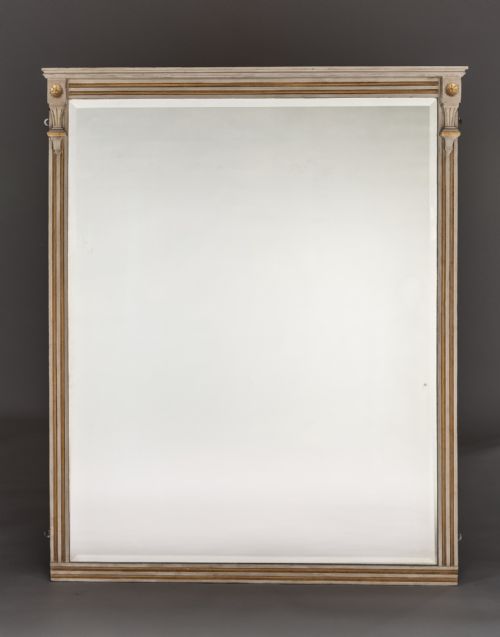
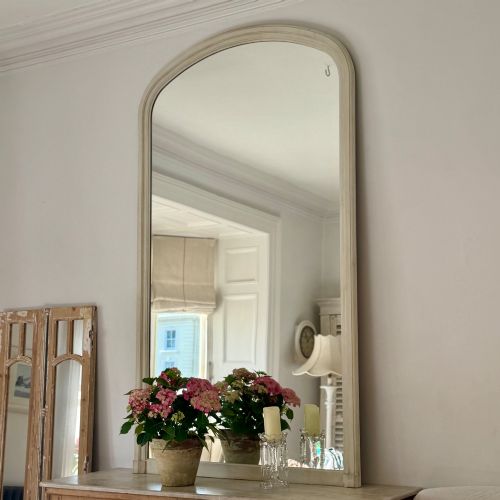
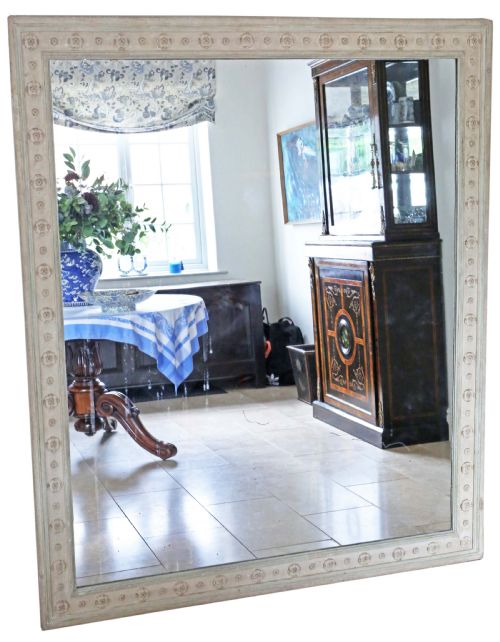
An off white overmantel mirror anchors a chimney breast with scale and pale light, drawing the room together.
Off White Overmantel Mirror
An off white overmantel mirror is designed specifically to sit above a fireplace, bringing scale and reflection into a room. These pieces span the nineteenth century, the Edwardian period and the early twentieth century, showing influences from Victorian classicism to French provincial and Georgian styles.
The version you are most likely to meet on this page is a large Victorian or nineteenth century painted and parcel-gilt overmantel mirror. Many examples feature carved wood and gesso construction, often with arched or shaped tops intended to follow the architectural lines of period mantelpieces.
Materials and construction
Makers built these frames primarily from carved wood, applying layers of gesso to create crisp architectural mouldings and decorative motifs. Paint finishes, sometimes combined with gold leaf for parcel-gilt highlights, were then applied over the prepared wooden ground.
Mirror glass was set into these substantial wooden frames, with some pieces employing marginal plates or arched plates to catch the light. The combination of carved wood, gesso and painted surfaces gave these large wall mirrors both structural stability and decorative presence.
Some nineteenth-century mirrors still carry the faint ghost of woodsmoke in their frames, having spent generations directly above roaring coal fires.
What separates the best pieces
The distinction between standard and superior examples lies in the depth of the wood carving and the finesse of the gesso work. Skilled hands produced sharper mouldings and more confident scrollwork that held the painted finish cleanly.
Proportion and scale also separate the finest pieces, where the arch of the frame and the weight of the timber relate harmoniously to the original fireplace dimensions. The handling of the painted surface, whether plain or accented with parcel-gilt, determines the visual refinement of the finished mirror.
The Off White Overmantel Mirror Glossary
- Overmantel
- A mirror or painting designed to be hung specifically on the wall directly above a fireplace mantelpiece. These frames are typically wide and proportioned to match the hearth below.
- Gesso
- A plaster-like mixture applied to wood frames to create a smooth surface for painting or gilding. It allowed carvers to achieve sharp relief details.
- Parcel-gilt
- Partially gilded, where gold leaf is applied only to specific raised carved details or mouldings to contrast with a painted background.
- Trumeau
- A decorative wall mirror or panel, often incorporating a painted scene or carved detail within the upper section of the architectural frame.
- Marginal mirror
- A mirror glass surrounded by a border of smaller, bevelled mirror plates held within the main frame.
Off White Overmantel Mirror: Frequently Asked Questions
How do I hang a heavy overmantel mirror safely?
These large frames require secure fixing directly into masonry or substantial wall studs using heavy-duty brackets. Because of their considerable weight, professional installation is strongly recommended to support the load safely.
Ensure the hanging wire or integrated D-rings are rated for the mass of the wood and glass. Distributing the weight evenly prevents the frame from twisting over time.
Where should I place an overmantel mirror if I have no fireplace?
An overmantel mirror works effectively above a low sideboard, console table or sofa where it can mimic the architectural presence of a mantelpiece. Placing it opposite a window will also bounce daylight deep into the room.
Take measurements of your chosen wall space to ensure the wide proportions do not overwhelm surrounding furniture. The base of the frame should anchor visually to the piece of furniture beneath it.
How do I clean the painted wood and gesso frame?
Dust the carved surfaces gently with a soft, dry brush or a clean microfibre cloth to remove everyday particles. Avoid using liquid cleaners or damp cloths, as moisture can soften aged gesso and damage the paint.
Keep the glass clean using a standard window spray applied to a cloth rather than directly onto the mirror. This prevents overspray from seeping onto the vulnerable wooden edges of the frame.
How can I tell a Victorian overmantel mirror from a later reproduction?
Examine the construction of the timber at the back of the frame, looking for traditional joinery and signs of age such as oxidation on the mirror plate. Nineteenth-century pieces often display hand-carved details and layered gesso that differ from modern machine-moulded resin copies.
The weight and the patina of the painted surface also offer clues to the period. Genuine nineteenth-century and Edwardian pieces show natural wear consistent with their age.