

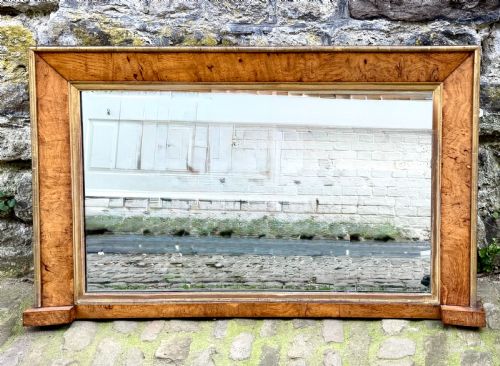


Gilt Slip Overmantel
These gilt slip overmantel mirrors bring scale and reflected light directly above the hearth, anchoring a room with period presence.
Gilt Slip Overmantel
A gilt slip overmantel is a large wall mirror designed specifically to hang above a fireplace mantelpiece. You are most likely to meet examples spanning the Regency, Victorian, and early twentieth century eras on this page.
The form frequently incorporates distinct wooden framing enhanced by parcel gilt or fully gilded surfaces. Many pieces feature triptych glass configurations framed by columns or pilasters.
Makers utilised timber substrates including birds eye maple, mahogany veneer, rosewood, walnut, and pine. These serve as the structural base for the gesso and gilt finishes.
How they were made
Makers constructed the primary carcasses from solid timbers and secondary woods like pine before applying decorative veneers or carved details. Acanthus decoration and architectural columns appear carved directly into the wood or modelled in gesso.
Guilders applied thin layers of gold leaf over prepared gesso surfaces on the wooden frames to achieve a brilliant metallic sheen. Glass panels were fitted into the rebates, often secured with internal slip mouldings.
Several mirrors arrive with stubborn nineteenth-century soot trapped deep in the acanthus carving, proving they spent generations warming above coal fires.
What varies in quality
The refinement of the surface decoration and the crispness of carved details set the finer pieces apart. Elaborate acanthus mouldings and balanced triptych proportions indicate superior workshop execution.
The choice of primary timber creates a clear hierarchy in the selection, moving from straightforward painted finishes to richly figured birds eye maple, rosewood, and mahogany veneers.
The Gilt Slip Overmantel Glossary
- Giltwood
- Wood that has been coated with gold leaf or gold paint. This finish creates a luminous, reflective surface characteristic of formal period mirrors.
- Gesso
- A plaster-like mixture applied to wood surfaces as a base for gilding. It provides a smooth ground that can be moulded into crisp decorative reliefs.
- Triptych
- A mirror plate divided into three distinct vertical sections. This tripartite arrangement was particularly favoured during the Regency period.
- Parcel gilt
- A finish where only specific portions of an object are gilded while other areas reveal the natural wood grain beneath. It highlights architectural details on the frame.
- Slip
- A narrow inner moulding used to frame a mirror plate separately from the main outer frame. It is frequently gilded to create a layered visual depth.
Gilt Slip Overmantel: Frequently Asked Questions
Where should an overmantel mirror be hung?
These mirrors are proportioned to sit directly on or be securely wall-mounted just above a fireplace mantelpiece. This traditional placement reflects room light and balances the vertical volume of the chimney breast.
Ensure the fixings engage solidly with the wall structure, as these timber and glass assemblies carry substantial weight.
How do I identify a Regency overmantel?
Regency pieces often display classical architectural motifs such as acanthus decorated columns, clean lines, and triptych glass divisions. The materials frequently include gilded wood alongside dark veneers.
Proportions tend to be horizontal and balanced, designed to span the width of a standard domestic fireplace.
What woods were used for these frames?
Carpenters utilised a variety of native and exotic timbers including mahogany veneer, birds eye maple, rosewood, and walnut. Pine and gesso served as the foundational base for the gilded elements.
Grain patterns remain visible beneath clear polishes on the un-gilded sections of the frames.
How do I clean a gilded frame?
Dust the gilded surfaces very gently with a dry, soft brush to prevent disturbing the delicate gold leaf layer. Avoid liquid cleaners and modern solvents entirely, as moisture strips historical gesso and gilt.
Leave the mirror glass itself to be cleaned sparingly with a dry microfiber cloth, keeping moisture away from the wooden rebates.