




Octagonal Oriental Side Table
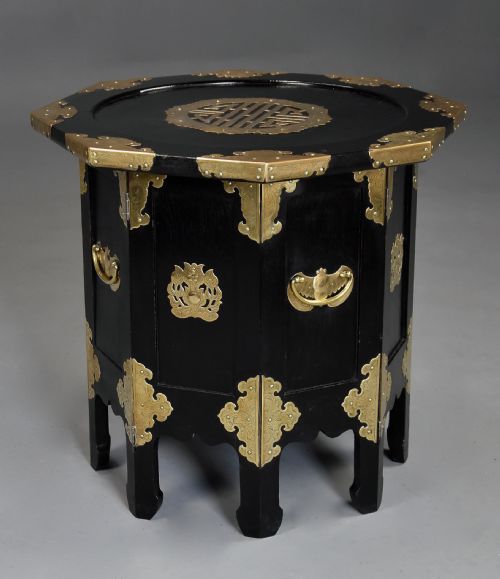
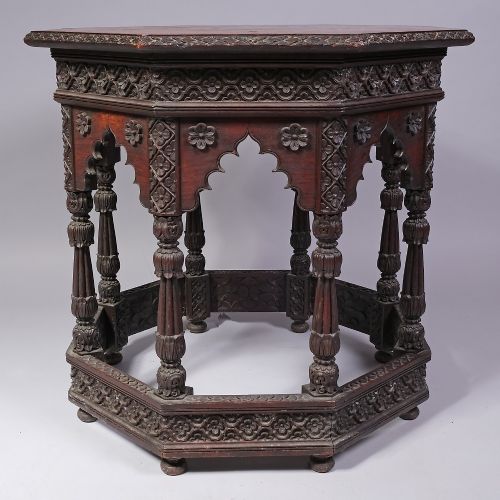
These octagonal oriental side table pieces bring together intricate carved wood, brass inlay, and diverse colonial styles to anchor a room.
Octagonal Oriental Side Table
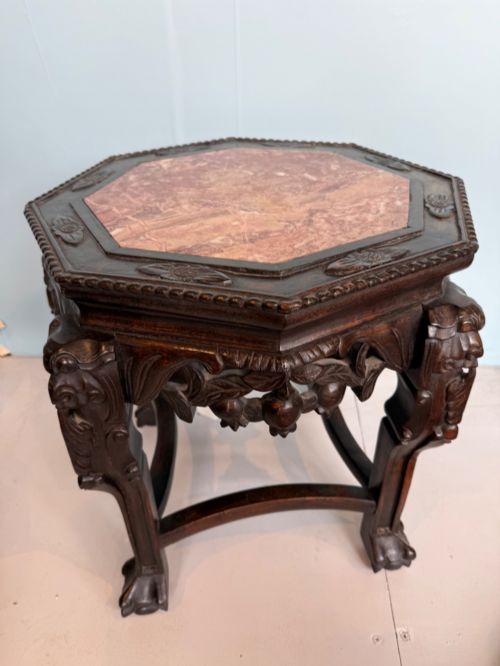
An octagonal oriental side table encompasses low occasional pieces, plant stands, and coffee tables shaped with eight sides. They emerge from diverse origins including India, China, and Burma, spanning the Victorian era through the early twentieth century.
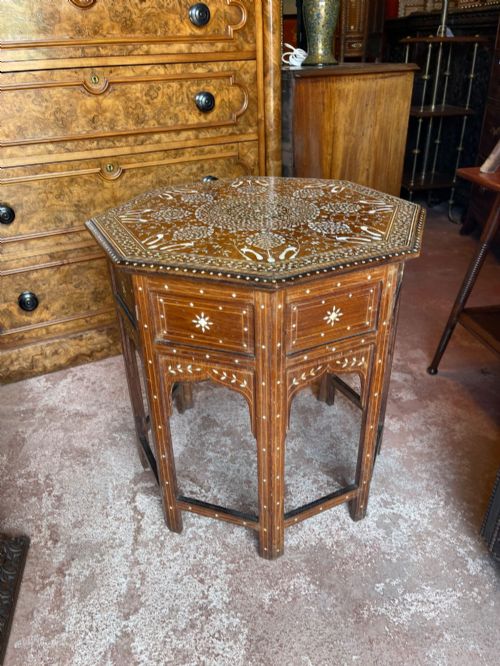
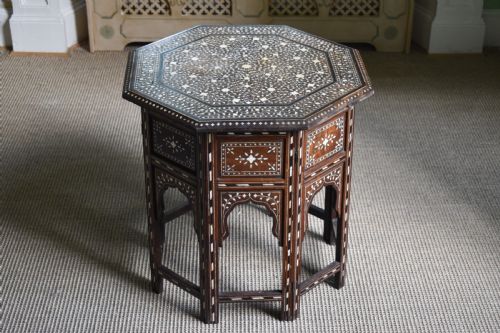
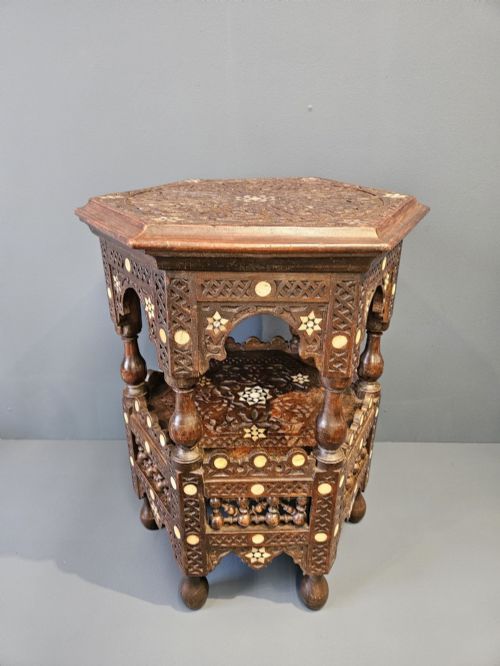
The selection on this page relies heavily on Anglo-Indian Hoshiarpur work, Chinese carved hardwood stands, and Moorish revival designs. These items served as lamp tables, folding tables, and centre tables in nineteenth and twentieth century homes.
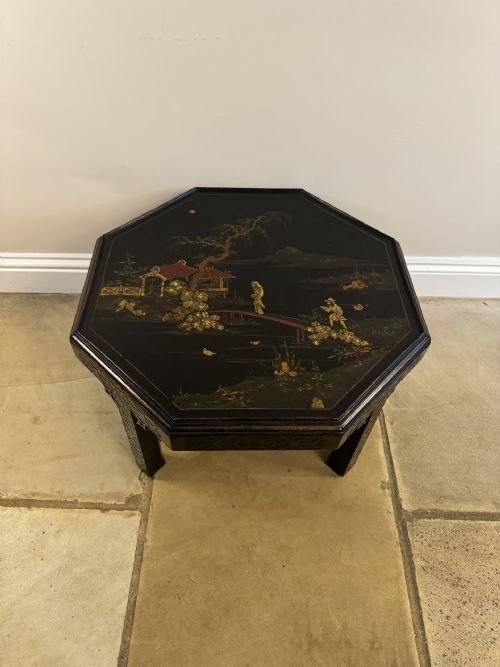
Buyers meet forms ranging from heavily inlaid sandalwood and sheesham folding tables to black lacquered and chinoiserie decorated surfaces. Each piece reflects the cross-cultural exchange of design during the colonial and export periods.
How they were made
Craftsmen built these tables using dense timbers such as teak, padauk, hardwood, sheesham, and sandalwood. Workshops applied black lacquer, paint, and ebonising to create dark, polished surfaces.
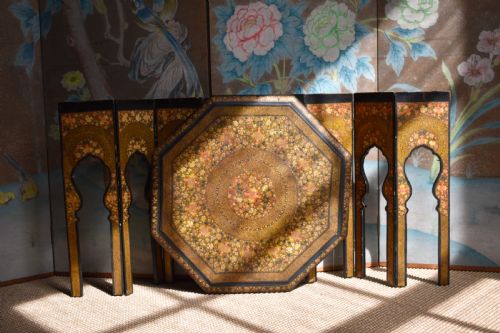
Surface ornamentation involved intricate hand carving alongside delicate bone, brass, copper, and mother-of-pearl inlay. Folding tables utilised clever hinged construction to allow the octagonal tops to collapse flat against their bases.
Periods represented span from Victorian and Edwardian eras into the nineteen-thirties.
What varies in quality
Quality rests upon the depth and precision of the hand carving and the intricacy of the inlay work. Pieces displaying dense bone, brass, or mother-of-pearl patterns set into hardwoods demonstrate superior workshop execution.
The structural integrity of the folding mechanisms and the preservation of original painted, lacquered, or ebonised surfaces dictate the standing of individual examples. Superior items maintain crisp definition in their carved motifs without extensive loss to the inlaid elements.
Hoshiarpur workshops
The Octagonal Oriental Side Table Glossary
- Hoshiarpur
- A city in Punjab, India, renowned for producing intricately carved and bone-inlaid wooden furniture. Pieces from this region often feature dense geometric or floral patterns.
- Anglo-Indian
- A style describing furniture made in India during British rule, combining traditional local craftsmanship with European forms. These items frequently incorporate brass and bone inlay.
- Chinoiserie
- A European decorative style reflecting Chinese artistic influences, popular during the eighteenth and early twentieth centuries. It often employs lacquered surfaces and painted figures.
- Padauk
- A heavy, durable tropical hardwood prized for its reddish-brown colour and dense grain. Makers utilised this timber for solid carved stands and tables.
- Ebonised
- Wood treated with a dark finish to imitate expensive ebony. This technique provided a uniform black ground for contrasting brass or bone inlay.
Octagonal Oriental Side Table: Frequently Asked Questions
What is an octagonal oriental side table?
An octagonal oriental side table is a small surface featuring eight sides, originating from traditions in India, China, and the Middle East during the nineteenth and early twentieth centuries. These versatile items served various domestic roles as lamp stands, coffee tables, and occasional furniture.
Craftsmen often decorated them with elaborate hand carving, pierced woodwork, and intricate metal or bone inlay. Their distinctive geometry made them popular additions to eclectic Victorian and Edwardian interiors.
How were folding tables used?
Folding tables provided flexible surface space that could be easily stored or moved around the home as needed. Their clever hinged construction allowed the octagonal top to detach or fold flat against the base.
In period interiors, households utilised these pieces in drawing rooms and parlours for serving tea or displaying decorative objects. They combined practical portability with highly decorative craftsmanship.
How do I distinguish regional styles?
Distinguishing regional styles involves examining the primary materials and decorative techniques employed by the makers. Hoshiarpur pieces from India are typically recognised by dense bone and brass inlay on sheesham or sandalwood, while Chinese examples often feature deep relief carvings of dragons or figures on hardwoods.
Moorish and Anglo-Burmese pieces introduce distinct geometric latticework and teak construction. Observing the specific combination of carving, inlay, and timber reveals the geographic origin of each item.
How do I live with these tables?
Living with these tables involves placing them where their intricate surfaces and detailed inlay can be appreciated without heavy wear. They function effectively as bedside stands, lamp tables, or accent pieces beside seating.
Maintenance requires gentle dusting and protection from direct sunlight and excessive moisture to preserve the delicate bone and metal inlays. Their compact dimensions allow them to integrate easily into both traditional and modern room schemes.