



Moorish Revival Side Table
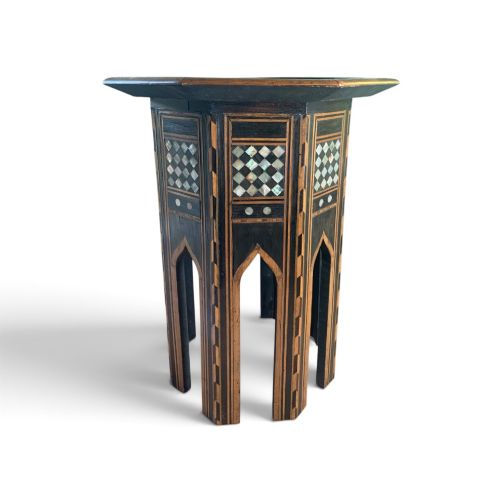
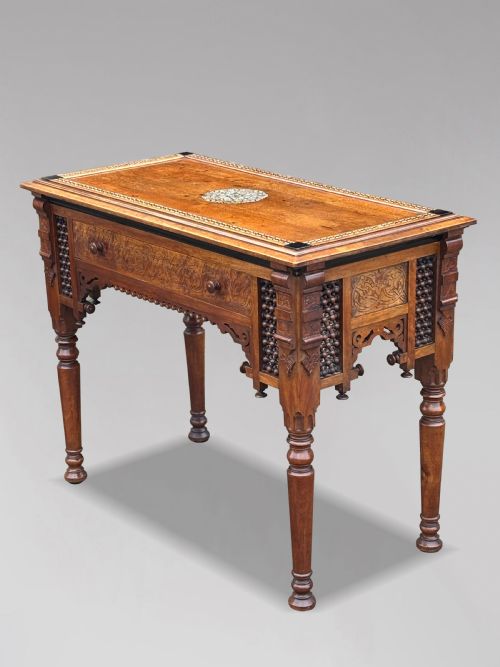
These moorish revival side table pieces bring intricate geometric design and rich material inlay into a room.
Moorish Revival Side Table
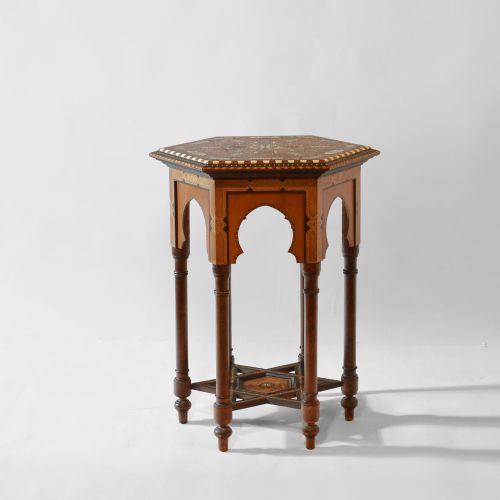
A moorish revival side table is typically constructed as an octagonal occasional or lamp table designed with strong geometric influences from Islamic and North African traditions. These items emerge frequently from the nineteenth century and the early twentieth century, reflecting a sustained Victorian fascination with exotic craftsmanship and decorative woodwork.
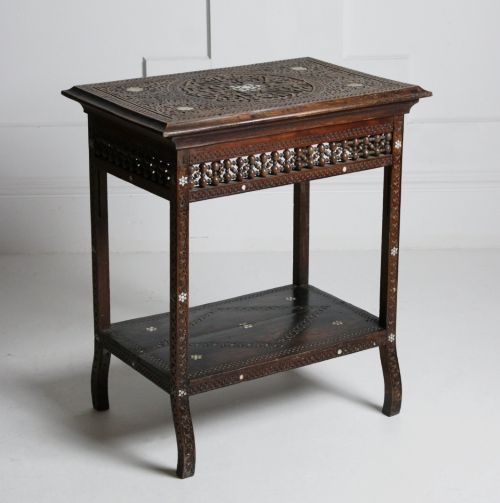
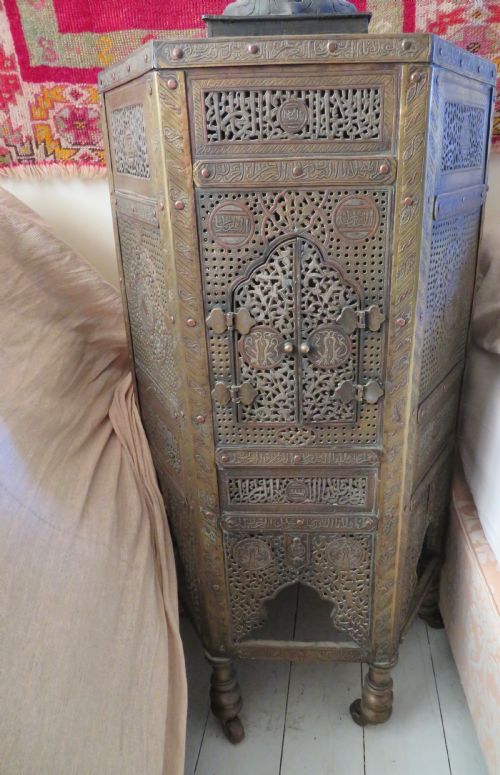
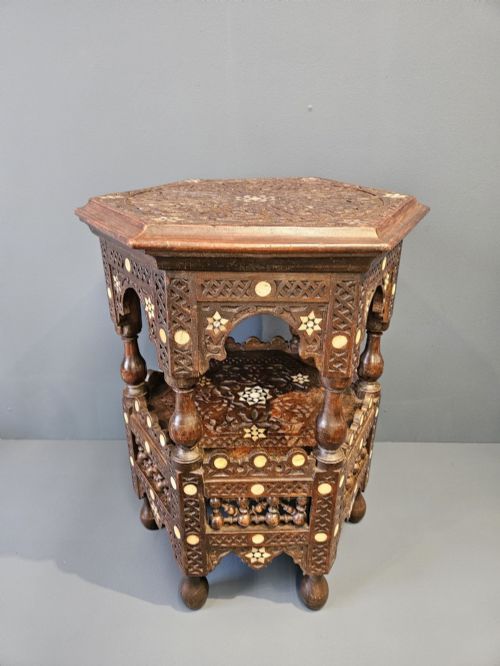
Makers often drew inspiration from Syrian, Damascus, and Cairo workshops, producing hexagonal forms and two tier tables that served various domestic functions. Some examples incorporate cupboards or low platforms, while others remain purely decorative surfaces intended for lamps or display.
The aesthetic frequently overlaps with Liberty style productions and Aesthetic Movement tastes of the late eighteen-hundreds. Buyers will also encounter occasional pieces bearing Italian renaissance revival or bohemian characteristics that adapted these eastern geometries for European drawing rooms.
What varies in quality
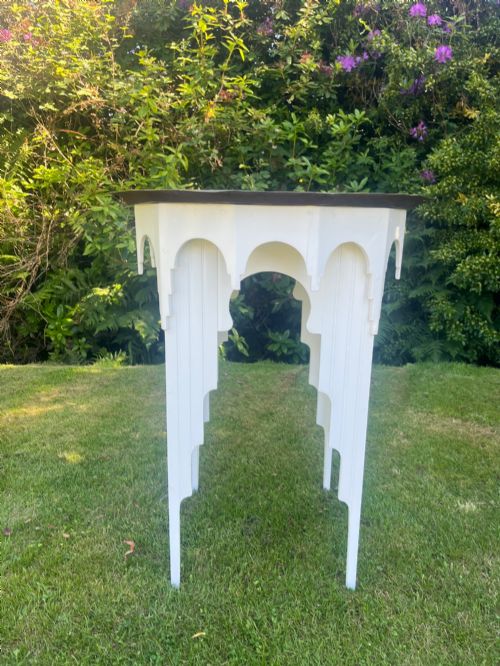
Quality rests primarily on the precision of the geometric woodwork and the complexity of the inlay work. Finer examples display tightly fitted mother-of-pearl and bone pieces with minimal filler, whereas simpler versions rely more heavily on painted wood surfaces or coarser joints.
The integrity of the structural joinery on octagonal and hexagonal frames determines the long-term stability of the table. Pieces that retain their original unblemished metal inlays and balanced wooden lattices represent the pinnacle of this decorative tradition.
Many octagonal tables were cleverly constructed to fold flat, allowing Victorian travellers to pack intricate eastern craftsmanship into their luggage.
Liberty & Co
The Moorish Revival Side Table Glossary
- Octagonal
- Having eight sides. This geometric form is the defining shape for the majority of tables in this style.
- Kursi
- A traditional low table or stand, often hexagonal or octagonal. These pieces frequently feature intricate openwork and metal inlays.
- Ebonised wood
- Timber treated to resemble ebony. This dark finish provides a high-contrast background for mother-of-pearl and bone inlay.
Moorish Revival Side Table: Frequently Asked Questions
Where should I place a hexagonal table?
These tables work effectively as lamp stands or occasional surfaces beside seating where their detailed tops remain visible. Their compact footprint also suits corners or smaller hallways.
Avoid placing them in areas of direct moisture or intense sunlight, as fluctuations in temperature can affect delicate mother-of-pearl and bone inlays.
Are these tables sturdy enough for daily use?
Most occasional and side tables from this tradition were built to hold lamps, books, or decorative objects rather than heavy loads. Their intricate lattice frames require gentle handling.
Placing them away from heavy foot traffic ensures the complex joints and protruding wooden elements remain secure over time.
How do I distinguish Syrian from Italian pieces?
Syrian examples typically showcase dense mother-of-pearl and bone geometric inlay across dark walnut or hardwood structures, often with openwork panels. Italian interpretations tend to reflect renaissance revival motifs alongside bone inlay.
Examining the underlying construction methods and the specific arrangement of the geometric patterns usually clarifies the regional origin.