



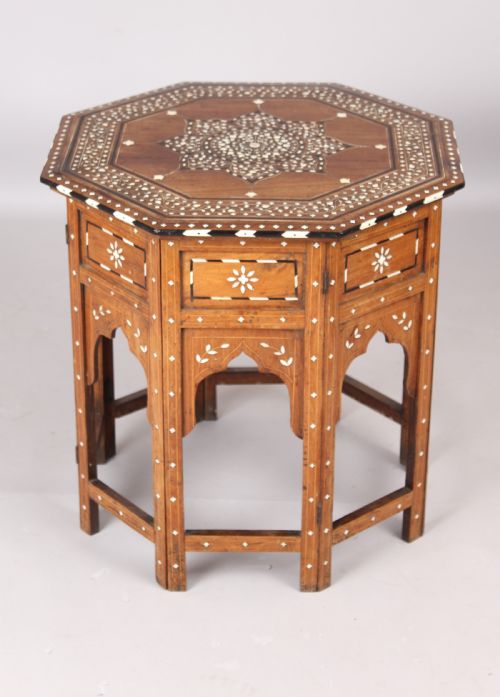


Syrian Inlaid Coffee Table
A syrian inlaid coffee table brings intricate geometric craft into a room, combining hardwood structures with shimmering decorative surfaces.
Syrian Inlaid Coffee Table
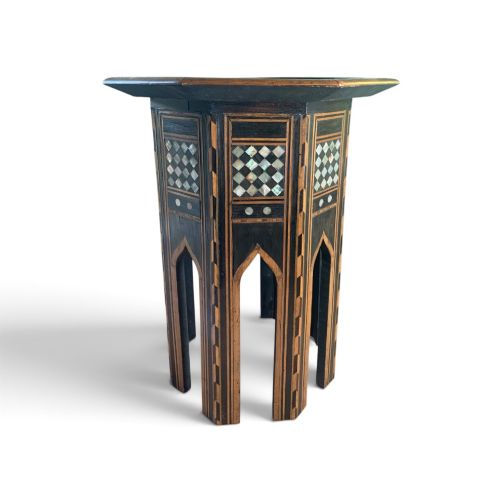
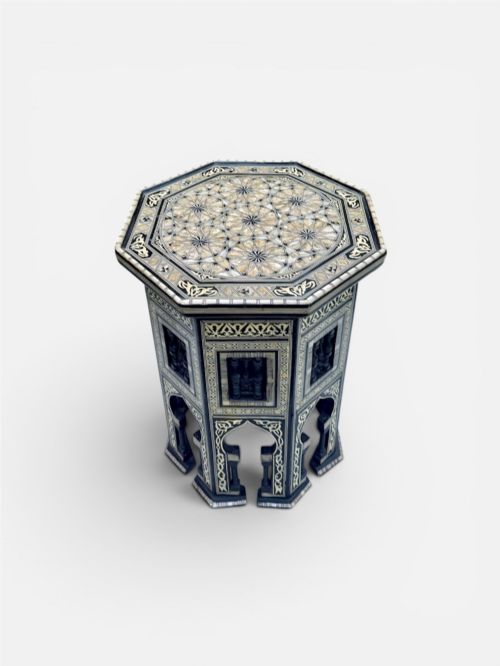
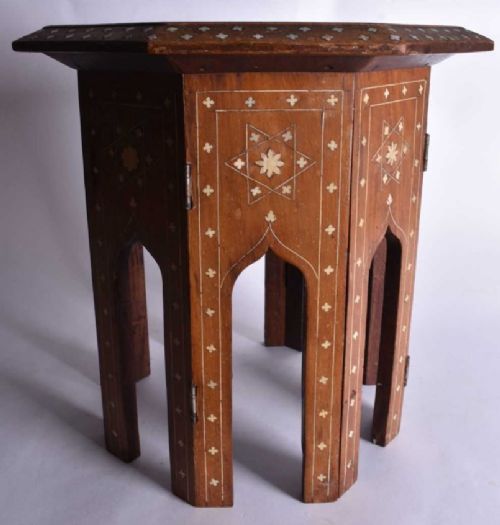
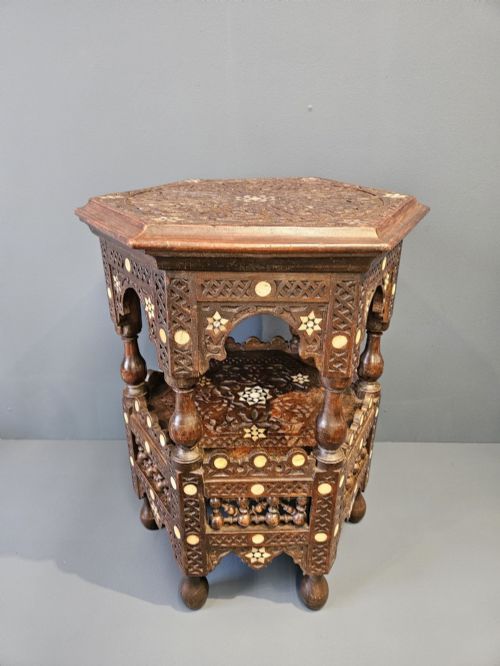
A syrian inlaid coffee table typically takes the form of an octagonal or hexagonal side, lamp, or occasional table. These pieces emerge from periods spanning the Victorian era through to the early decades of the twentieth century. They serve as functional low surfaces while displaying complex geometric layouts.
The regional styles represented across these listings include Moorish Revival, Ottoman, and Syrian influences, alongside related Anglo-Indian and Bohemian iterations. Many pieces feature folding bases or centralized octagonal tops suited to intimate seating arrangements. They connect nineteenth-century aesthetic movements with traditional Middle Eastern woodworking traditions.
How they were made
Construction relies upon solid timbers such as walnut, ebonised wood, and general hardwoods shaped into multi-sided frames and folding supports. Carved detailing frequently complements the primary woodwork across the body of the table. Artisans build these foundational structures to support dense surface ornamentation.
The distinctive surface patterns utilise meticulous inlays of mother-of-pearl and bone fitted directly into the wood. Craftsmen arrange these organic materials into elaborate geometric and floral tessellations across the tabletops and sides. This combination of carved hardwood and iridescent inlay defines the technique of the pieces.
Listings feature octagonal and hexagonal forms constructed from walnut, ebonised wood, and various hardwoods.
What varies in quality
Quality rests upon the density, precision, and completeness of the mother-of-pearl and bone inlay across the surface. Finer examples display tight geometric alignment with minimal gaps between the individual inlaid tesserae and the surrounding wood. Lesser versions feature simpler, sparser ornamentation with wider joints.
The crispness of the carved woodwork and the structural integrity of folding mechanisms further distinguish the range. Tables with deeply articulated carving and robust, stable joints represent superior execution. The complexity of the polygonal top geometry also signals the level of workshop skill involved.
Liberty And Co
The Syrian Inlaid Coffee Table Glossary
- Octagonal
- Having eight sides and eight angles. This geometric form shapes the tops of many tables in this selection.
- Moorish Revival
- An architectural and decorative style drawing on Islamic design elements. It gained popularity in European and British furnishings during the nineteenth century.
- Mother-of-Pearl
- The iridescent inner layer of certain mollusc shells. Artisans cut this material into small geometric pieces for tabletop mosaics.
- Hoshiarpur
- A North African and Indian centre of woodworking renowned for intricate inlay work. Pieces from this tradition share technical similarities with Middle Eastern work.
Syrian Inlaid Coffee Table: Frequently Asked Questions
What is a syrian inlaid coffee table?
A syrian inlaid coffee table is a low occasional or side table featuring detailed mosaic work constructed from mother-of-pearl, bone, and hardwood. These pieces often adopt polygonal forms like octagons and hexagons.
They reflect nineteenth and early twentieth-century design movements, blending traditional Middle Eastern craftsmanship with European interior tastes.
How were these tables used?
These tables functioned as movable occasional surfaces for lamps, display, or serving coffee within Victorian and Edwardian drawing rooms. Their folding bases allowed for easy storage and relocation.
Today, they serve well as compact low coffee tables or accent pieces in living spaces.
How do I style a syrian inlaid coffee table?
Pair the table with neutral upholstery to let the intricate geometric wood and pearl patterns stand out as a focal point. Keep surface styling minimal to showcase the detailed inlay work.
Avoid placing them in areas of high humidity or direct sunlight to protect the delicate organic materials.
How do I date a syrian inlaid table?
Dating relies on stylistic markers such as association with specific retail aesthetics, colonial trade routes, and construction methods. Pieces span the Victorian period through the early twentieth century.
Examine the types of wood used and the complexity of the geometric inlay to help narrow the period of manufacture.