
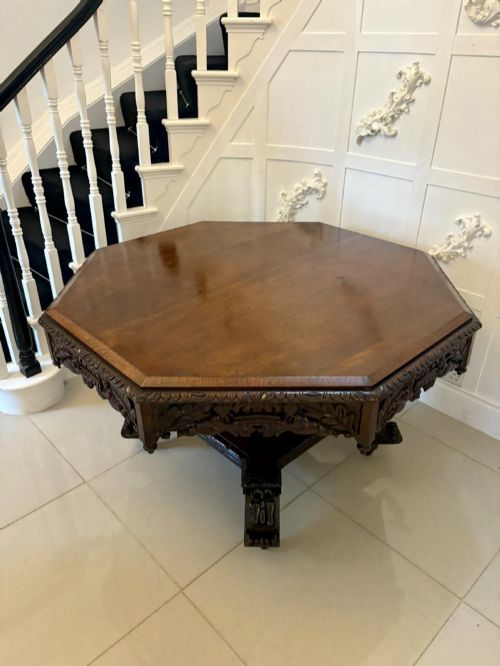
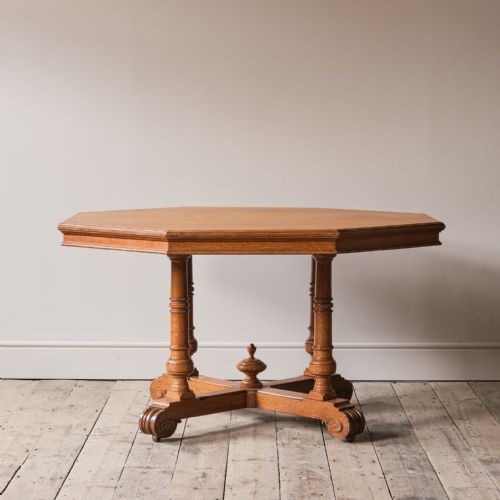
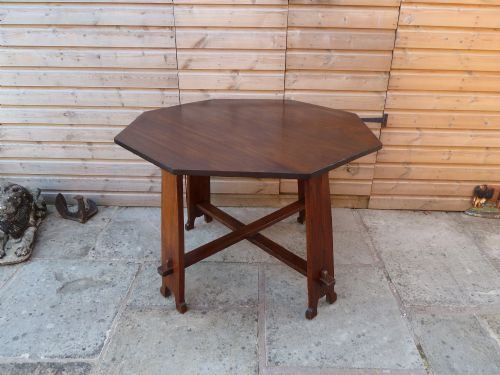
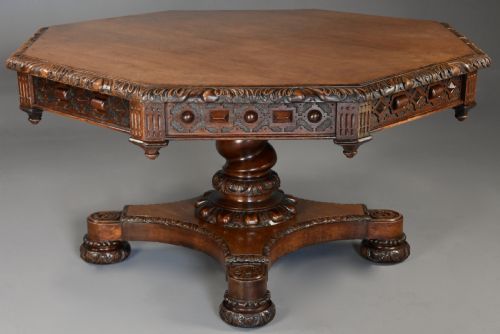




Octagonal Oak Centre Table
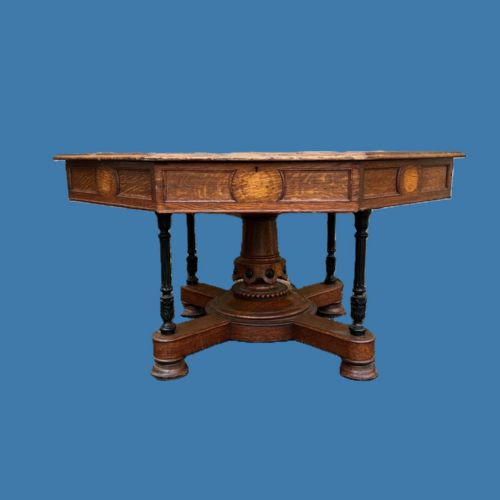
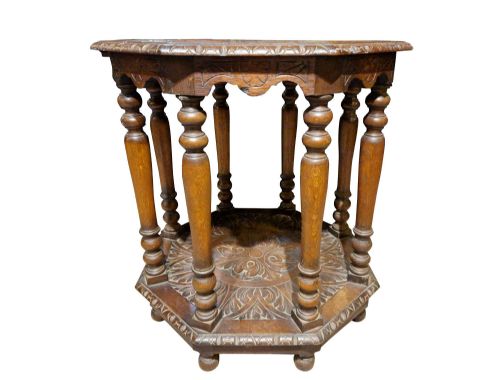
An octagonal oak centre table anchors a room with eight-sided geometry and solid nineteenth-century timber.
Octagonal Oak Centre Table
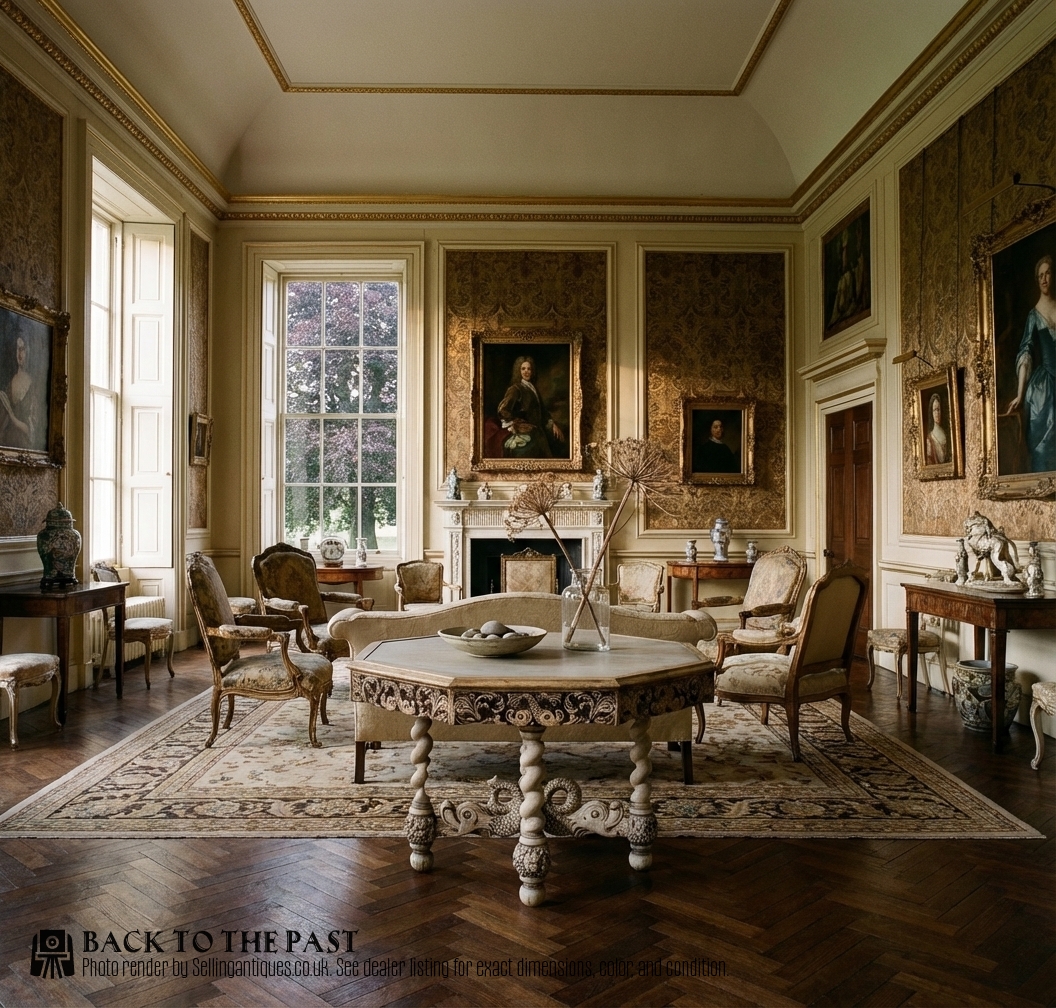
An octagonal oak centre table is a freestanding piece designed to sit in the middle of a room rather than against a wall. When you search for an octagonal oak centre table, you encounter nineteenth-century forms ranging from compact Victorian library pieces to larger Arts and Crafts and Gothic Revival examples.
The pieces on this page span the Victorian, Edwardian, and late nineteenth-century periods. Common variations include pedestal bases with quadruple feet, tilt-top mechanisms, and tiered surfaces designed for books, lamps, or display.
Makers such as James Shoolbred and Gillows appear alongside Gothic Reform designs influenced by Pugin and William Butterfield. Most examples utilise solid oak or oak veneers, sometimes paired with leather inserts or brass castors.
Materials and construction
Cabinetmakers built these tables primarily from solid oak, occasionally employing fruitwood veneers, mahogany, or ebonised wood for contrast. Tops frequently incorporate inlaid leather writing surfaces, geometric parquetry, or bleached finishes.
Structural elements include carved central columns, quadruple bases fitted with brass castors, and apron friezes featuring fret-carved details or drop finials. Joinery relies on heavy timber framing to support the weight of books and daily use.
Listings feature oak tables spanning the nineteenth century, including Victorian Gothic Revival, Arts and Crafts, and Edwardian periods.
Assessing quality
Quality rests on the crispness of the carving, the selection of figured oak timber, and the integrity of the structural joinery. Tables with complex parquetry, tilt-top mechanisms, or documented cabinetmaker stamps demonstrate superior workshop execution.
Proportion and stability separate standard utility pieces from fine library furniture. The weight of the timber and the detailing on the column bases dictate the overall presence of the table.
James Shoolbred & Co. London·W. Williamson & Sons·Gillows
The Octagonal Oak Centre Table Glossary
- Centre table
- A freestanding table finished on all sides to stand in the middle of a room. These pieces provide a focal point and surface access from every direction.
- Parquetry
- Geometric wood inlay forming a mosaic pattern on the tabletop. This technique showcases precise woodworking skills.
- Tilt-top
- A hinged tabletop that pivots vertically to store flat against the base. This mechanism saved space when the table was not in use.
- Gothic Revival
- A nineteenth-century design style drawing inspiration from medieval architecture. Pieces feature pointed arches, quatrefoils, and heavy carved mouldings.
- Drop finial
- A small hanging wooden ornament suspended beneath the table frieze. It is characteristic of Gothic and Jacobean revival joinery.
Octagonal Oak Centre Table: Frequently Asked Questions
What is an octagonal centre table used for?
These tables served as library tables for holding heavy volumes, breakfast tables, or window tables for displaying objects.
Their eight-sided shape allowed multiple people to sit or work around them comfortably in the middle of a room.
How do I date an antique oak table?
Dating relies on style markers such as Victorian Gothic revival motifs, Arts and Crafts simplicity, or Edwardian bleached finishes.
Construction methods, hardware like brass castors, and maker stamps or labels provide further chronological evidence.
Are these tables solid oak?
Most examples utilise solid oak framing and tabletops, occasionally combined with oak veneers over secondary timbers.
Some variants incorporate fruitwood veneers, mahogany, or leather writing inserts within the wooden borders.
What distinguishes a library table?
Library tables are typically larger and heavier, designed to hold substantial collections of books and writing materials.
They often feature leather-lined tops and sturdy pedestal bases to support daily academic use.