


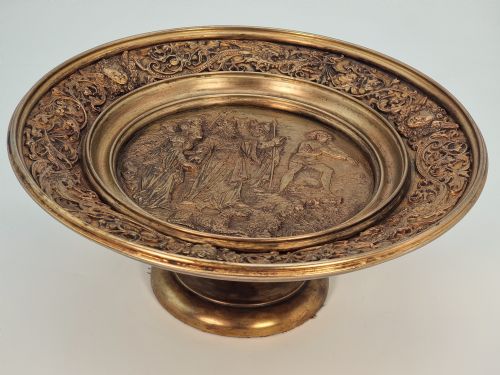


Renaissance Revival Centre Table
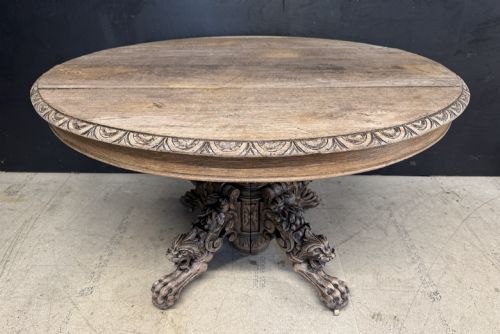
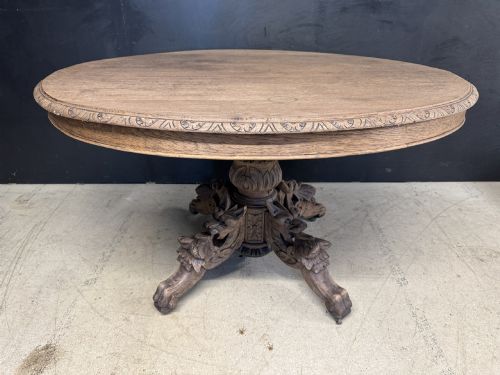
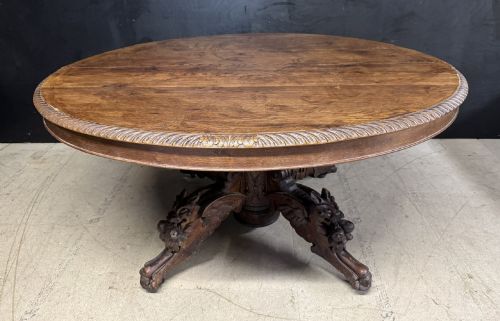
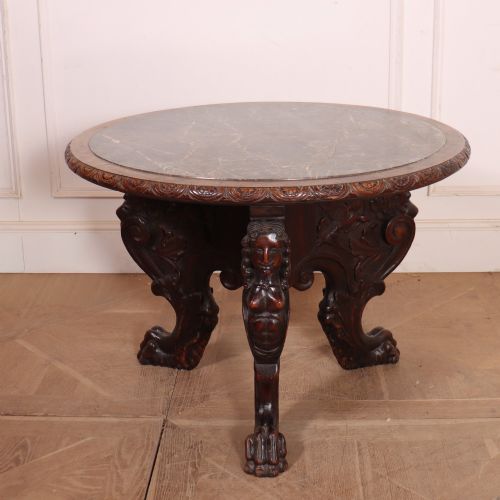
These pieces are a renaissance revival centre table, solid statement furniture built to anchor a grand room with rich historicism.
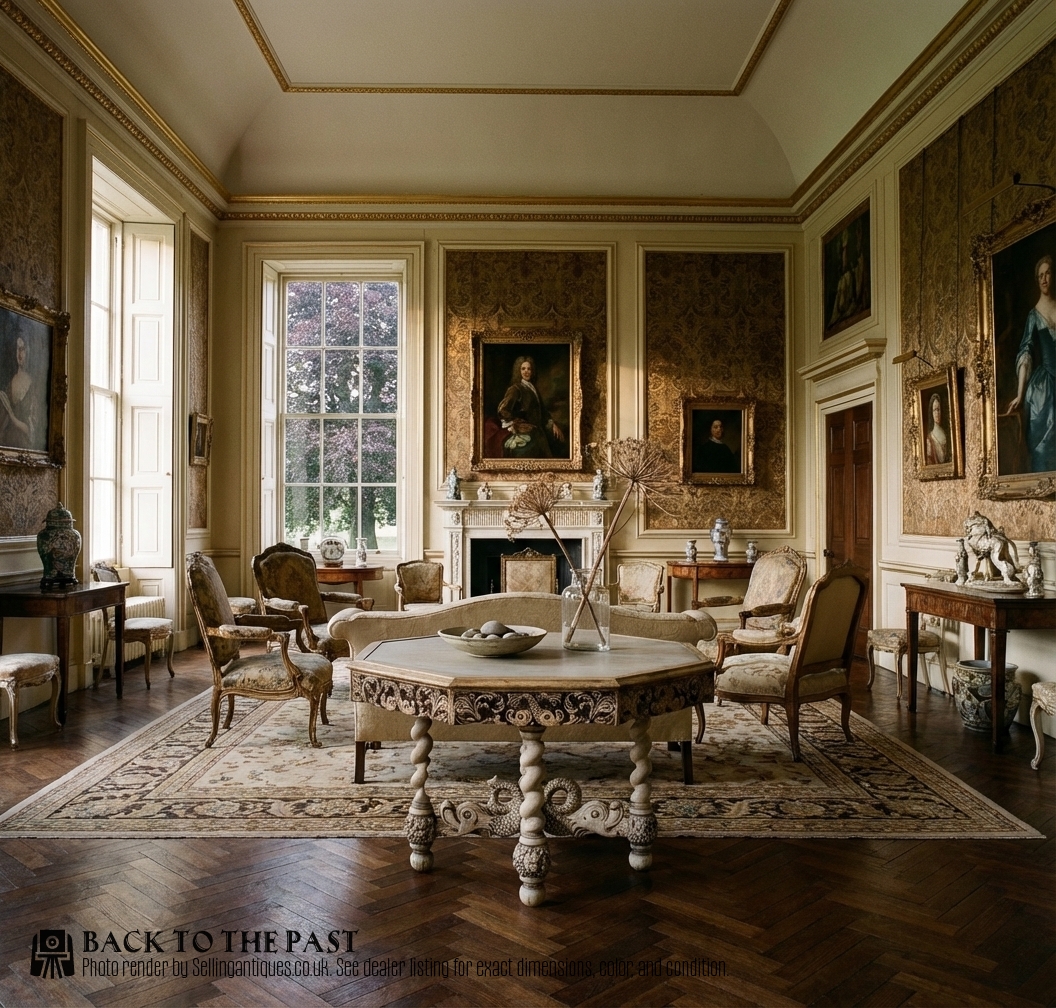
Renaissance Revival Centre Table
A renaissance revival centre table brings heavy architectural presence and elaborate historic detail into a room, designed to stand free in the middle of a space rather than push against a wall. The pieces listed on this page span the nineteenth century into the early twentieth century, showing forms from simple walnut tables to heavily carved examples.
Most items you will meet take the form of centre tables or library tables, alongside related side tables and occasional consoles. These works draw on earlier stylistic vocabularies, notably Victorian and Gothic influences, Spanish baroque lines, and the lighter aesthetic movement touches found in related pieces.
Origins stretch across European workshops, taking in English carvers, French cabinet makers, Italian makers, and Spanish output. Walnut and oak dominate the material palette, often paired with marble tops, leather inserts, or cast bronze mounts.
Materials and construction
Timbers like walnut, carved oak, and pale oak form the structural backbone of these tables, worked by hand to achieve deep relief carving and scrollwork. Bleached oak and Brazilian mahogany also appear, offering varied surface tones and grain patterns.
Many examples incorporate inset marble tops or leather working surfaces, while others feature gilt metal and cast bronze mounts for added decorative contrast. Joinery relies on traditional cabinet-making techniques suited to heavy freestanding furniture.
One enthusiastic Victorian cabinet maker evidently decided a simple table needed an entire carved cherub population to hold up the books.
Judging quality in revival furniture
The depth and crispness of the carving dictate much of the visual success, separating mechanical work from pieces where the chisel has found genuine fluency. Bold scrollwork and figural elements require precise hand execution to maintain proportion across the frame.
Selection of timber grain and the integration of secondary materials such as marble, bronze, or leather determine the overall finish. Superior examples maintain structural integrity in the freestanding form without relying on excessive modern reinforcement.
Edwards & Roberts·Angiolo Barbetti
The Renaissance Revival Centre Table Glossary
- Renaissance Revival
- A nineteenth-century design movement drawing inspiration from sixteenth-century Italian, French, and Flemish architecture and decorative arts. It favours robust proportions and classical motifs.
- Centre Table
- A freestanding table designed to be viewed from all sides and placed in the middle of a room rather than against a perimeter wall. These pieces often served as library or lamp tables.
- Tazza
- A shallow ornamental vase, bowl, or cup mounted on a stem and foot, frequently utilised as a decorative centrepiece on furniture. They appear in bronze and gilt metal forms.
- Console Table
- A table fixed to a wall or freestanding with bracket supports, sharing decorative vocabularies with larger centre tables. They provide narrow surface areas for display.
- Jardiniere
- An ornamental pot or stand for holding plants or flowers, often cast in bronze or ceramic as part of a decorative tabletop ensemble.
Renaissance Revival Centre Table: Frequently Asked Questions
Where should a centre table go?
These pieces are designed to stand away from walls, making them ideal for the middle of a large drawing room, library, or entrance hall where they can be viewed from every angle.
Because they function as freestanding furniture, ensure there is enough clearance around the table for people to walk and use the surface comfortably.
What is a renaissance revival table?
It is nineteenth-century furniture that borrows heavily from sixteenth-century European architectural motifs, featuring prominent carvings, heavy timbers, and classical details.
These designs emerged as cabinet makers looked back to the Renaissance for inspiration, producing bold statement pieces for Victorian homes.
How do I care for antique walnut?
Keep wooden surfaces away from direct heat sources and strong sunlight to prevent the timber and any leather inserts from drying out over time.
Dust regularly with a soft cloth and feed the wood occasionally with appropriate wax to maintain the natural lustre of the finish.
Are these tables good for daily use?
Most examples are constructed from solid timbers like oak and walnut, making them sturdy enough for everyday tasks such as writing or holding lamps.
Take care with unsealed marble tops or antique leather surfaces by using coasters and mats to protect against moisture and scratches.