




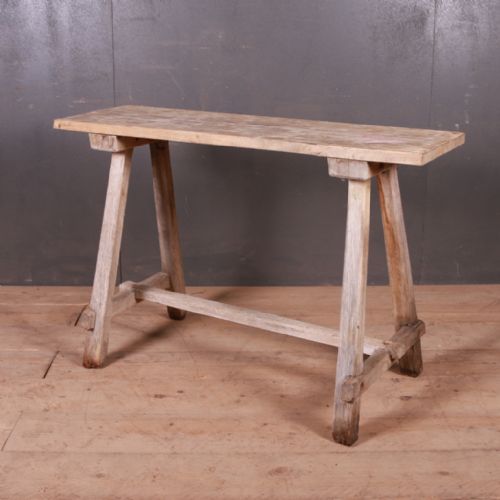


Bleached Oak Hall Table
A bleached oak hall table brings a pale, weathered timber surface to a narrow entrance space, offering practical drop-space with a restrained historic profile.
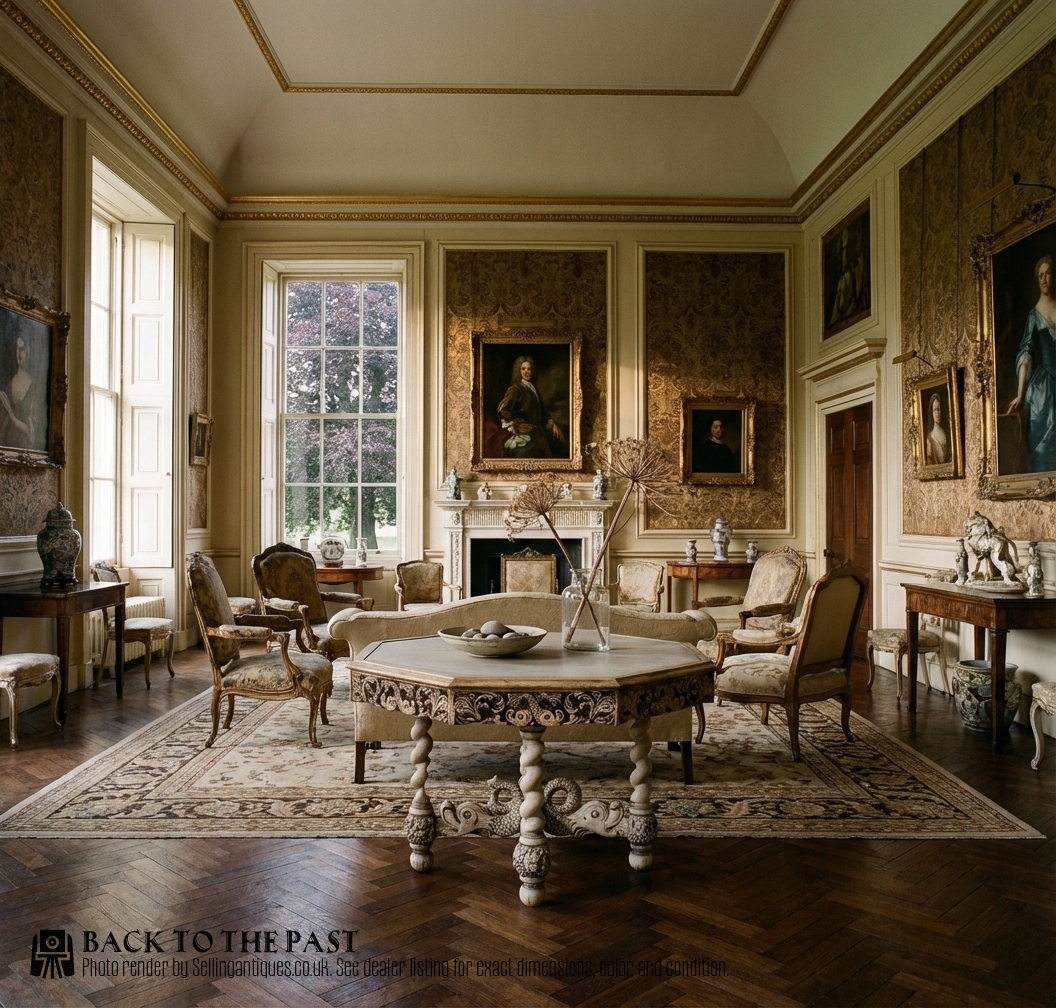
Bleached Oak Hall Table
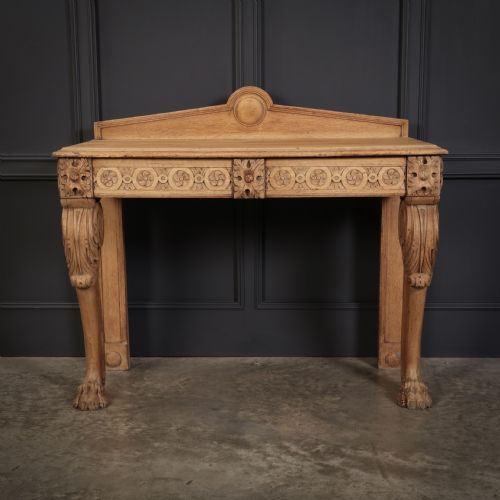
When you search for a bleached oak hall table, you are looking at narrow timber furniture designed for corridors, landings, and entrance spaces where floor space is at a premium. These pieces take the form of console tables, side tables, and serving tables that sit flush against a wall.
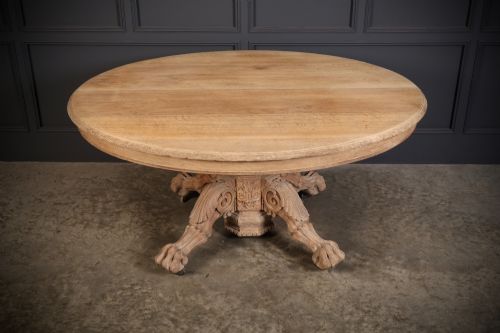
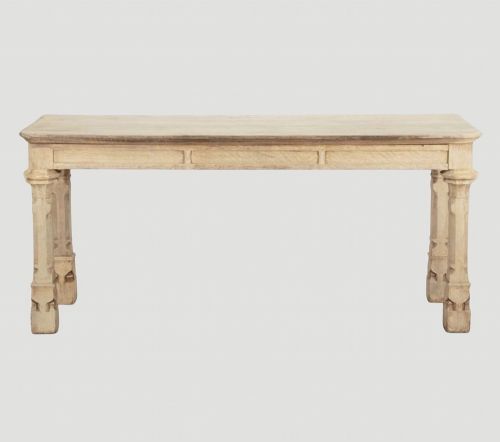
The versions you are most likely to meet on this page span the eighteenth century through to the early twentieth century, drawing on English, French, Spanish, and Dutch country traditions. They frequently appear in formats such as trestle tables, potboard dressers, and D-end consoles.
Many examples show regional adaptations, from Georgian proportions to French provincial framing and Neoclassical revival details. The unifying characteristic is the pale, washed finish applied to the solid oak timber, which lightens the heavy grain.
How they were made
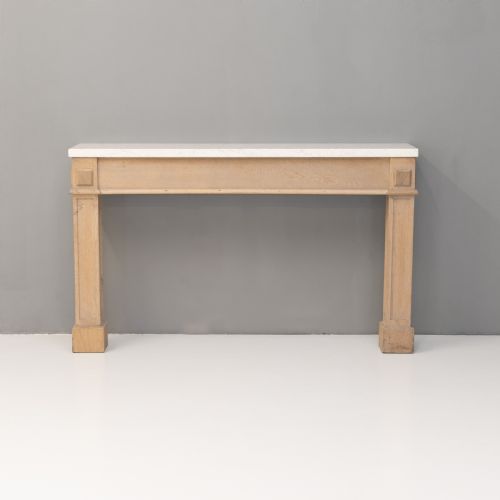
The primary construction relies on solid oak and heavy timber, joined using traditional cabinet-making methods suited to load-bearing tables. Selected pieces incorporate brass hardware or marble inserts to complement the wooden structure.
The distinct pale finish is achieved by bleaching the dark natural oak, a process that subdues the traditional warmth of the wood while accentuating the deep figuring of the grain. Carved decorative elements appear on select frames, utilising chisels and gouges on solid stock.
Bleached Oak Hall Table Retail Price Guide 2026
Typical asking prices for bleached oak hall table among the pieces listed under this phrase on Sellingantiques today, from the lower quarter to the upper quarter. They describe what is for sale here now, not the wider market.
Several tables in this selection double as metamorphic furniture, proving that historical cabinet-makers loved a multi-tasking piece just as much as we do.
What varies in quality
Quality in these tables is determined by the crispness of proportion and the integrity of the timber framing. Better examples maintain balanced dimensions that suit narrow entryways without appearing overly bulky.
The depth and uniformity of the bleached finish also vary, with superior pieces retaining natural grain contrast rather than a flat, opaque appearance. The stability of the joints and the handling of carved details separate standard utility tables from finer regional pieces.
The Bleached Oak Hall Table Glossary
- Bleached oak
- Oak timber treated with chemical agents or specialised washes to strip its original dark tone and create a pale, neutral finish. This treatment highlights the natural grain pattern while softening the visual weight of the wood.
- Console table
- A table designed to stand against a wall, frequently supported by wall brackets or two front legs. In narrow spaces, these pieces maximise surface area without blocking thoroughfares.
- Trestle table
- A table construction where the top rests on two or more upright supports connected by a horizontal beam. This design provides sturdy support and unhindered legroom.
- Potboard dresser
- A traditional storage furniture piece featuring an open lower shelf beneath a serving surface. The lower tier was historically used for displaying earthenware vessels.
- D-end table
- A dining or console table whose ends are semicircular in shape, resembling the letter D. These sections can often be separated or pushed against walls to save space.
Bleached Oak Hall Table: Frequently Asked Questions
How do I style a bleached oak hall table?
Keep the surface uncluttered to let the pale grain texture remain the primary focus. A single lamp, a small ceramic bowl, or a seasonal branch in a vase works well without crowding a narrow entryway.
Allow the architectural lines of the console or trestle base to stay visible. Pair the table with a simple mirror or a low-profile bench underneath if space permits.
Are these tables suitable for narrow hallways?
Console and side tables in this selection are specifically built with shallow depths to fit transit spaces. They provide a practical spot for keys and post without obstructing foot traffic.
Measure the clearance of your corridor carefully before choosing between a slim trestle format or a D-end console design.
How do I care for bleached oak?
Dust the timber regularly with a dry cloth to prevent grit from settling into the open grain. Avoid using heavy wax polishes that can darken the pale bleached finish over time.
Keep the table away from direct heat sources and strong sunlight, which can cause the treated wood to dry out or fade unevenly.
What is the difference between a console and a side table?
A console table is specifically engineered to stand flat against a wall, sometimes relying on the wall for extra stability. A side table is a freestanding piece that can be moved around a room more freely.
In historic listings, these terms frequently overlap, particularly with tables designed for narrow hallways and serving areas.