
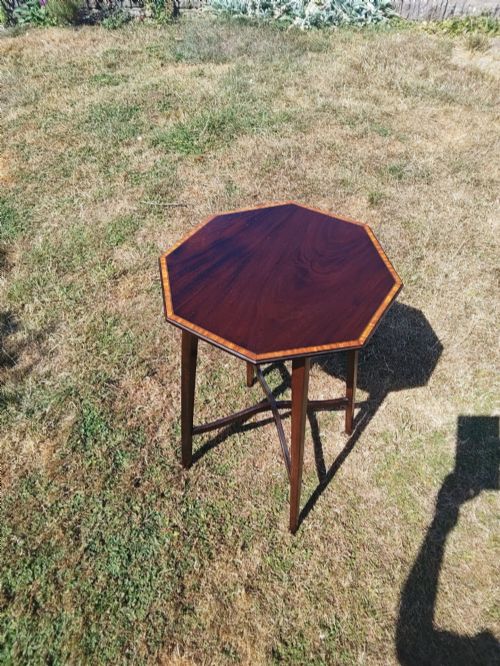
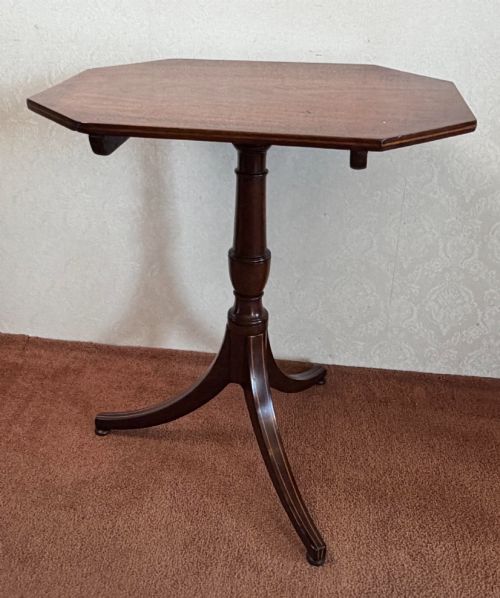
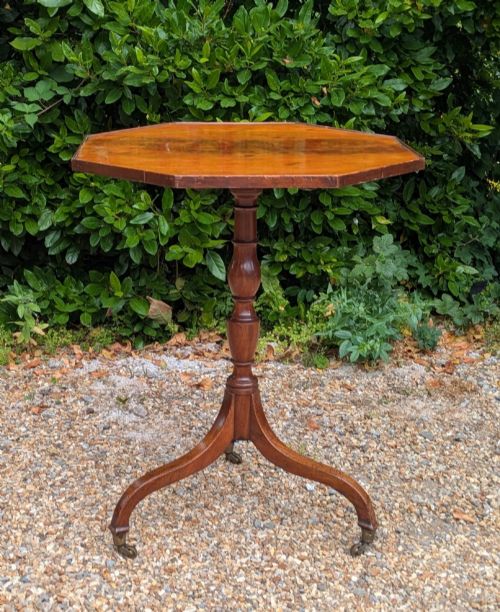
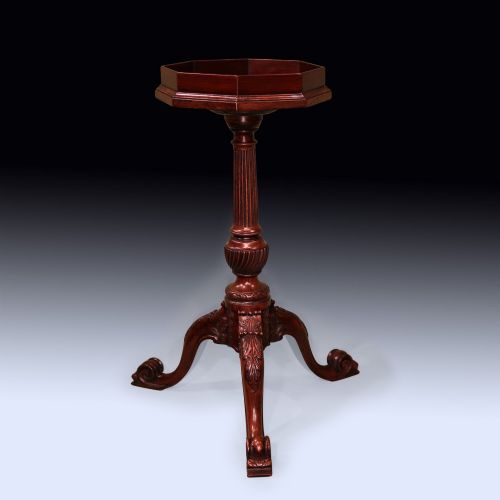
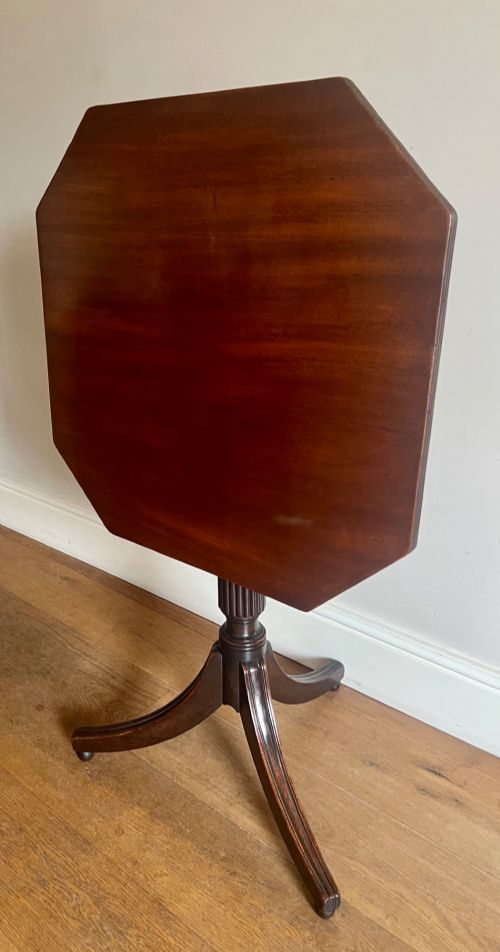
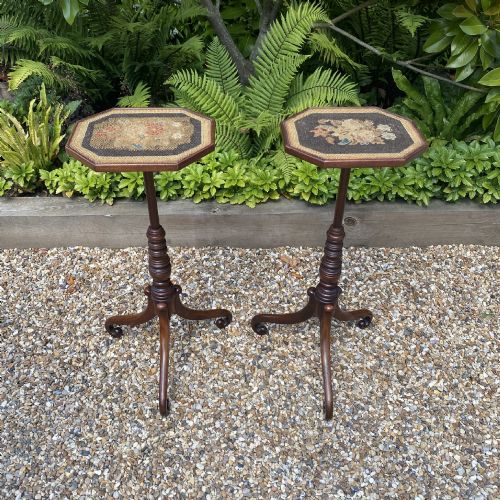
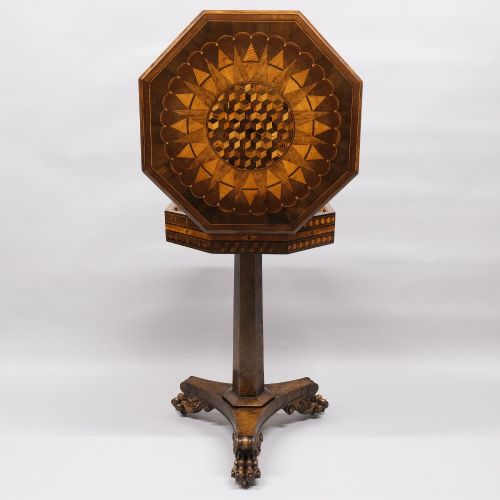
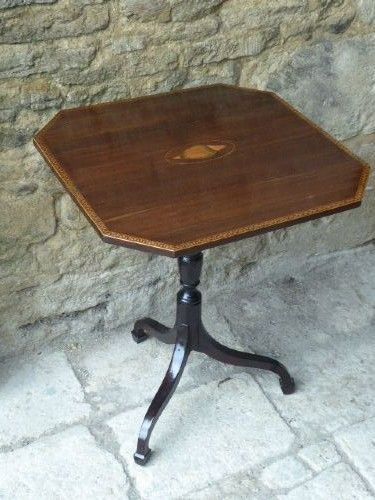
Octagonal Mahogany Side Table
An octagonal mahogany side table brings sharp geometry and rich timber warmth to a room, offering a practical surface with distinct character.
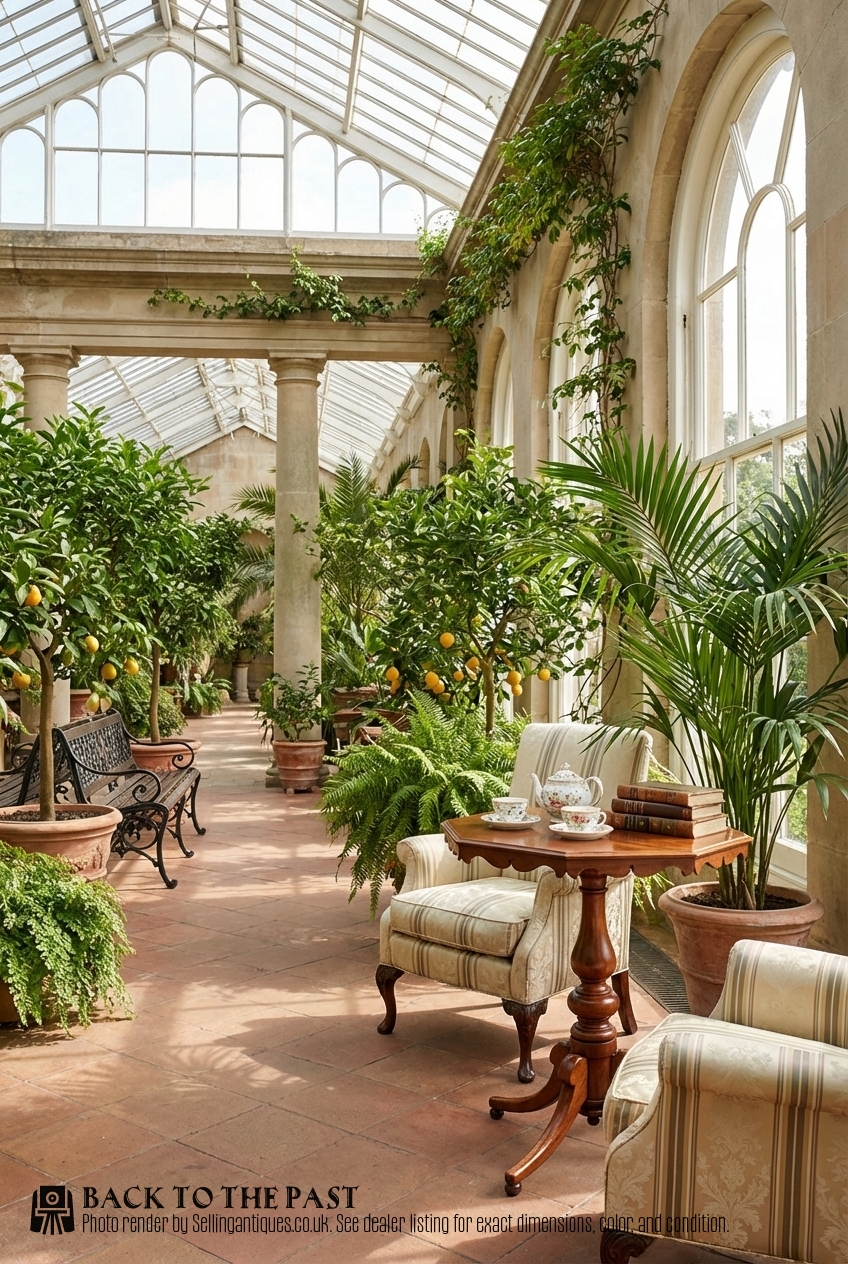
Octagonal Mahogany Side Table
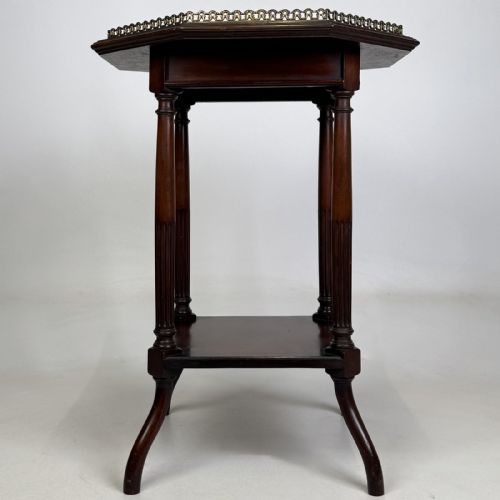
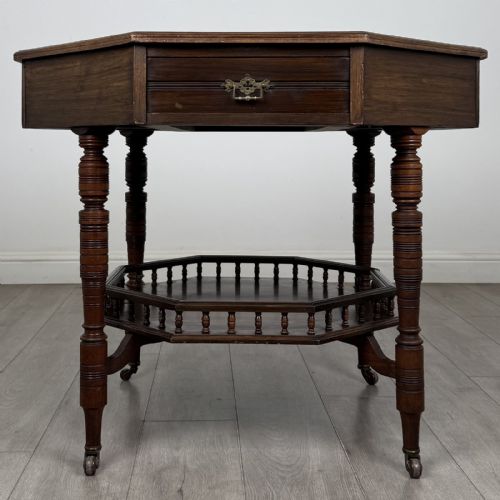
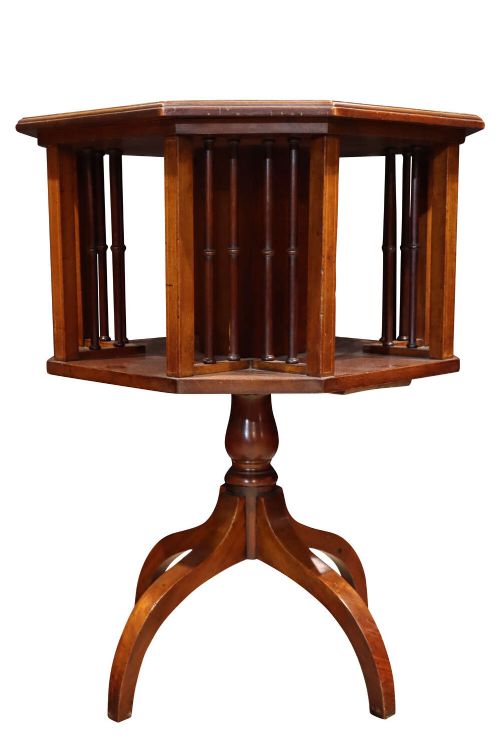
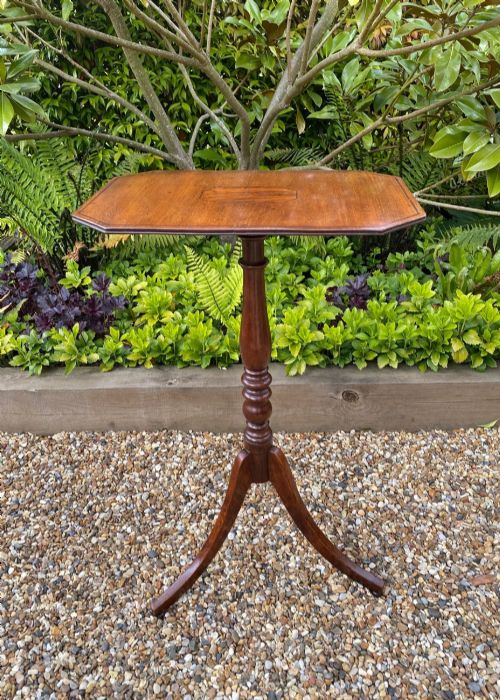
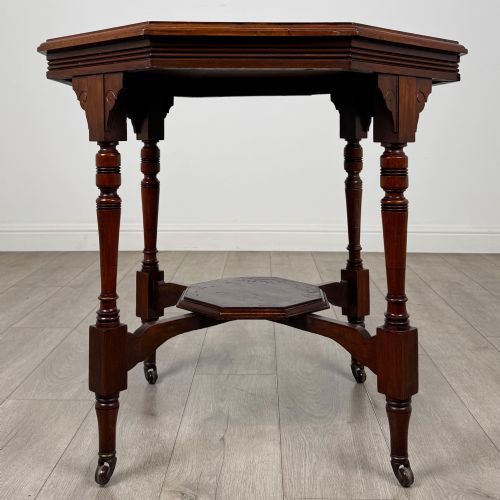
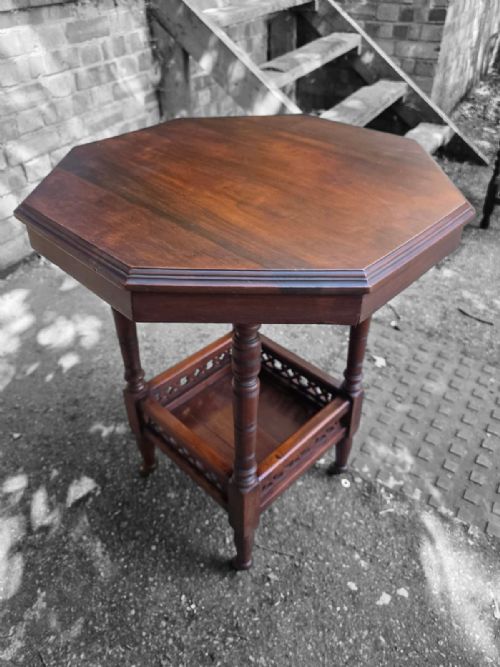
When searching for an octagonal mahogany side table, buyers look at compact occasional furniture spanning the Georgian, Regency, and Victorian eras. These pieces serve multiple domestic functions, appearing as wine tables, lamp stands, and work tables.
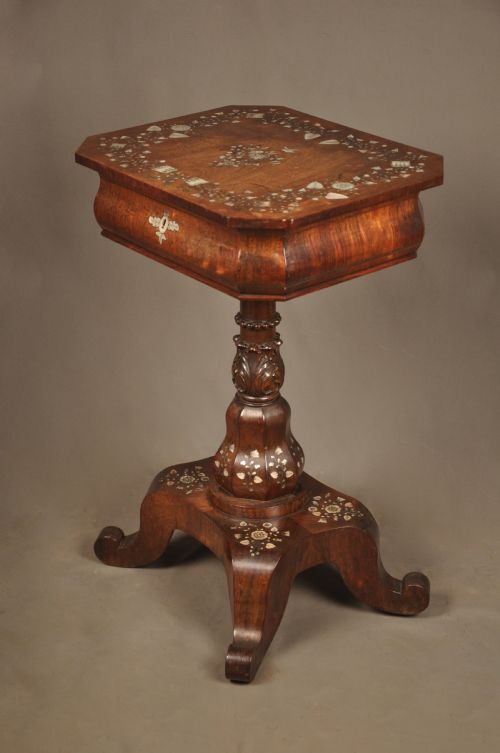
The shape itself creates a clear alternative to round or square furniture, often featuring tilt-top actions or fitted interior compartments. Most examples belong to the nineteenth and early twentieth centuries, reflecting changing interior styles from strict classical lines to later revival periods.
Timber and construction methods
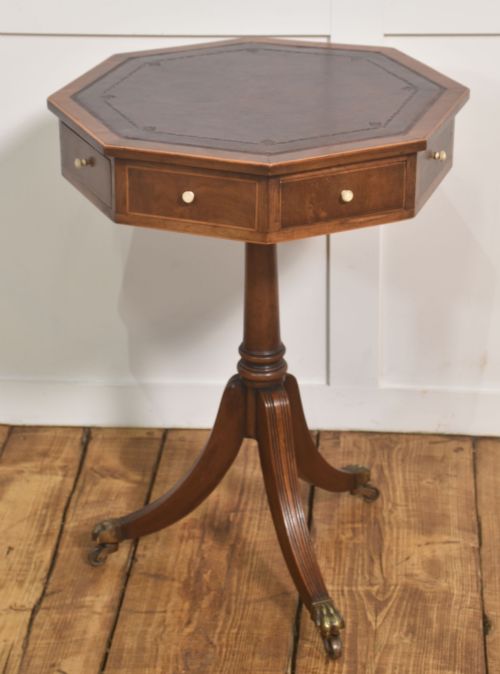
Makers utilised solid mahogany and figured veneers for the main structure, frequently enhancing the design with contrasting boxwood inlay or delicate stringing. Tabletops are supported by sturdy pillar columns, often terminating in tripod legs that provide stability without heavy bulk.
Joinery methods rely on traditional techniques such as dovetailing for drawers and secure tenon joints for the central pillars. Surfaces are finished to highlight the natural grain of the wood, sometimes incorporating leather inserts or marble tops.
Listings feature pieces spanning from the 18th Century through the Edwardian period, constructed primarily in mahogany with occasional brass, marble, and leather elements.
Distinctions in execution and timber
The quality of an octagonal mahogany side table rests primarily on the selection of the timber and the crispness of the secondary inlays. Superior pieces display deeply figured grain patterns and precise boxwood or satinwood stringing that remains intact.
Structural integrity also separates standard items from finer works, particularly in the smooth operation of tilt-top mechanisms and the rigid alignment of tripod bases. Original brass fittings and well-preserved internal silk baskets on work tables further distinguish the finer examples.
Ralph Turnbull·John Taylor Edinburgh
The Octagonal Mahogany Side Table Glossary
- Mahogany
- A durable, reddish-brown tropical hardwood prized for its stability and rich grain. It serves as the primary material for the vast majority of these tables.
- Tilt-top
- A hinged tabletop mechanism that allows the surface to fold vertical when not in use. This clever design saved floor space in period rooms.
- Tripod base
- A three-legged support structure attached to a central pillar column. It ensures the table remains steady on uneven floors.
- Boxwood inlay
- Light-coloured wood cut into geometric or linear patterns set flush into the darker mahogany surface. It provides sharp visual contrast.
- Occasional table
- A small, movable piece of furniture designed for specific, intermittent tasks such as holding a lamp or serving wine.
Octagonal Mahogany Side Table: Frequently Asked Questions
What is an octagonal mahogany side table used for?
These versatile tables function primarily as surfaces for lamps, drinks, or decorative displays in reception rooms and hallways. Many period variations also include built-in sewing baskets or tilt-top actions for multi-purpose use.
Their compact footprint allows them to fit neatly into corners or beside seating areas where larger rectangular furniture would crowd the space.
How do I date a mahogany table?
Dating relies on observing the stylistic details, construction techniques, and timber characteristics. Georgian and Regency pieces often exhibit finer proportions and classical bracket or tripod bases, while Victorian and Edwardian examples may include heavier turnings or revival inlays.
Checking the interior construction of drawers and the type of secondary woods used underneath also helps establish the correct period of manufacture.
Are tilt-top tables stable?
A well-made tilt-top table remains stable on its central pillar and three legs when locked in the horizontal position. The metal catch or wooden peg secures the top firmly to the base during daily use.
Over time, wear in the pivot mechanism can introduce slight movement, which is a common characteristic found in older examples.
How do I care for antique mahogany?
Antique mahogany benefits from regular dusting with a soft, dry cloth to prevent surface grit from accumulating. Avoid placing the wood in direct sunlight or near heat sources to protect the polished finish and prevent timber shrinkage.
Occasional application of appropriate wax polish helps maintain the natural lustre of the grain without building up heavy residues.