
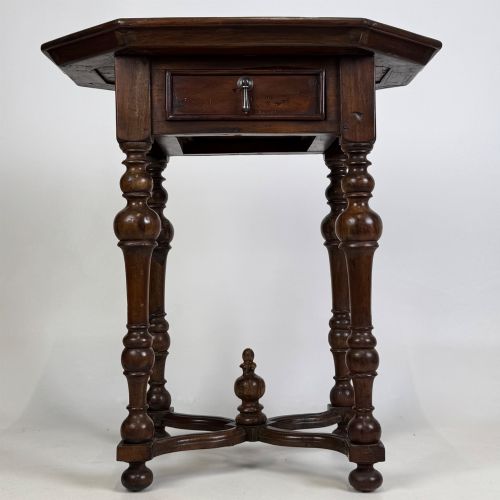
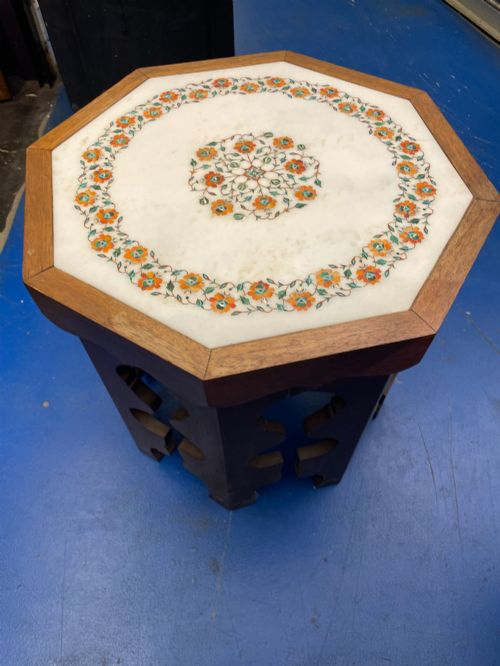
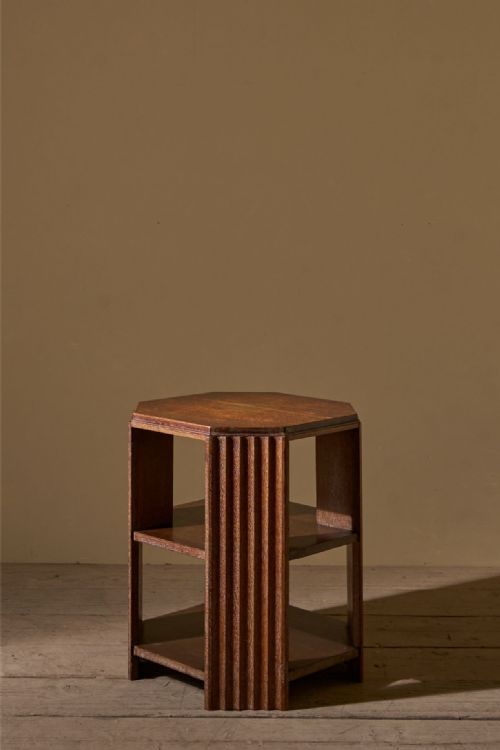
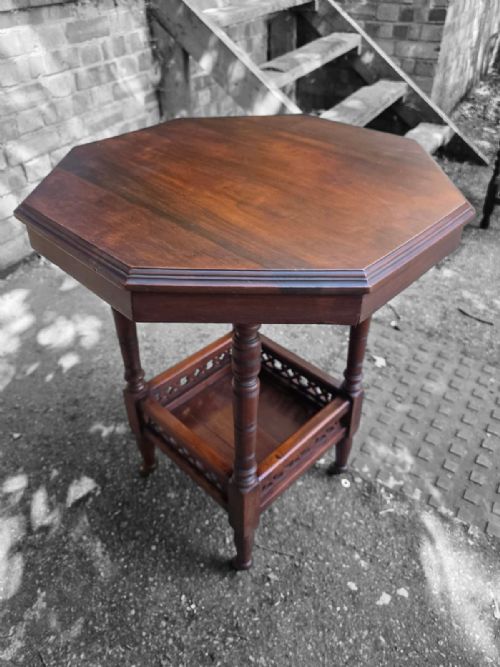
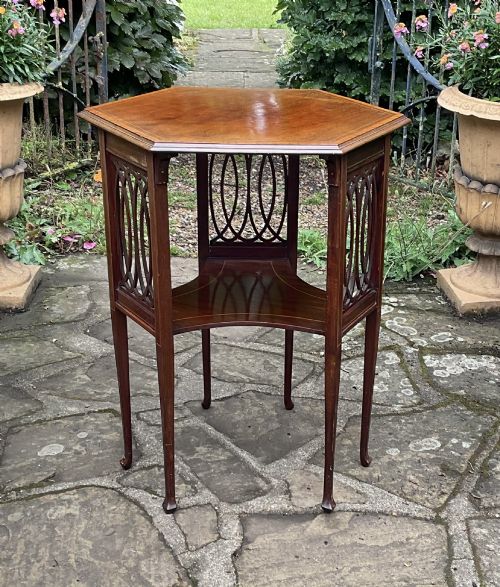

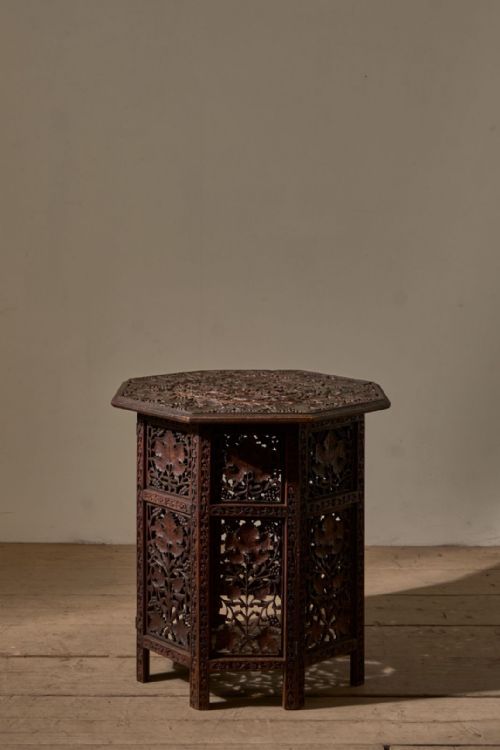
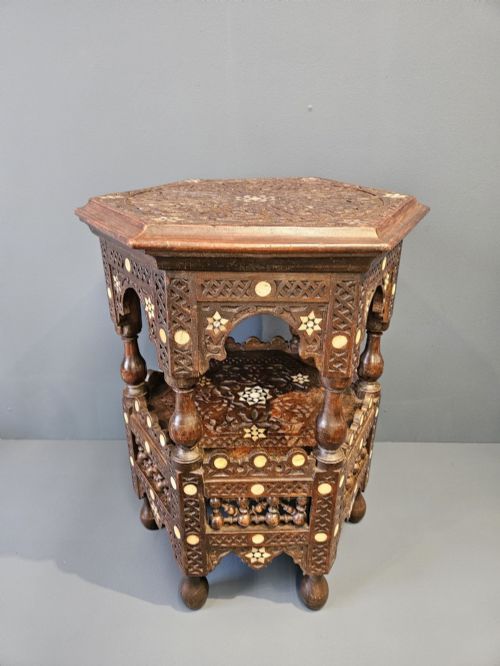


Octagonal End Table
An octagonal end table brings sharp geometry and rich timber grain to a corner, offering a compact surface suited to lamps and books.
Octagonal End Table
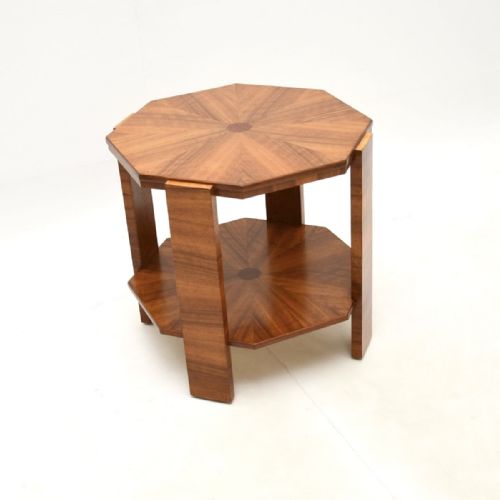
The octagonal end table appears across the nineteenth and twentieth centuries in forms ranging from heavy Victorian parlour items to streamlined Art Deco walnut pieces. Buyers seeking an octagonal end table encounter diverse regional traditions, from Anglo-Indian carved teak and padauk to English oak and mahogany designs.
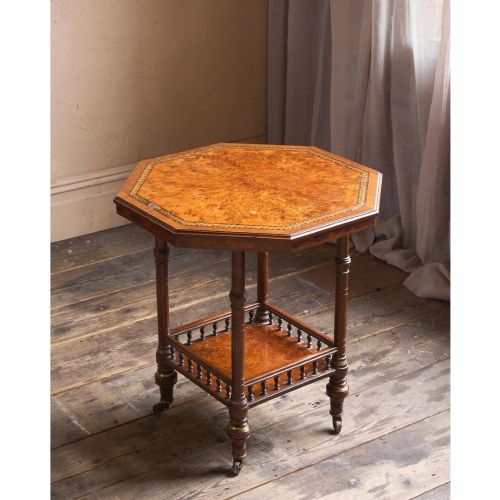
Makers utilised the eight-sided top for occasional, lamp, and side table duties, often pairing the geometry with barley twist legs, inlaid motifs, or lower storage shelves. The most frequently met examples span the Edwardian era and the 1930s, reflecting changing domestic requirements for adaptable small tables.
Formations include simpler occasional tables alongside more ornate Moorish revival or Chinese carved pieces utilising hardwoods and contrasting veneers. Each period brings distinct construction signatures, allowing collectors to trace shifting tastes in domestic seating arrangements.
Materials and construction methods
Cabinetmakers relied on solid timbers like oak, mahogany, walnut, and teak, frequently applying walnut veneer or amboyna for decorative surface figuring. Hardwoods provided the structural integrity required to support multi-faceted tops without warping over decades of use.
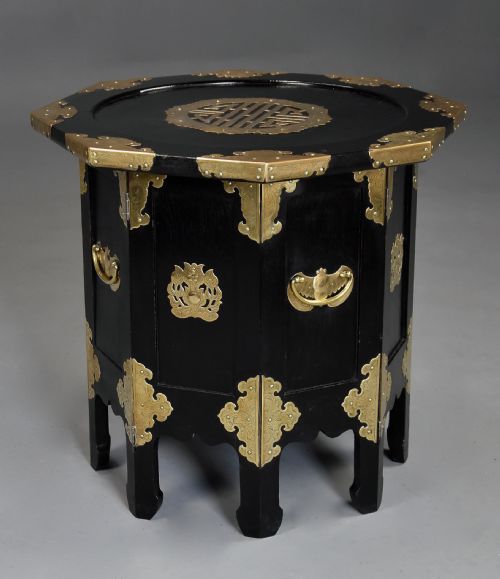
Surface ornamentation involved intricate hand carving, mother-of-pearl inlay, brass wire work, and parcel gilt highlights, particularly on Anglo-Indian and Moorish revival items. Joinery standards dictated the longevity of these multi-sided frames, ensuring stable leg assemblies beneath heavy marble or timber tops.
Camel tables with folding wooden frames offer a clever space-saving trick that has amused guests since the Victorian era.
Assessing quality and craftsmanship
Quality rests in the crispness of the eight-sided geometry and the depth of hand-carved detailing across the apron and legs. Finer examples display meticulous grain selection in walnut or mahogany veneers, whereas simpler utility pieces rely on plain oak with minimal enrichment.
The integration of secondary materials, such as brass inlay, mother-of-pearl, or marble inserts, separates standard production from exceptional workshop output. Structural soundness in the leg joints and under-tiers determines how well the piece endures daily placement beside armchairs.
Gillows
The Octagonal End Table Glossary
- Occasional table
- A small, movable table designed for light, intermittent use rather than central dining. These pieces fit easily beside seating arrangements.
- Padauk
- A dense tropical hardwood prized for its reddish-brown colour and durability. It frequently appears in nineteenth-century Anglo-Indian furniture.
- Hongmu
- A category of dense Chinese hardwoods translating to red wood. It was commonly utilised for fine carved stands and tables.
- Barley twist
- A turned wooden furniture leg resembling a spiral rope. This decorative turning is typical of seventeenth-century revivals and later oak tables.
- Inlay
- A technique where contrasting materials like brass, mother-of-pearl, or lighter woods are inserted into cavities flush with the surface.
Octagonal End Table: Frequently Asked Questions
What is an octagonal end table used for?
These compact tables serve as convenient resting surfaces for lamps, books, and decorative objects in sitting rooms and hallways.
Their eight-sided shape allows them to fit comfortably into corners or beside armchairs without obstructing foot traffic.
How do I identify an Art Deco octagonal table?
Art Deco examples, usually dating from the 1920s and 1930s, typically feature geometric simplicity, rich walnut veneers, limed oak, or ebonised finishes.
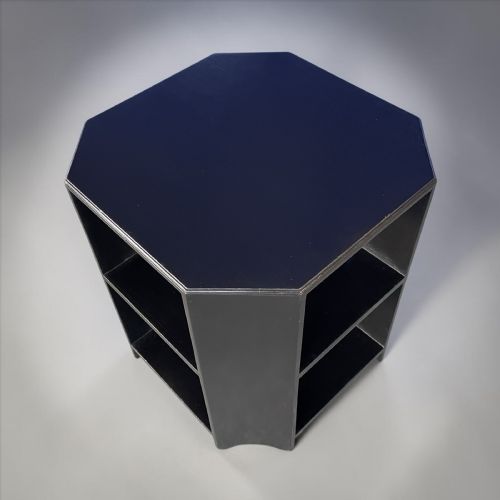
They dispense with heavy Victorian carving in favour of clean lines, smooth surfaces, and occasionally built-in storage spaces.
What distinguishes Anglo-Indian tables?
Anglo-Indian pieces from the nineteenth and early twentieth centuries are characterised by dense teak or padauk timbers and deeply carved foliage or animal motifs.
Many incorporate intricate elements like Hoshiarpur or Moorish carving traditions, reflecting cross-cultural design influences of the period.
Are marble-topped tables difficult to maintain?
Marble tops require basic care to prevent staining from liquids, needing prompt wiping and occasional sealing depending on the stone's porosity.
The stone provides a durable, heat-resistant surface that contrasts with the surrounding wooden frame.