






Octagonal Black Side Table
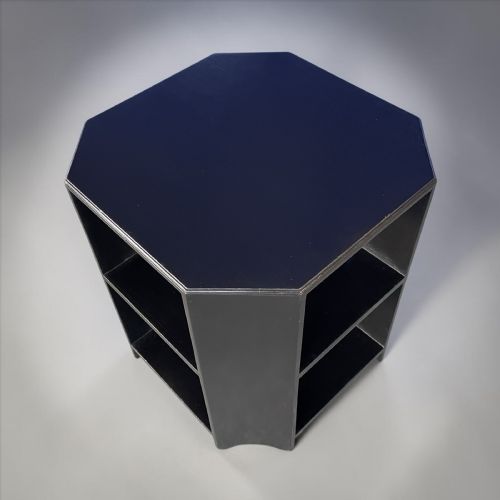
An octagonal black side table brings dark geometry and distinct period character into a room.
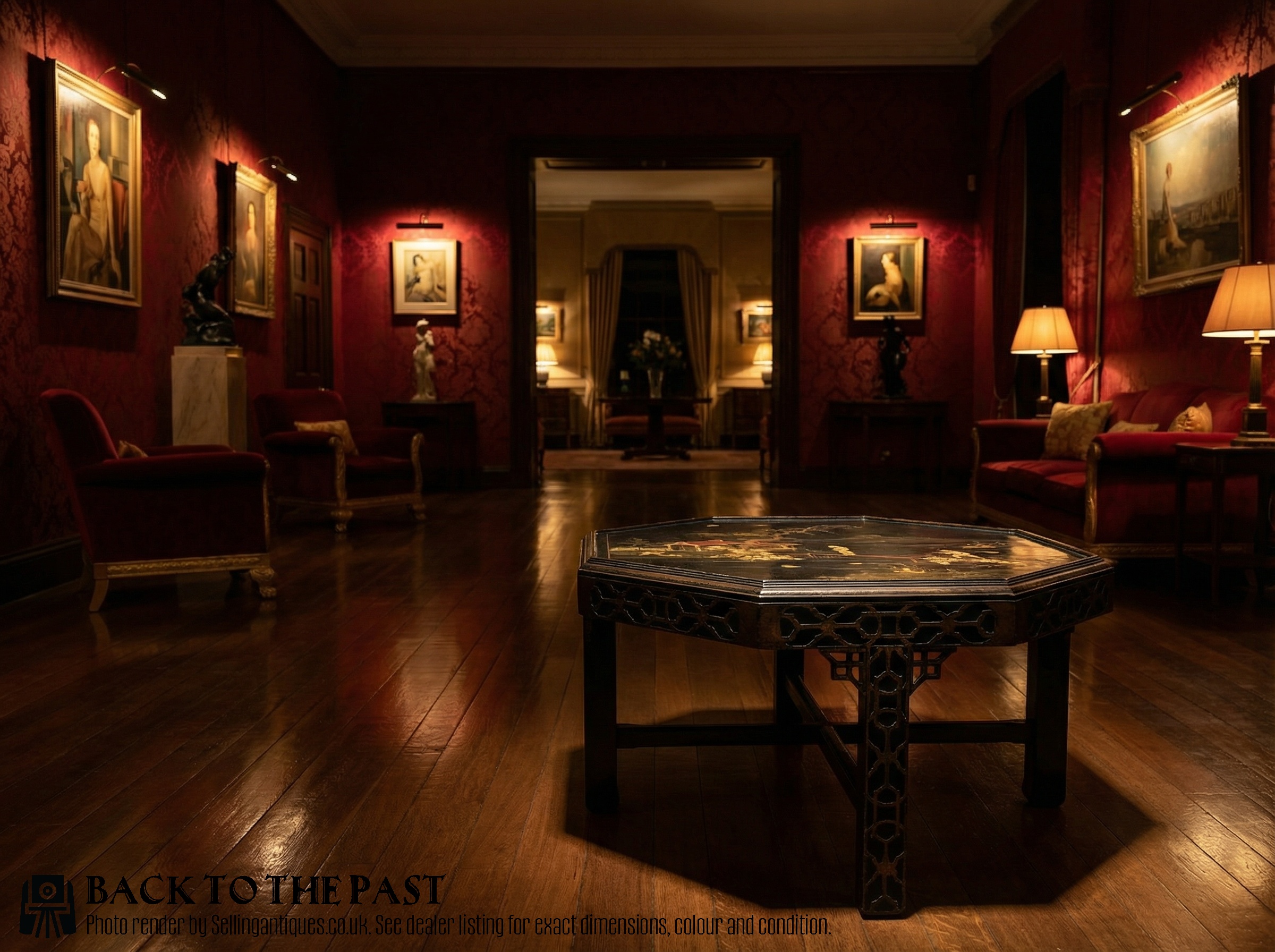
Octagonal Black Side Table
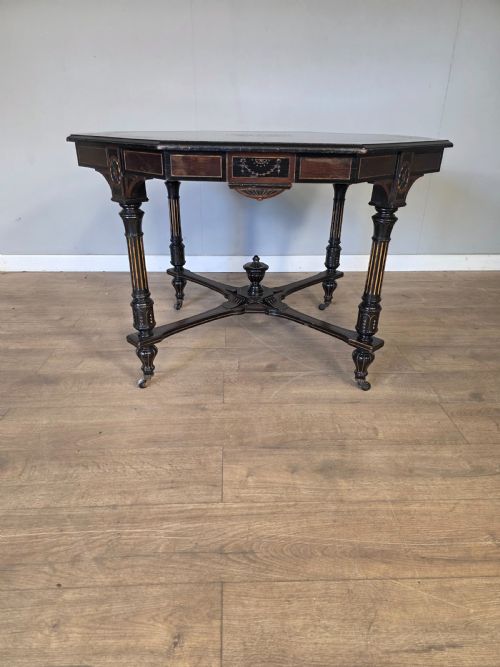
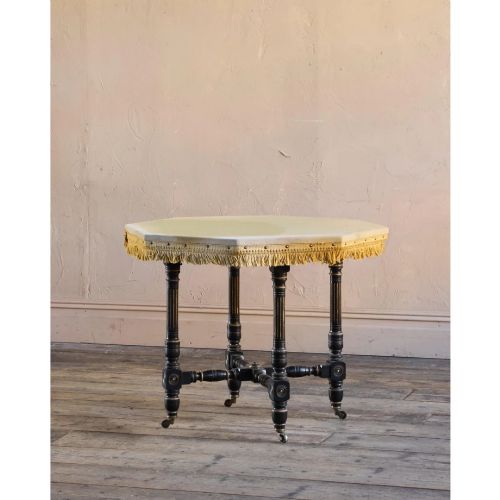
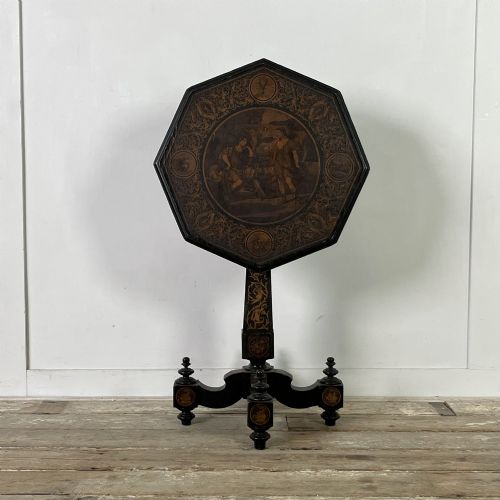
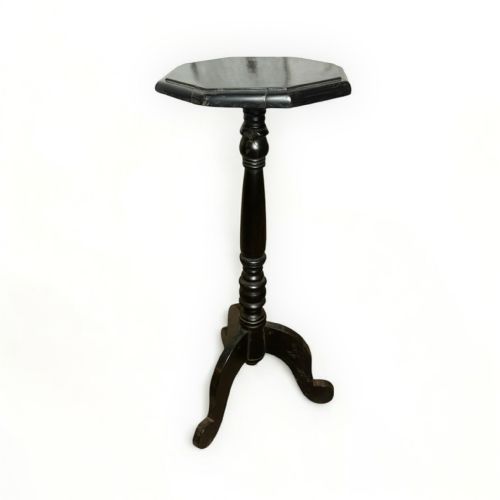
An octagonal black side table is a compact surface built with eight sides and a dark finish, appearing across nineteenth-century and early twentieth-century periods. These items serve as occasional tables, centre tables, and coffee tables within diverse interior settings.
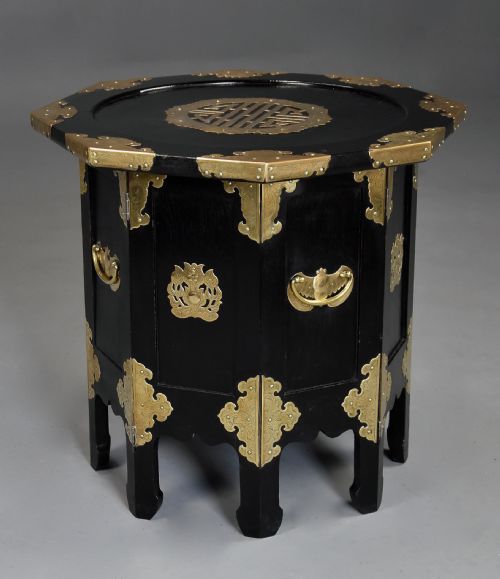
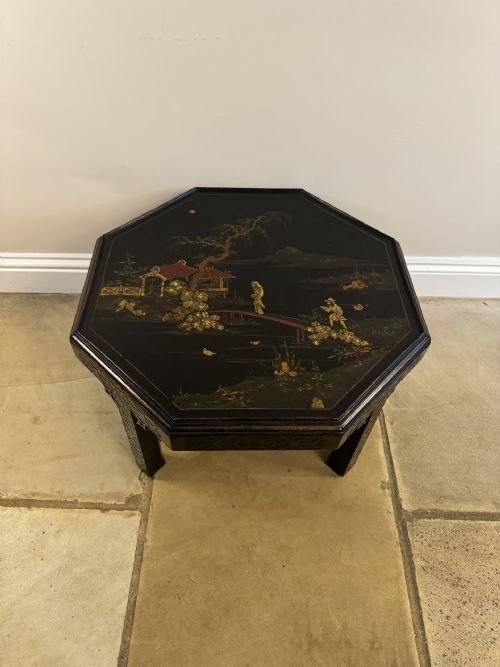
The versions most commonly met on this page span Victorian, Aesthetic Movement, and early twentieth-century eras, often incorporating oriental or Anglo-Indian influences. Forms range from simple occasional stands to decorated two-tier tables and solid wood structures.
Makers and artisans employed varied regional styles, producing pieces that function equally as plant stands or bedside surfaces. Each example reflects the distinct decorative tastes of the nineteenth and early twentieth centuries.
How they were made
Makers utilised ebonised wood, ebonised timber, and solid ebony to achieve the characteristic dark surfaces seen across these listings. Lacquered wood and black lacquer also appear, alongside traditional wood foundations.
Brass elements and gilt details frequently accent the dark frames, while inlay work and painted decoration define specific regional pieces. Artisans combined these materials using period cabinet-making techniques appropriate to each style.
Several tables spend their time holding heavy potted plants rather than cups of tea.
What varies in quality
The standard of an octagonal black side table depends on the depth of the finish and the precision of the eight-sided geometry. Superior examples display careful joinery and well-preserved surface treatments.
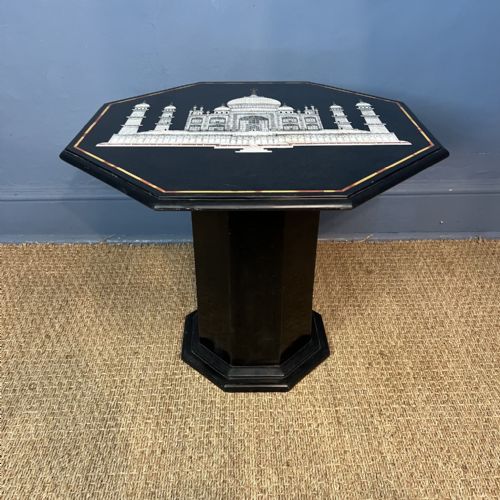
Decorative application dictates the distinction between standard production and finer work, particularly where hand-painted oriental motifs, brass embellishments, or inlaid stones are present. The integrity of the underlying timber framework further separates simpler items from more ambitious constructions.
A Hindley & Sons·Gillows
The Octagonal Black Side Table Glossary
- Ebonised
- Wood treated with a dark stain or finish to imitate the appearance of ebony. This process was widely utilised during the Victorian era for decorative furniture.
- Aesthetic Movement
- A late nineteenth-century design style emphasising visual beauty over narrative subject matter. Pieces from this movement often feature ebonised surfaces and oriental influences.
- Chinoiserie
- European artistic interpretation of Chinese and East Asian decorative traditions. This style frequently employs black lacquer and painted details on occasional furniture.
- Pietra Dura
- The technique of inlaying cut and fitted polished coloured stones to create geometric or figurative designs. It appears on select nineteenth-century table tops.
- Tilt-top table
- A table designed with a mechanism that allows the surface to tilt vertically when not in use. This practical form saves space in smaller rooms.
Octagonal Black Side Table: Frequently Asked Questions
Where should I place an octagonal table?
An octagonal black side table fits well beside a sofa, armchair, or in a corner as a display surface.
The eight-sided shape allows it to sit comfortably in tighter spaces where square or round tables might feel intrusive.
How do I care for ebonised wood?
Dust ebonised surfaces regularly with a soft, dry cloth to prevent accumulation. Avoid harsh chemical cleaners that can strip or dull the dark finish.
Keep the wood away from direct sunlight and excessive moisture to preserve the depth of the colour.
Are these tables solid ebony?
Most pieces are constructed from timbers such as hardwood or walnut that have been ebonised rather than carved from solid ebony. A solid ebony octagonal side table is an exception found among nineteenth-century examples.
The underlying wood provides structural stability while the ebonising creates the desired dark aesthetic.
What distinguishes Victorian ebonised tables?
Victorian ebonised tables often reflect the taste for dark, dramatic furniture popularised by the Aesthetic Movement and revival styles. They frequently incorporate contrasting brass details or burr walnut elements.
These pieces combine utilitarian function with the ornate decorative tendencies of the later nineteenth century.