
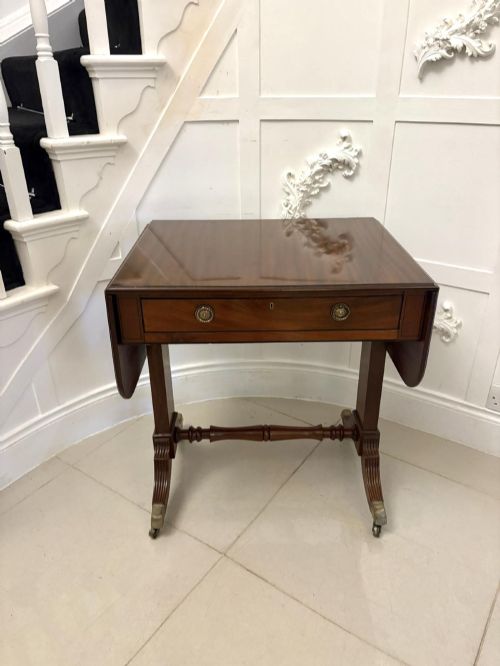
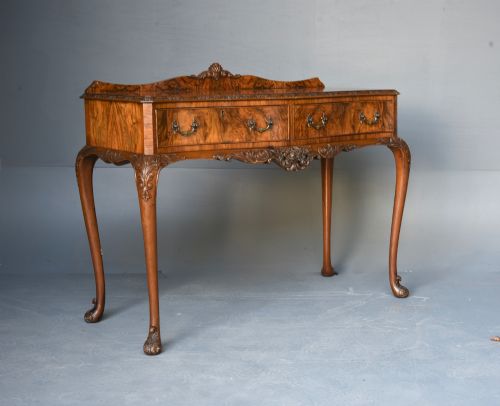
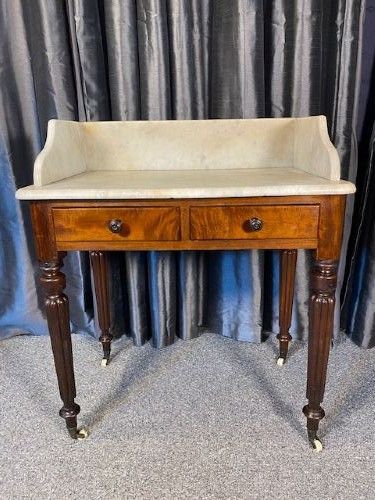
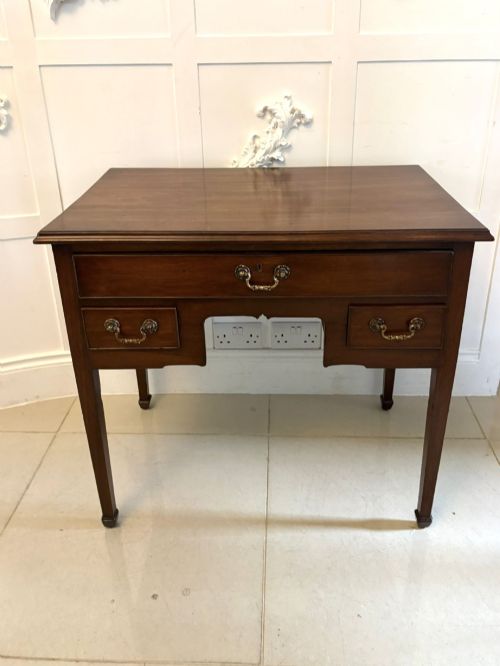
Occasional Hall Table
An occasional hall table serves as a compact surface for narrow spaces, offering period character alongside practical placement.
Occasional Hall Table
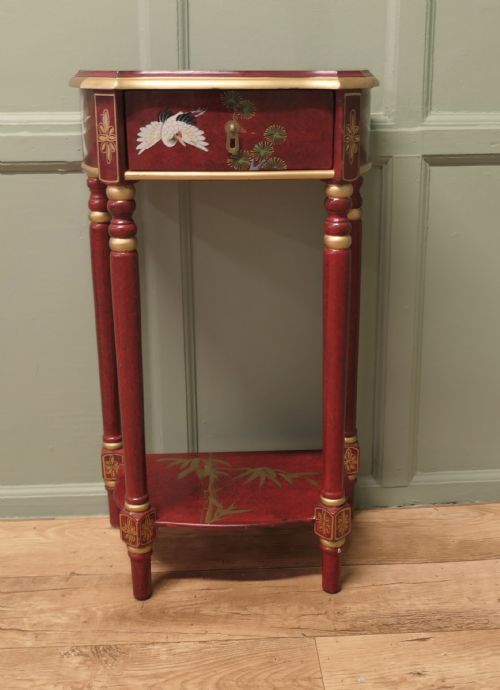
When searching for an occasional hall table, buyers encounter a variety of forms including side tables, lowboys, console tables, and compact writing desks designed for transitional spaces. These pieces span centuries of British and European cabinet-making, extending from seventeenth-century oak furniture through Georgian mahogany designs to Edwardian walnut and inlaid examples.
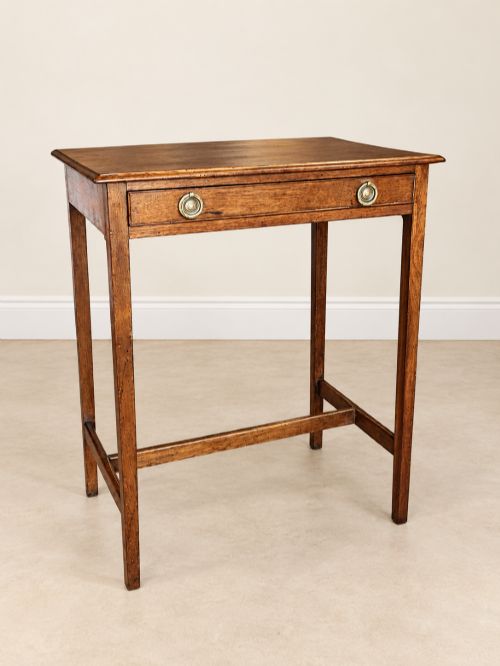
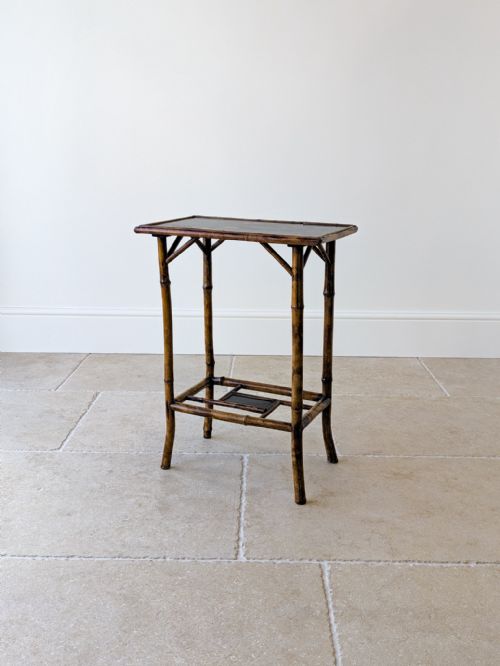
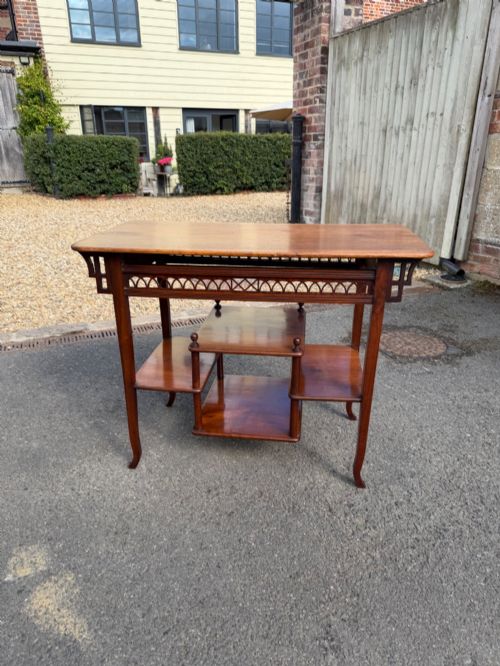
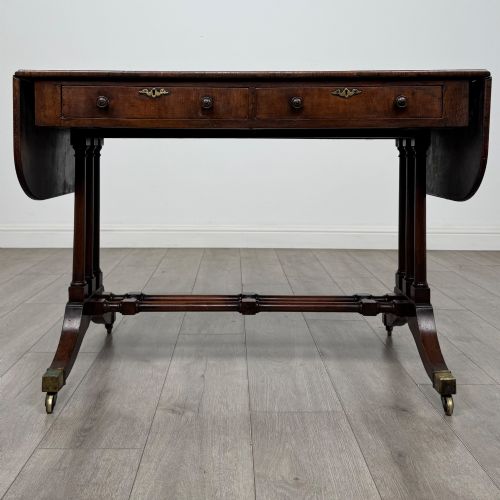
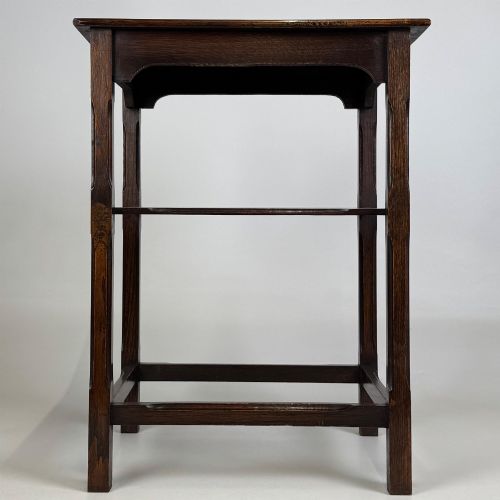
The version most frequently met on this page is the compact Edwardian or Victorian side table in oak or mahogany, often fitted with a single drawer or an under-tier. These smaller formats suit narrow entryways and hallways where deep furniture obstructs movement while still providing a surface for lamps or correspondence.
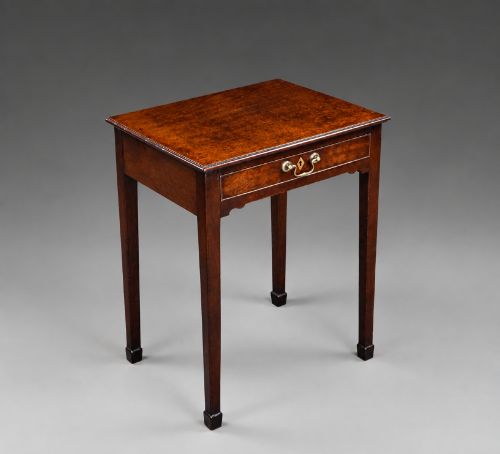
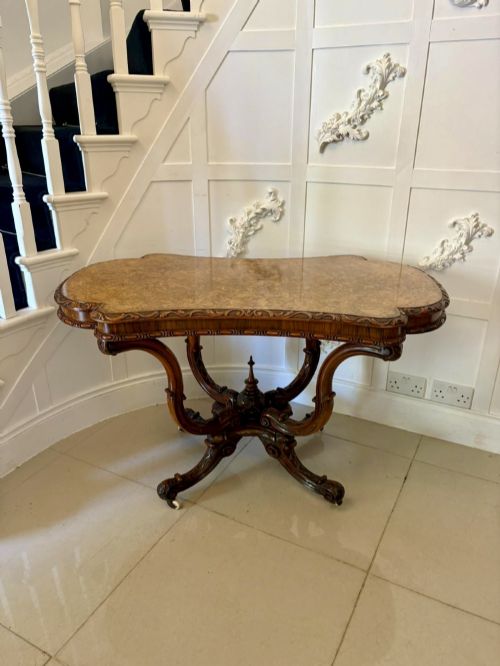
Earlier iterations from the eighteenth century, such as oak lowboys or cross-banded mahogany tables, display simpler provincial lines or finer Georgian proportions. Alongside these sit nineteenth-century centre tables and occasional pieces in rosewood, burr walnut, and ebonised wood, reflecting the changing interior tastes of successive periods.
Materials and Construction
Cabinet-makers relied on native timbers such as oak, elm, and ash for earlier provincial tables, utilising solid planks for tops and sturdy framing for legs and stretchers. As fashions shifted towards the eighteenth and nineteenth centuries, imported hardwoods like mahogany, rosewood, and walnut became dominant, frequently applied as fine veneers over secondary woods to create figured surfaces.
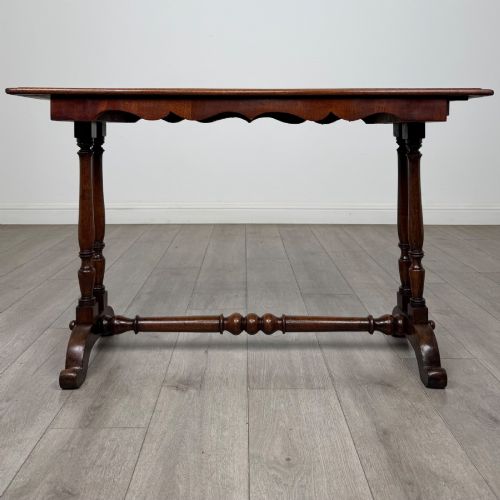
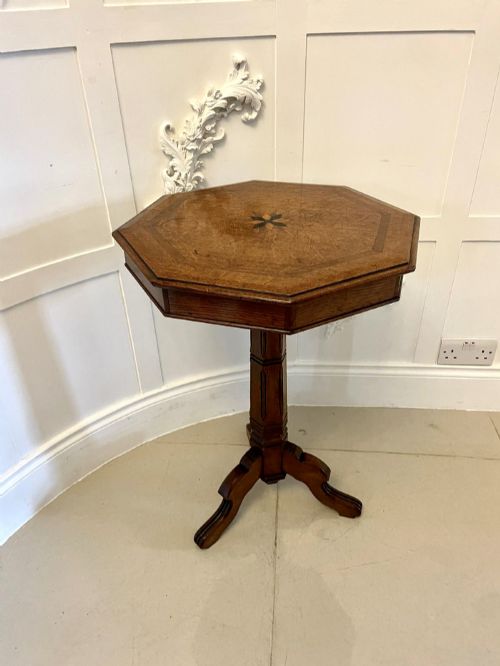
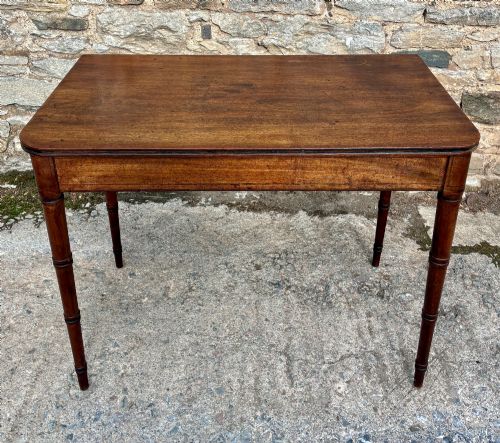
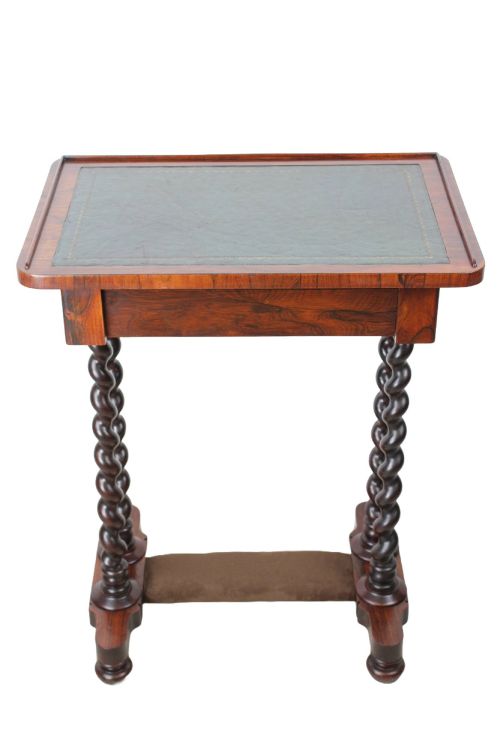
Decorative techniques recorded in the archive and current listings include satinwood inlay, marquetry, parquetry, and brass stringing, alongside carved details like barley twist legs and gothic tracery. Drawers were typically constructed with hand-cut dovetails, while smaller occasional pieces employed turnery, bracket feet, and fold-over mechanisms to balance utility with decoration.
Current listings feature occasional tables spanning from the late seventeenth century through the Edwardian period in oak, mahogany, and walnut.
Craftsmanship and Proportion
The distinction between standard examples and top-tier pieces rests on the selection of timber and the precision of the joinery. Tables featuring highly figured burr walnut, flame mahogany, or dense oak veneers display a depth of grain that elevates the visual impact of a compact surface.
Proportion and structural integrity define the higher range of these tables, where original brass hardware, uncompromised drawer linings, and cleanly cut dovetails remain intact. Refined turning on legs, crisp carving, and balanced dimensions separate provincial utility pieces from workshop items produced by notable firms.
Edward And Roberts·Gillows·Maple And Co
The Occasional Hall Table Glossary
- Lowboy
- A small provincial table featuring one or more drawers and long legs, frequently used as a writing or dressing table in eighteenth-century country houses.
- Under-tier
- A lower shelf positioned between the legs of a table to provide additional storage or display space for books and small objects.
- Marquetry
- A decorative technique where thin pieces of coloured wood veneer are arranged in geometric or floral patterns on a surface.
- Barley twist
- A type of turned furniture leg resembling a spiralling rope, achieved by carving or lathe-cutting solid timber.
Occasional Hall Table: Frequently Asked Questions
Where should I place an occasional hall table?
These compact tables fit neatly against narrow hallway walls, landings, and small entry spaces where floor area is restricted.
Their modest depth allows them to sit behind doors or along passageways without blocking foot traffic.
Did these tables always have drawers?
Many provincial and Georgian examples incorporate one or two drawers, originally intended for letters, keys, or sewing implements.
Open occasional tables without drawers were equally common, designed purely to hold lamps, decorative ceramics, or calling card trays.
How do I identify a Georgian table from a Victorian copy?
Examination of the drawer linings, timber shrinkage, and construction methods reveals the underlying period of manufacture.
Georgian pieces typically display hand-sawn oak secondary woods and simpler internal framing, whereas later revivals often utilise machine-cut elements and distinct nineteenth-century finishing techniques.
Can I use an antique side table for a lamp?
Smaller side and occasional tables provide stable surfaces for lighting, table lamps, and small decorative objects in entrance halls.
Their sturdy timber frames easily support modern electrical cords and daily household use.