

Oak Tray on Stand
An oak tray on stand serves practical and decorative roles across domestic interiors, merging timber utility with purposeful design.
Oak Tray on Stand
The pieces appearing most frequently across these records date from the nineteenth and early twentieth centuries, encompassing Victorian, Edwardian, and Arts and Crafts aesthetics. These variations reflect domestic shifts towards organised hospitality and functional hallway storage.
Makers and workshops utilised solid oak alongside supplementary materials such as brass, iron, and zinc to build durable items suited to daily household service. Whether configured as a removable tray or a compartmented hall stand, each piece demonstrates period-specific craftsmanship.
How they were made
Construction relies heavily on solid oak timber, shaped through period joinery methods to create folding trestles, panelled hall structures, and raised tray rims. Cabinet makers employed mortise and tenon joints alongside turned wooden elements to ensure stability under heavy loads.
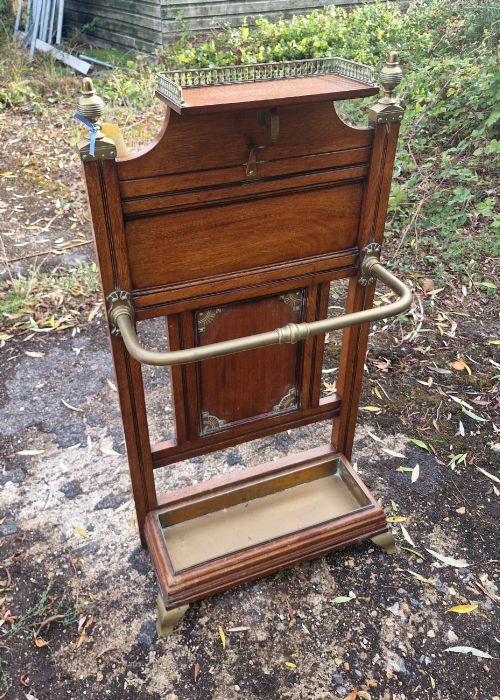
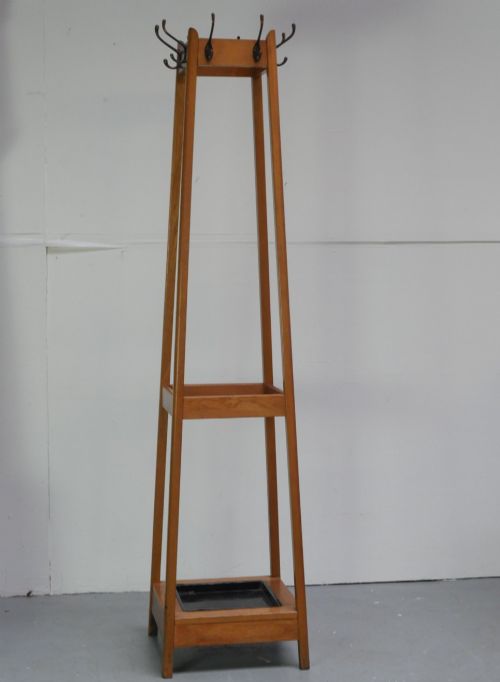
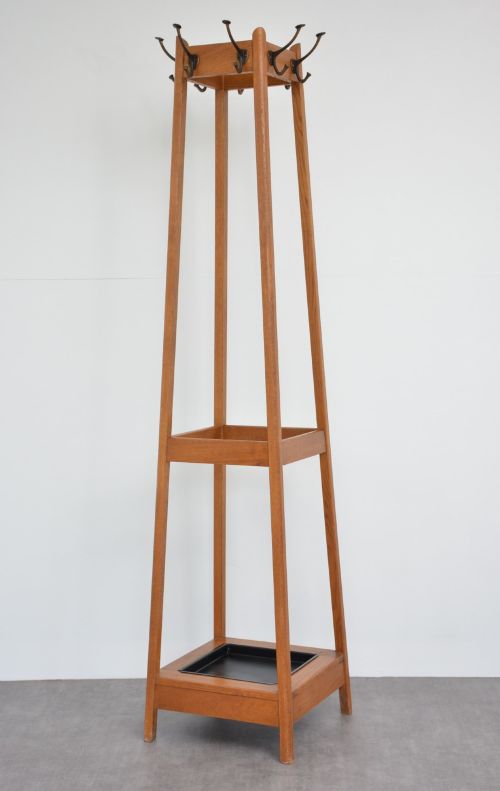
Metal components such as brass, cast iron, and zinc were integrated into tray hinges, coat hooks, and floor-level drip trays to manage moisture and daily wear. These hardware additions formed an essential functional layer alongside the carved and golden oak framing.
Listings feature items spanning the nineteenth century through the 1950s, utilising oak alongside brass, iron, zinc, and glass.
What varies in quality
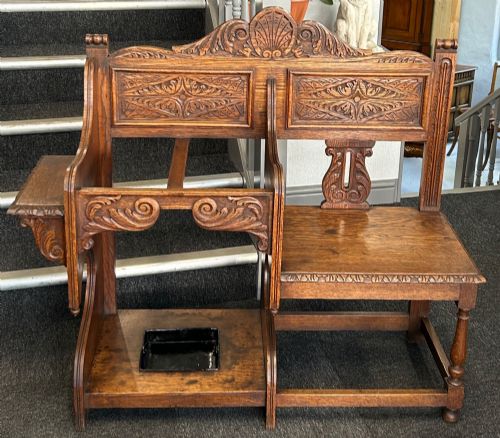
The distinction between standard utility items and finer examples rests upon the integration of original hardware, such as designated metal drip trays and folding stands that retain their matching timber components. Pieces bearing attributed workshop designs or integrated carvings generally demonstrate superior execution in timber selection and joinery.
Proportion and structural integrity define the higher tiers of surviving examples, where the grain of the golden or dark oak remains consistent and unaltered through generations of domestic use. Lesser pieces often show replacement hardware or mismatched timber stands that alter the original profile.
Liberty Design·Heals of London·GW Evans·James Shoolbred
The Oak Tray on Stand Glossary
- Butler's tray
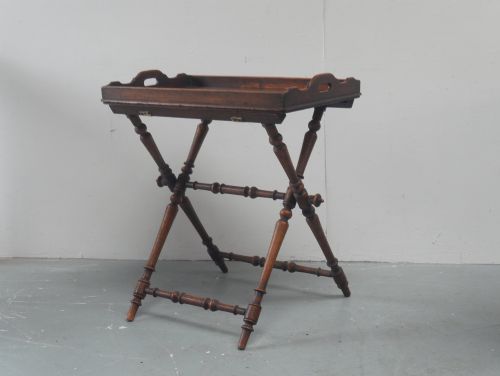
- A removable wooden tray with panelled or hinged sides, designed to sit upon a collapsible folding stand for serving food or drink.
- Stick stand
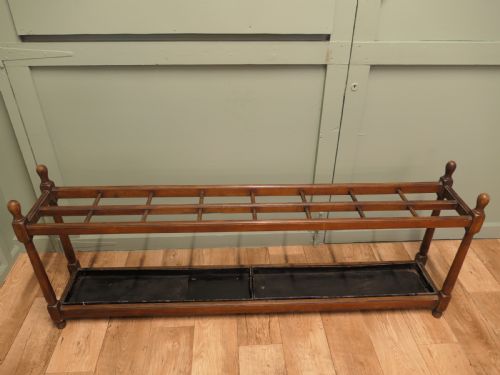
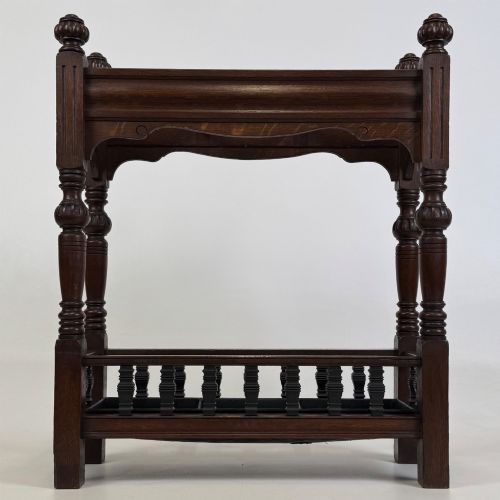
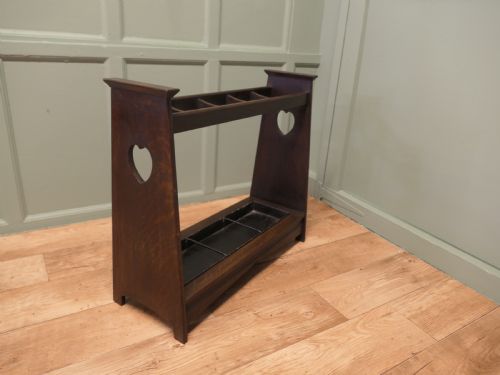
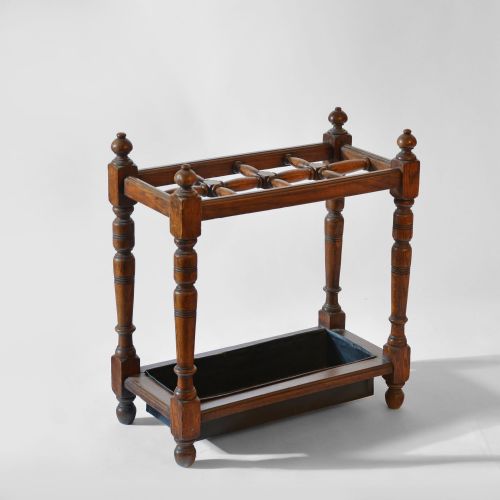
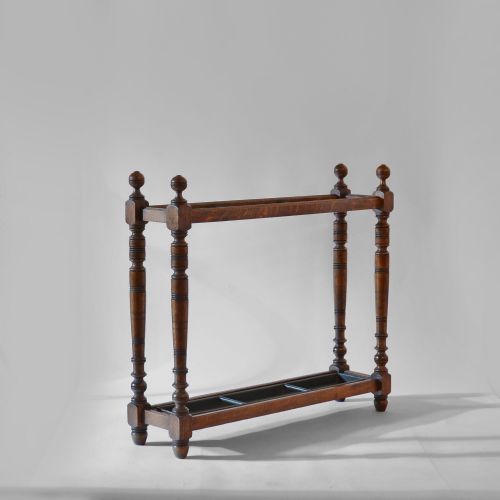
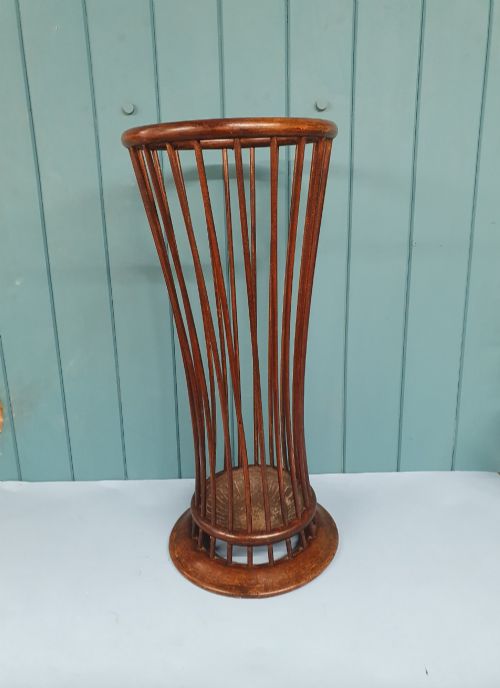
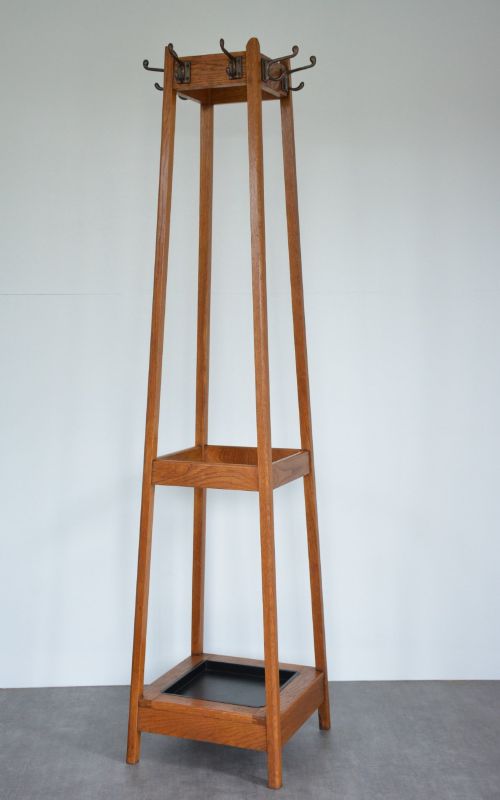
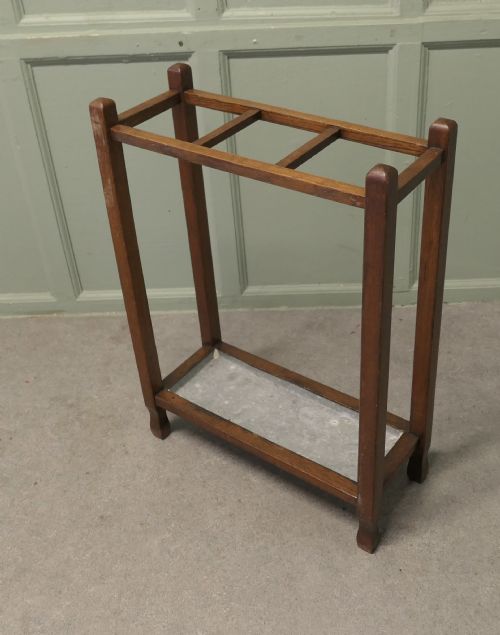
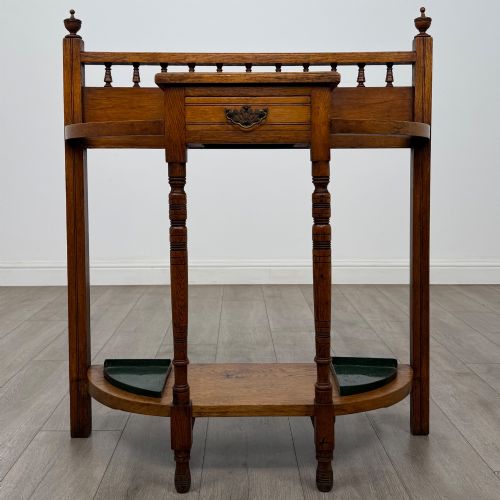
- A tall furniture piece featuring partitioned upper rings and a lower metal tray designed to hold walking sticks and umbrellas.
- Arts and Crafts
- A design movement emphasising handcraftsmanship, simple structural forms, and the natural grain of materials like oak.
- Drip tray
- A removable metal basin, typically made of zinc or brass, positioned at the base of umbrella stands to catch moisture.
- Gothic Revival
- A nineteenth-century style incorporating architectural motifs such as pointed arches and heavy carved tracery into domestic woodwork.
Oak Tray on Stand: Frequently Asked Questions
What is an oak tray on stand used for?
These versatile pieces served historical households either as portable serving tables for meals and drinks or as permanent hallway furniture for coats, hats, and umbrellas.
Butler trays provided removable surfaces that could be folded away when not in use, while stick stands kept entryways organised with integrated metal drip trays.
How do I date an oak tray on stand?
Dating relies on observing stylistic markers, construction techniques, and the types of hardware used throughout the piece. Victorian and Edwardian examples often feature specific decorative movements like Arts and Crafts carving or Gothic Revival motifs.
Examining the underside of trays and the joinery of the folding stands reveals whether components are original to the period of manufacture.
Where should I place an oak tray on stand at home?
Hall stands and umbrella racks suit entryways and corridors where they can manage outdoor gear and provide immediate storage for walking sticks and coats. Tray tables function effectively in living spaces or dining rooms as portable side surfaces for serving refreshments.
Are these stands made of solid oak?
Surviving examples from the nineteenth and early twentieth centuries utilise solid oak timbers, occasionally paired with secondary woods for internal framing or drawer linings. Metal hardware such as brass hooks, iron brackets, and zinc drip trays frequently accompany the wooden structures.