

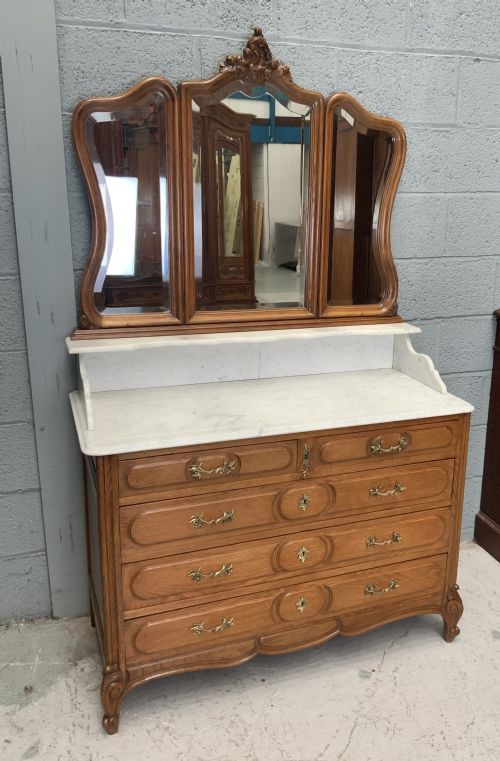


Oak Sideboard with Mirror
An oak sideboard with mirror brings together heavy timber and reflective glass, giving dining rooms a focal point that stores silver and brightens the space.
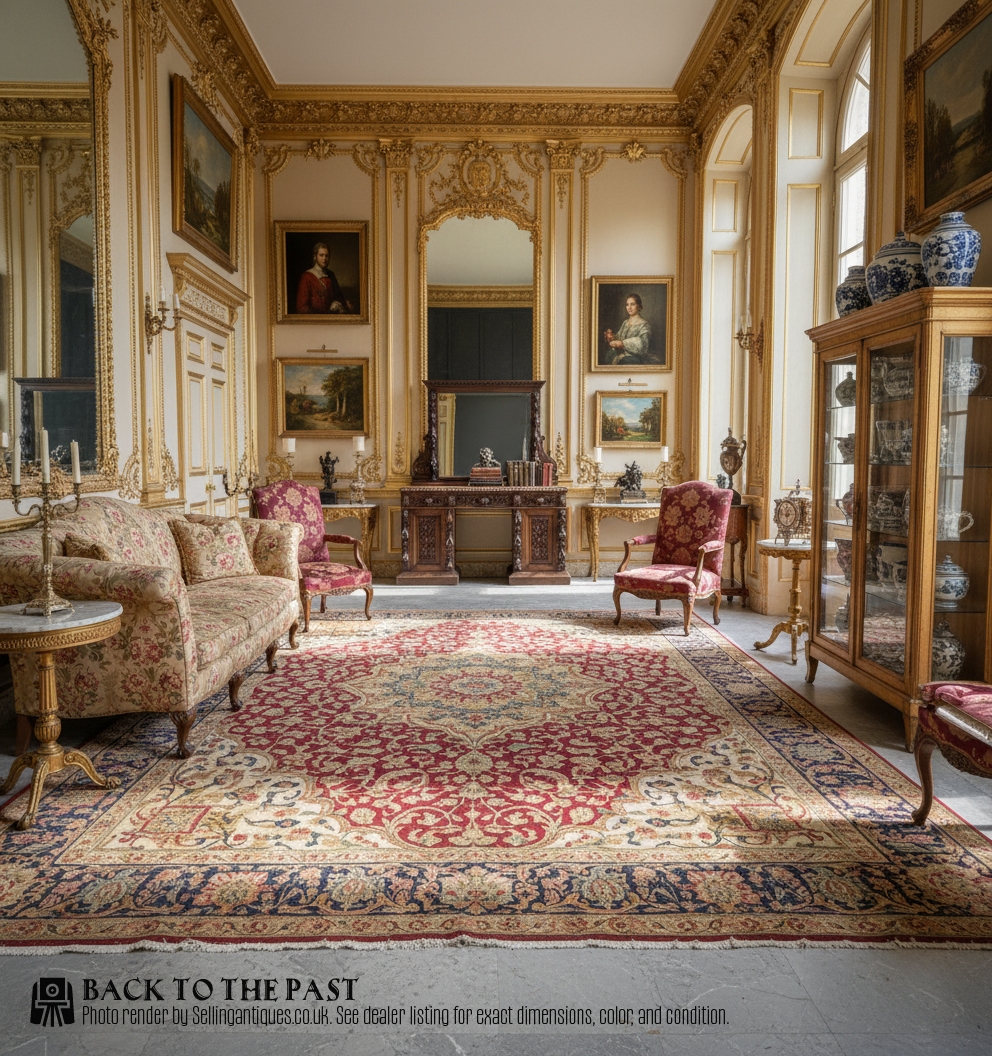
Oak Sideboard with Mirror
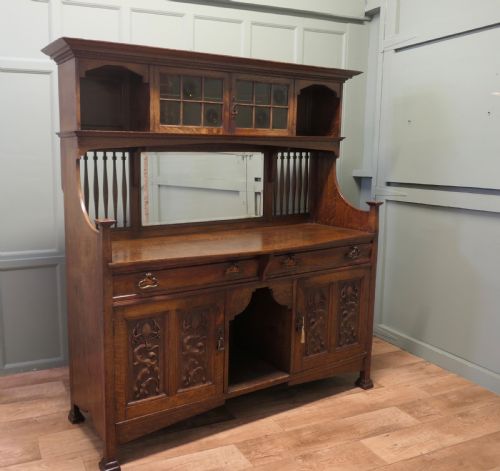
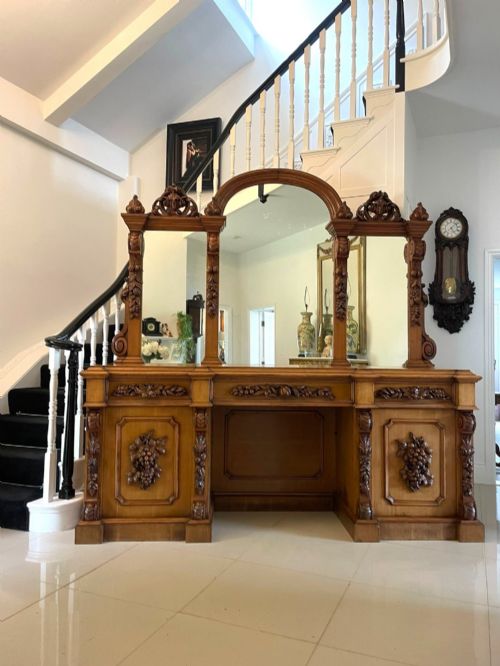
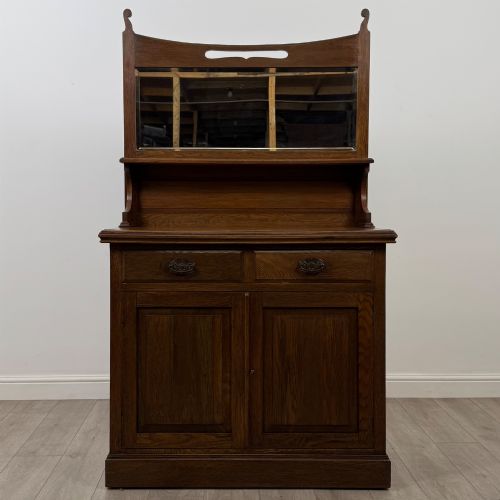
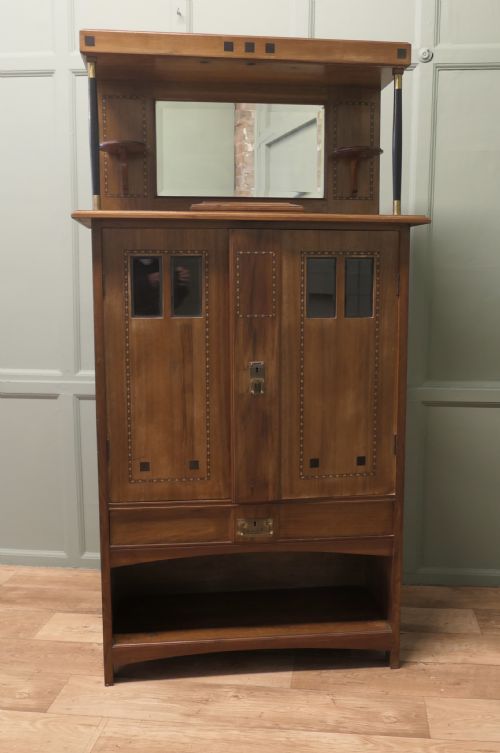
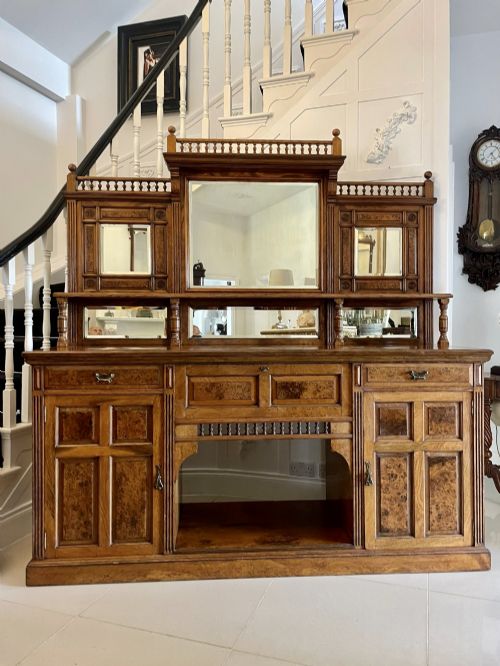
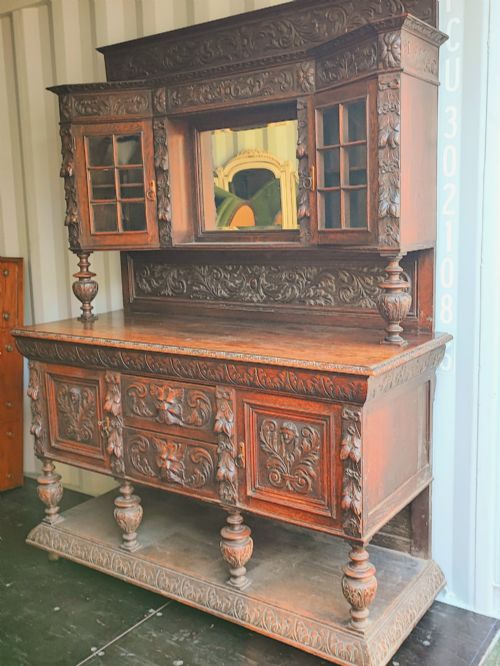
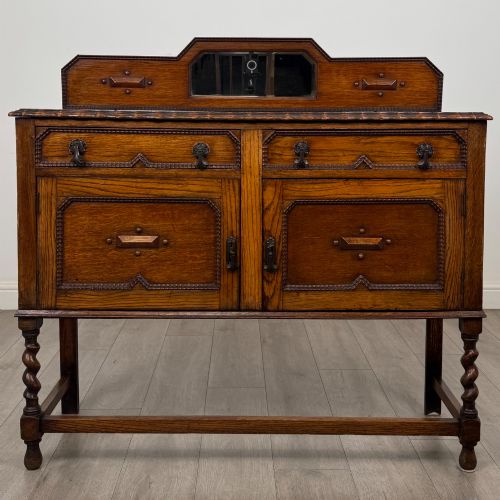
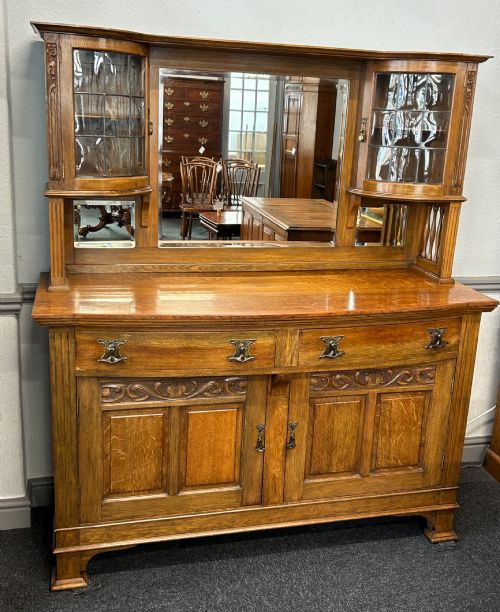
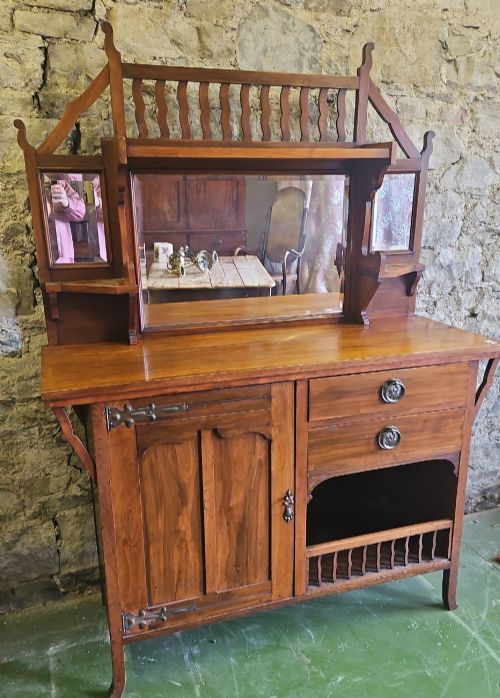
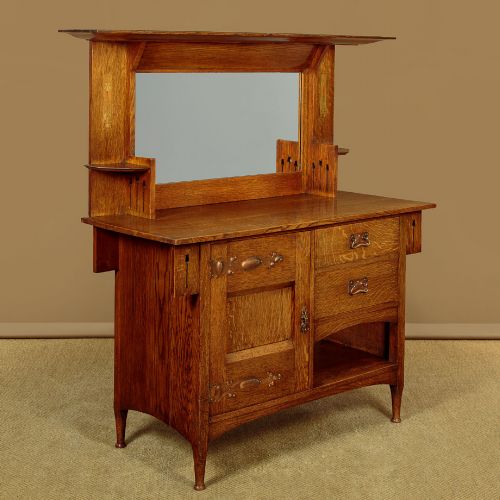
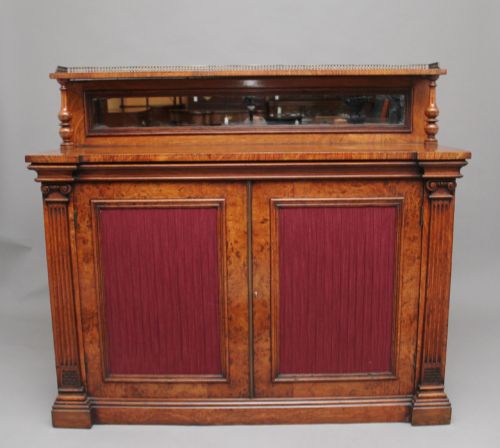
An oak sideboard with mirror combines substantial storage cabinetry with an upright glass plate, taking forms that range from Victorian and Edwardian iterations to Arts and Crafts designs. These pieces serve as functional servers or display units in domestic interiors, anchoring a room with timber construction.
You are most likely to encounter Victorian and Edwardian examples on this page, alongside specific stylistic offshoots like Arts and Crafts and Secessionist interpretations. The corpus includes pieces dated across the nineteenth and twentieth centuries, spanning the 1880s through to the 1920s.
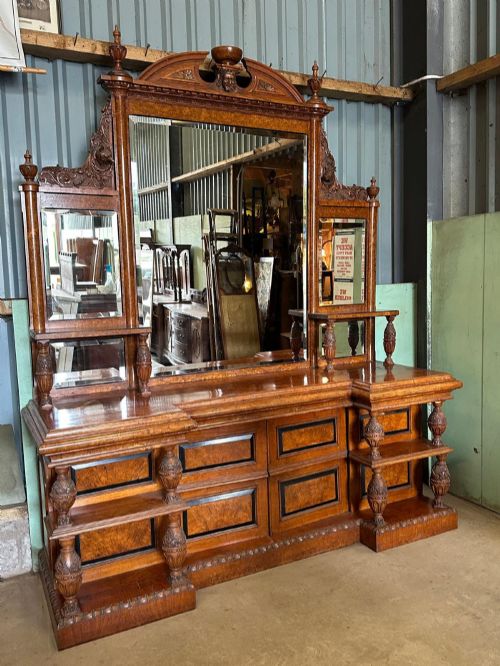
The primary form involves a lower cabinet base with cupboards and drawers, surmounted by a mirrored back that frequently incorporates carving, shelving, or leaded glass. Variations in these listings include related configurations such as washstands and cocktail cabinets alongside traditional sideboards.
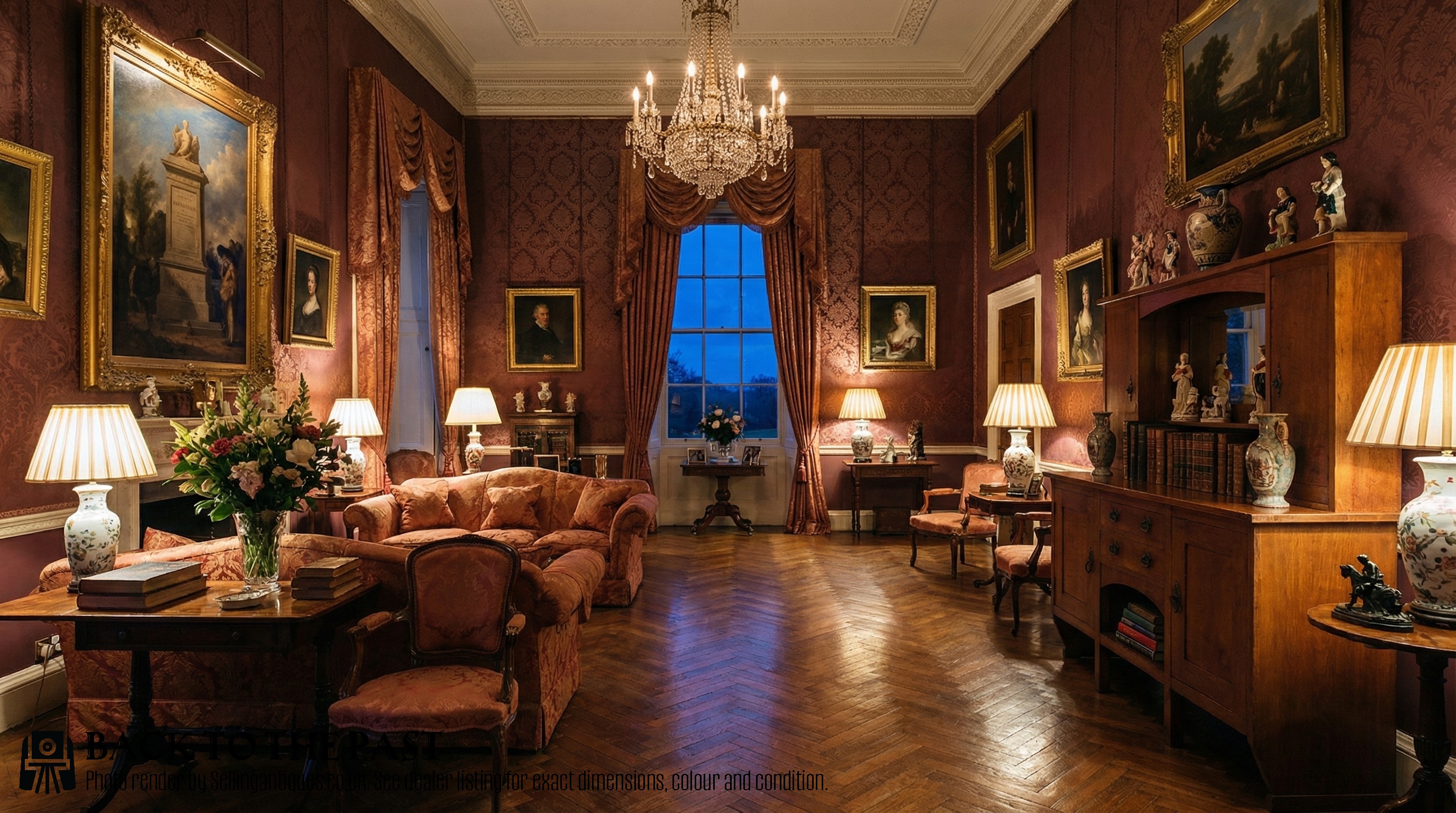
How they were made
Cabinetmakers utilised solid oak and pollard oak as the primary structural and visual timbers, often selecting figured grains for prominent door panels and drawer fronts. Secondary woods such as pine appear in concealed carcass construction.
Decoration relied on hand carving, applied mouldings, and turned elements like barley twist supports, executed within periods spanning from the nineteenth century to the 1920s. Metalwork hardware in brass complemented the timber surfaces.
Mirrored glass formed the upper backing plates, sometimes cut with bevelled edges or paired with leaded glass doors and marble inserts to create varied textural contrasts.
One Edwardian specimen includes a serpentine edge, proving that even heavy timber can learn to wave.
What varies in quality
The depth and execution of the carved ornamentation separate standard production from superior pieces, with crisp, hand-chiselled details indicating skilled craftsmanship. Plain timber surfaces rely entirely on the selection of figured oak grain, such as pollard oak, for visual impact.
Proportion and architectural coherence dictate the overall success of the piece, particularly where the mirrored superstructure meets the lower cabinet base. Integrated design elements, such as specific Arts and Crafts or Secessionist detailing, elevate the cohesion of the object.
The Oak Sideboard with Mirror Glossary
- Pollard oak
- Oak timber taken from a tree that has been pollarded, producing a dense, highly figured grain pattern often utilised for decorative veneer.
- Mirror back
- An upright wooden framework holding a glass mirror plate attached to the rear of a sideboard surface.
- Barley twist
- A type of turned furniture leg or support carved in a helical spiral resembling a twist of barley.
- Arts and Crafts
- A design movement valuing handcraftsmanship and simple forms over mass production, evident in several listings here.
- Secessionist
- A stylistic approach associated with early twentieth-century avant-garde movements, prioritising geometric lines and clean forms.
Oak Sideboard with Mirror: Frequently Asked Questions
What is an oak sideboard with mirror used for?
These pieces function as dining room storage units for crockery, linen, and cutlery, while the upper mirror shelf displays decorative objects.
The reflective glass serves to bounce light around the room and create a sense of greater space above the heavy timber base.
How do I date an oak sideboard?
Dating relies on identifying stylistic markers, such as heavy Victorian carving, Edwardian lightness, or the geometric lines of Arts and Crafts and Secessionist movements.
Construction methods, hardware materials like brass, and secondary woods such as pine also provide chronological indicators.
Are mirror backs original to these sideboards?
Most mirror backs on Victorian and Edwardian sideboards are original, constructed as an integral upper superstructure attached to the lower cabinet.
Sideboards from this era were specifically designed with mirrored panels to complement dining room interiors.
How do I care for pollard oak furniture?
Maintain pollard oak by dusting with a soft cloth and applying appropriate beeswax periodically to nourish the timber grain.
Keep the piece away from direct heat sources and strong sunlight to prevent the wood and any mirrored backing from drying out or degrading.