


Antique Oak Server Mirror
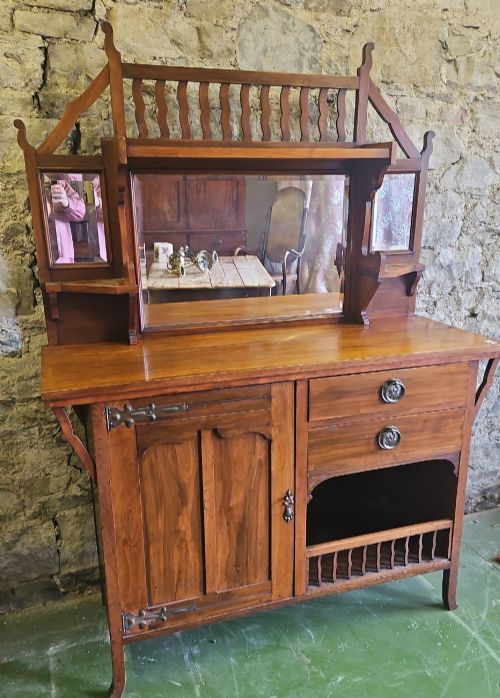
An antique oak server mirror brings deep grain, bevelled glass and sturdy Victorian or Edwardian craftsmanship straight into a modern dining room.
Antique Oak Server Mirror
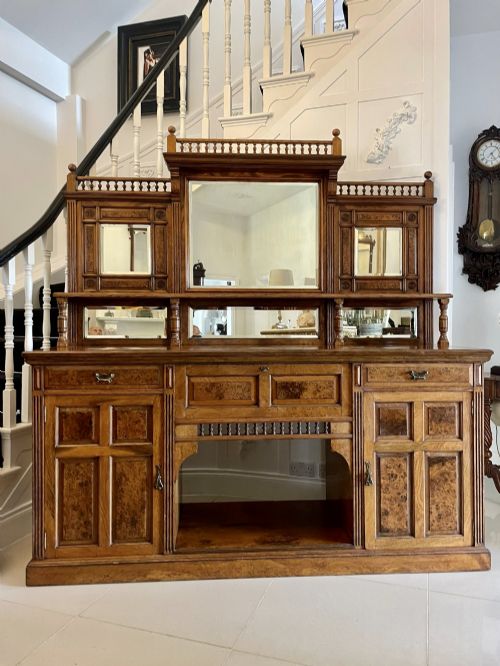
When you search for an antique oak server mirror, you encounter substantial dining furniture combining a capacious sideboard base with an integrated tall mirror back. These pieces emerge primarily from the Victorian and Edwardian eras, spanning the late nineteenth century through to the early twentieth century.
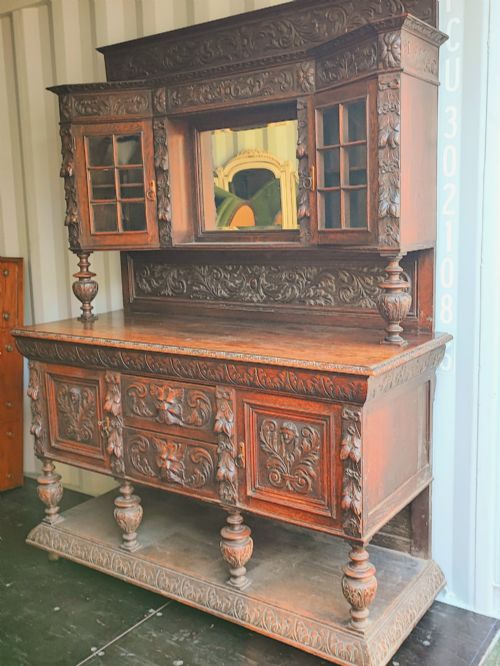
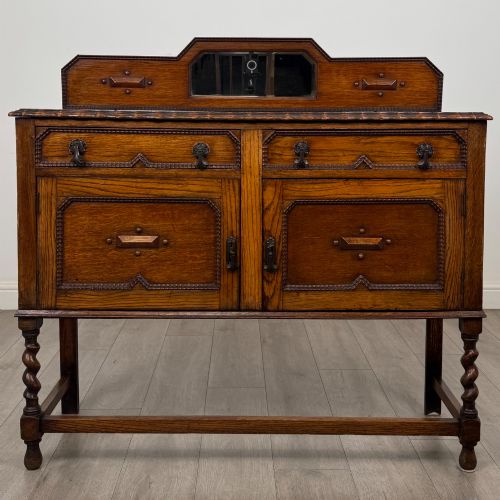
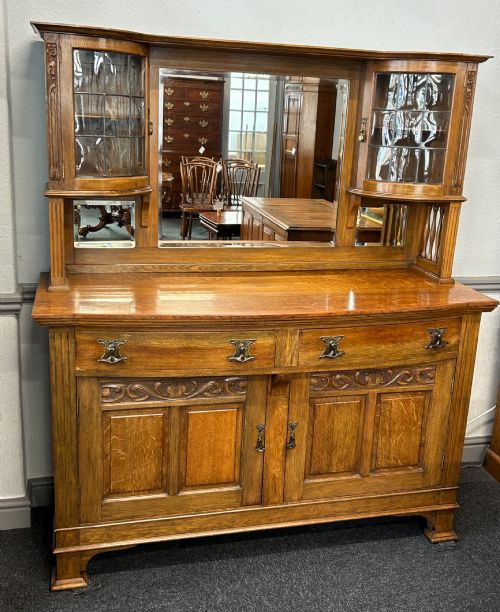
The forms vary from grand mirror-backed sideboards featuring carved panels and pedestals to more linear Arts and Crafts designs. You also meet regional interpretations displaying Jacobean Revival motifs or Art Nouveau flourishes.
Most examples function as dining room servers or side cabinets, offering surface display space alongside enclosed cupboard storage and shelving. The mirror component serves to reflect light and amplify the sense of space within a room.
Materials and construction methods
Makers utilised solid oak and pollard oak timber, often selected for strong grain patterns, burrs and warm golden or bleached tones. Specimen woods occasionally appear for subtle inlay work, while brass and iron provide structural hardware or decorative handles.
Carving, geometric panelling and barley twist turnings define the ornamentation across these large dining pieces. Heavy mirror glass sits securely within timber frames, supported by panelled backs and substantial cabinet bases.
A grinning Green Man occasionally peers out from the carved oak foliage, watching over your dining room with ancient woodland charm.
Judging the quality of these servers
Quality rests heavily on the selection of the timber, particularly where figured pollard oak or rich golden grain exhibits deep natural contrast. The depth and execution of hand carving distinguish standard production from exceptional cabinet work.
Structural integrity matters deeply in pieces of such grand proportions, where heavy mirror glass and thick timber demand robust joinery. The clarity of the mirror glass and the refinement of brass or metal mounts also separate standard examples from masterworks.
T Simpson and Son
The Antique Oak Server Mirror Glossary
- Pollard oak
- Timber taken from trees that were pollarded, resulting in dense, highly figured grain patterns with intricate swirling burrs. This material was favoured by high-end Victorian cabinet makers for statement furniture.
- Mirror back
- An upright wooden frame housing a large looking glass, attached to the rear surface of a sideboard or server. This element reflects interior light and displays decorative crests or carved pediments.
- Arts and Crafts
- A design movement prioritising simple forms, honest construction and handcrafted details over mass-produced ornamentation. Pieces in this style often feature exposed tenons and hammered copper or brass fittings.
- Green Man
- A sculptural architectural motif depicting a face carved from or entwined with leaves and vines. It appears frequently on nineteenth-century carved oak furniture as a symbol of rebirth.
- Barley twist
- A decorative turning technique resembling the spiralling shape of a barleycorn stalk. It provides texture to the structural support columns and legs of later period sideboards.
Antique Oak Server Mirror: Frequently Asked Questions
How do I date an oak server mirror?
Dating relies on observing stylistic markers, such as heavy carved Gothic Revival motifs characteristic of the mid-to-late nineteenth century, versus the cleaner, linear aesthetic of Edwardian Arts and Crafts pieces.
Construction methods and timber selection also offer clues, with pollard oak and deep geometric panels pointing firmly to the Victorian era, while lighter golden oak finishes often indicate early twentieth-century production.
Are these mirrors detachable from the sideboard?
Most mirror backs are built as an integral part of the overarching sideboard structure and connect directly to the main cabinet base.
While some elements can be unbolted for transport, separating them permanently alters the intended proportion and visual balance of the furniture.
How should I care for pollard oak furniture?
Maintain the timber by applying a quality beeswax periodically to nourish the grain and protect the surface from drying out.
Position the piece away from direct heat sources and strong sunlight to prevent the oak from warping and to keep the mirror silvering intact.
What is the difference between a sideboard and a server?
A server generally offers a more compact footprint designed specifically for plating and serving food during dining, though the terms often overlap in antique cataloguing.
Both forms incorporate storage cupboards and drawers, but server mirrors lean toward lighter display integration compared to heavy dining room sideboards.