
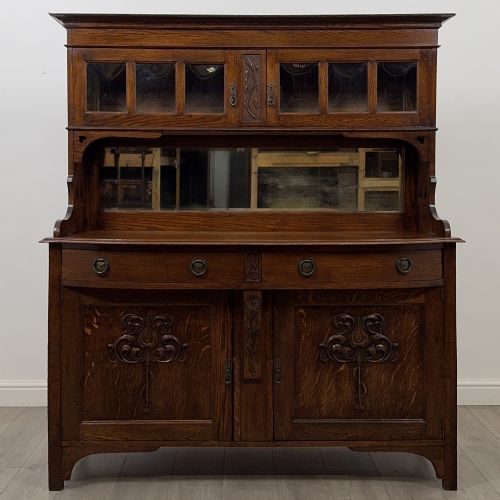




Carved Oak Sideboard Mirror
A carved oak sideboard mirror brings heavy timber and reflective glass together, offering substantial storage and display space for a traditional dining room.
Carved Oak Sideboard Mirror
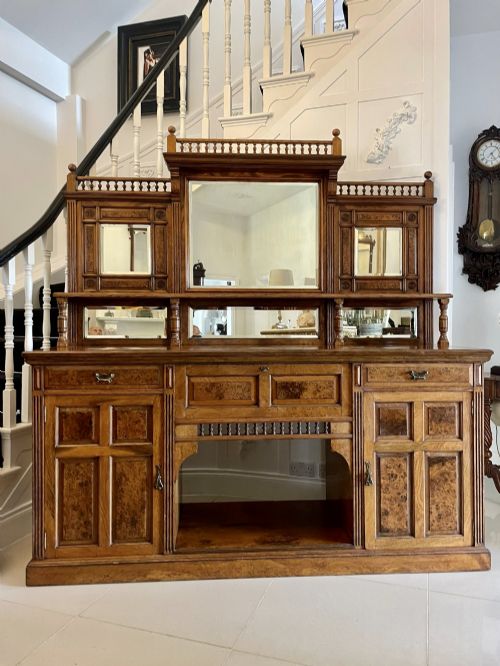
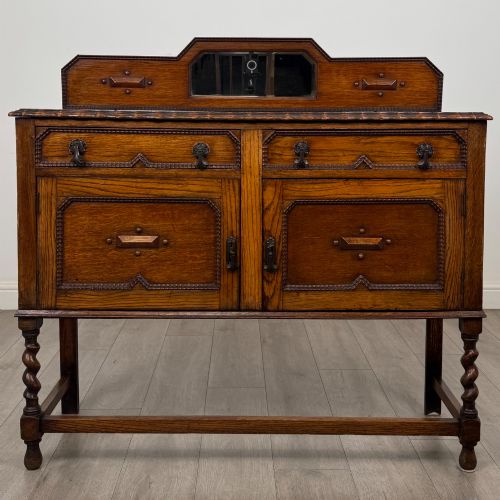
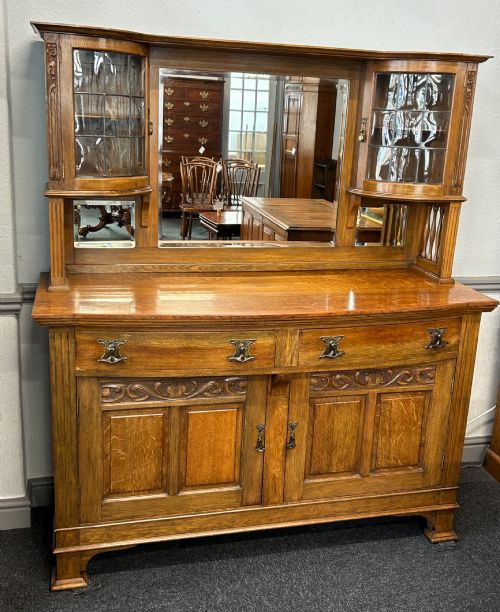
A carved oak sideboard mirror combines a sturdy wooden base cabinet with an upright wooden frame holding a glass mirror, spanning several decades of domestic design. These pieces serve primarily as dining room furniture meant for storing tableware and displaying decorative items upon the surface.
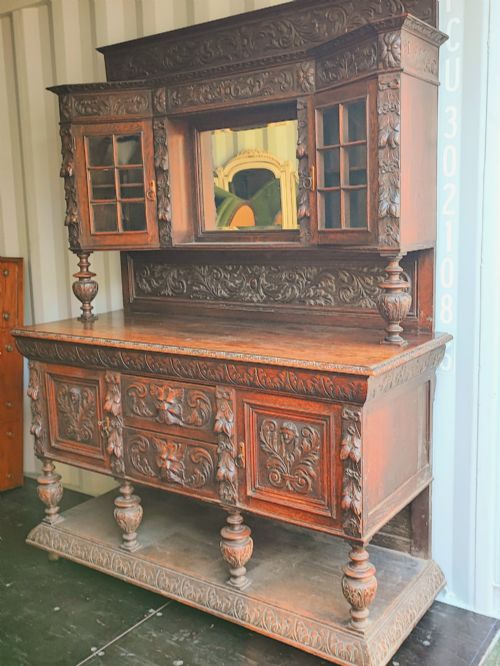
Victorian and Edwardian examples dominate the available selection, often featuring elaborate relief carving, panelled doors, and raised backboards. The form evolved through various revival movements, incorporating styles from Gothic Revival to Arts and Crafts within the same timber tradition.
Makers utilised durable hardwoods to construct large buffet cabinets, dressing units, and pedestal sideboards intended for prominent placement in the home. The inclusion of mirror glass adds light and a sense of depth to domestic interiors where these items stand.
How they were made
Cabinet makers built these pieces using solid oak, frequently incorporating pollard oak or burr walnut for distinct grain patterns and decorative veneer panels. Glass and mirror glass were fitted into rebated wooden frames, secured behind carved mouldings or leaded doors.
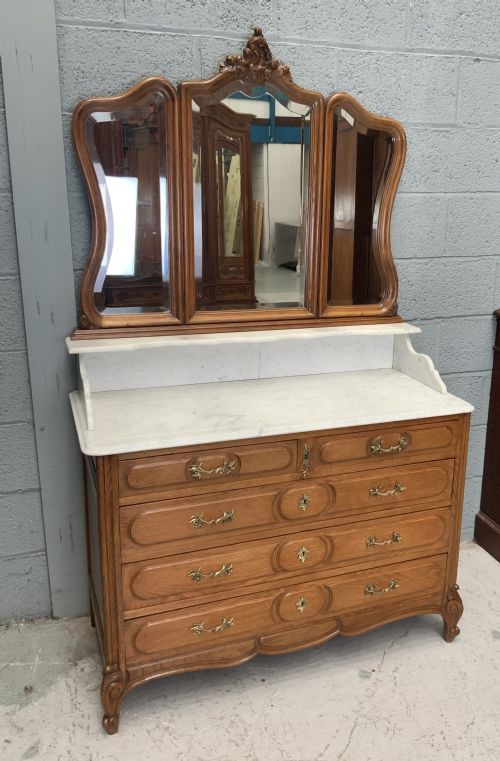
Brass hardware, marble inserts, and iron fittings appear across various models, providing structural support and contrasting metallic detail against the dark wood surfaces. Joinery techniques involved mortise and tenon framing, heavy panel construction, and hand-carved ornamentation applied to cornices and drawer fronts.
Listings feature oak, pollard oak, and glass alongside marble and brass elements across Victorian and Edwardian periods.
What varies in quality
The depth and execution of the hand carving separate simpler production models from more ambitious examples, where figures, geometric motifs, and floral patterns display greater precision. Wood selection also dictates grade, with figured pollard oak or specially chosen golden oak marking out superior cabinet work.
Proportion and scale influence the overall presence of the furniture, as grander nineteenth-century pieces require balanced mirror frames and heavy structural integrity to support their massive weight. The quality of the original mirror glass and the integration of secondary woods further distinguish standard items from exceptional ones.
T Simpson and Son·James Simpson and Sons
The Carved Oak Sideboard Mirror Glossary
- Mirror back
- An upright wooden superstructure attached to the rear of a sideboard containing a large glass mirror plate. This component often includes small shelves or carved brackets.
- Pollard oak
- A decorative timber harvested from trees that were cut back to promote dense, gnarled branch growth, producing a speckled grain pattern. Cabinet makers used this wood for high-end drawer fronts and door panels.
- Arts and Crafts
- A design movement prioritising honest construction, plain surfaces, and visible craftsmanship over mass-produced ornamentation. Pieces from this style often feature minimal carving and exposed hinges.
- Gothic Revival
- An architectural and decorative style drawing inspiration from medieval forms, featuring pointed arches, tracery, and heavy mouldings. Sideboards in this style frequently display dark finishes and religious motifs.
- Sideboard buffet
- A large storage unit designed for dining rooms to hold serving dishes, cutlery, and glassware. The top surface functions as a staging area for food service.
Carved Oak Sideboard Mirror: Frequently Asked Questions
What is a mirror back sideboard?
A mirror back sideboard combines a heavy timber storage cabinet with an attached upright frame holding a large glass mirror. This design was popular for reflecting light and displaying decorative items in dining spaces.
The lower section provides enclosed cupboard space and drawers for tableware, while the upper mirror structure adds height and visual presence to the room.
How do I date an oak sideboard?
Dating relies on examining the prevailing design styles, hardware types, and construction methods used in the cabinet framework. Victorian examples often show heavy carving and dark finishes, whereas Edwardian pieces tend to feature lighter golden oak.
Revival styles such as Arts and Crafts or Gothic Revival also provide clear chronological markers based on the decorative vocabulary applied to the wood.
Where should I place a sideboard mirror?
These large pieces function best against a solid wall in a dining room, hallway, or spacious living area where their substantial proportions can anchor the space. Positioning them opposite a window helps the mirror glass maximise natural light.
Due to their heavy weight and solid wood construction, placement requires adequate floor support and sufficient clearance for opening doors and drawers.
How do I care for antique oak furniture?
Maintaining antique oak requires keeping the timber away from direct heat sources and extreme humidity fluctuations to prevent wood splitting or warping. Regular dusting with a soft, dry cloth preserves the finish without building up residue.
Applying occasional appropriate wax polish helps nourish the grain and protects the surface from minor moisture marks during daily use.